


Antique Leather Screen
An antique leather screen divides a room with hand-painted artistry, heavy panels and centuries of decorative history.
Antique Leather Screen
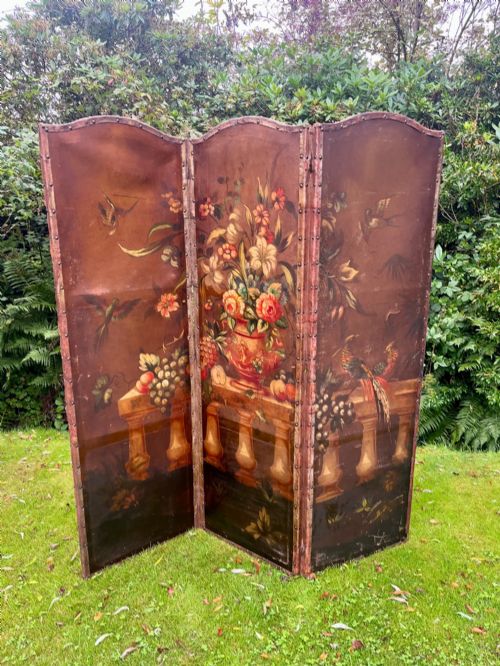
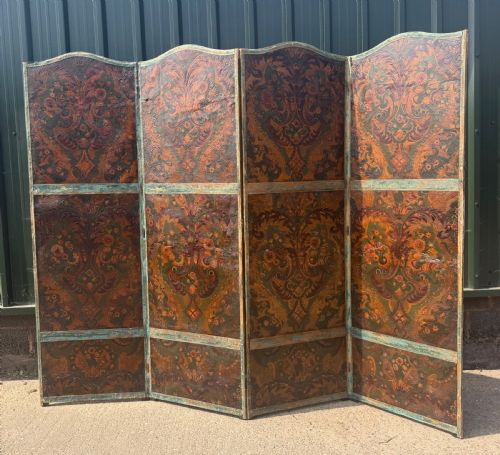
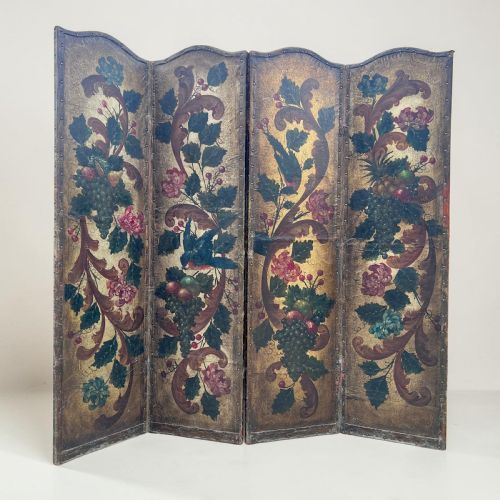
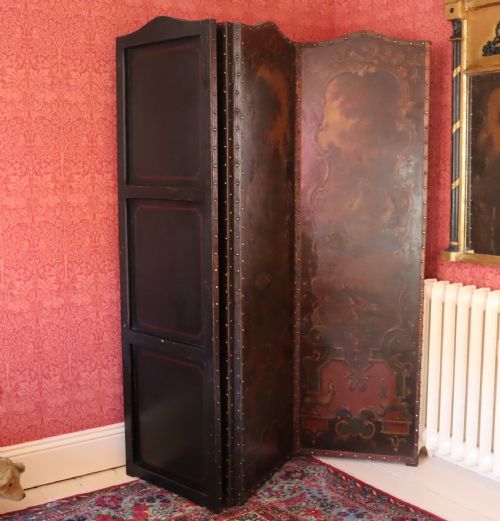
An antique leather screen functions as a substantial room divider or folding partition, designed to segment large spaces or create private areas within a chamber. These panels stand upright using hinged folds, most commonly appearing in three or four-fold configurations, though taller and wider multi-fold versions also emerge.
The materials span sturdy timber frames lined with heavy leather, canvas, or decorated hides, enriched by oil paint, gold leaf, and polychrome detailing. The aesthetic range covers Victorian interpretations, French Chateau influences, Continental Baroque, and Chinoiserie motifs.
Originating across the 18th and 19th centuries, these pieces include examples from the George III period and Dutch workshops, alongside later Victorian revivals. Buyers encounter folding screens, room dividers, and occasional domestic variants such as fire screens or screen writing tables.
Materials and Construction
Makers built these panels using timber frames of oak, walnut, mahogany, or satinwood to support the flexible hide. Leather and canvas surfaces were stretched across the internal framing and secured with brass elements.
Decoration relied on oil paint, hand-applied polychrome pigments, and gilt embossing. Artisans utilised techniques such as tooled leather work and elaborate hand-painted Chinoiserie scenes to finish the surfaces.
Listings feature periods from the 18th and 19th centuries, incorporating Victorian, George III, and Continental Baroque styles.
Assessing Quality and Execution
The distinction between standard domestic pieces and finer examples rests on the depth of the hand-painted artistry and the complexity of the gilt embossing. Superior panels exhibit crisp polychrome detail and careful brushwork rather than flat, uniform colour.
The integrity of the structural hinges and the weight of the supporting timber frame dictate the durability of the folding action. Wealthier 18th-century pieces, such as Cordoban or Dutch examples, demonstrate more intricate tooling than later 19th-century variants.
The Antique Leather Screen Glossary
- Cordoban leather
- Heavy goatskin leather originating from Spain, heavily embossed, painted, and gilt for wall hangings and screens. This material provides exceptional durability and a rich surface texture.
- Chinoiserie
- European artistic style reflecting Chinese motifs, popular in decorative screens and painted furniture. Artisans depicted pagodas, exotic flora, and figures in gilt and polychrome.
- Polychrome
- Decoration employing multiple distinct colours applied to wood, canvas, or leather surfaces. This technique brings depth and narrative detail to the panels.
- Embossed
- Raised ornamentation pressed or hammered into the surface of the leather. It creates a tactile, three-dimensional pattern across the panel.
- Fire screen
- A small screen placed before a fireplace when not in use to block residual heat or drafts. Some variants incorporated writing desks or decorative leather panels.
Antique Leather Screen: Frequently Asked Questions
How are antique leather screens cleaned?
Dust the leather gently with a soft, dry cloth to remove surface particles without disturbing the painted details. Avoid harsh chemical cleaners or excess moisture, which can damage aged oils and gilt leaf.
Nourish dry leather periodically with appropriate conservation-grade dressings recommended for historic hides. Test any treatment on a hidden corner before applying it to the main painted surface.
Can these screens support weight?
These folding partitions are designed as decorative room dividers rather than structural walls. They stand independently by angling the hinged panels for balance.
Avoid hanging heavy objects or applying physical pressure against the folding joints. Proper placement involves spreading the folds to ensure stability on flat flooring.
How many folds do they have?
Most surviving examples feature three or four folding panels linked by hinges. Larger configurations with six folds also appear in the record for expansive rooms.
Each panel consists of a wooden frame supporting painted leather or canvas. The number of folds determines the overall coverage and stability of the divider.
Where were they used historically?
Historic households utilised these screens in grand reception rooms, dressing chambers, and drawing rooms to draft-proof spaces and create private enclosures. Country houses and colleges incorporated them as both functional barriers and artistic focal points.
Smaller variants served beside fireplaces or combined with writing desks in studies. Their portability allowed occupants to rearrange interior layouts easily.
How to tell 18th and 19th century screens apart?
Eighteenth-century examples often feature heavy Cordoban or Dutch tooled leather with rich gilt embossing and deep-toned painted motifs. These tend to reflect Baroque or early Chinoiserie aesthetics.
Nineteenth-century pieces frequently display Victorian polychrome decoration, aesthetic movement styling, or lighter canvas framing. Construction techniques and hinge types also shift toward industrial manufacturing methods in the later period.