


Painted Leather Room Divider
A painted leather room divider brings rich texture and layered historic pigment to a high-ceilinged interior.
Painted Leather Room Divider
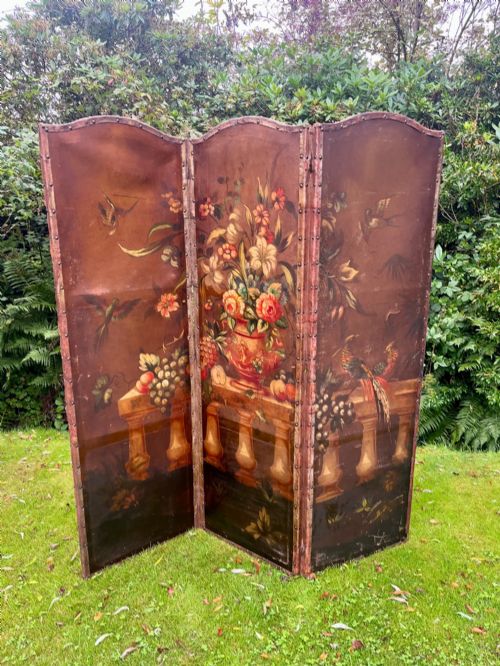
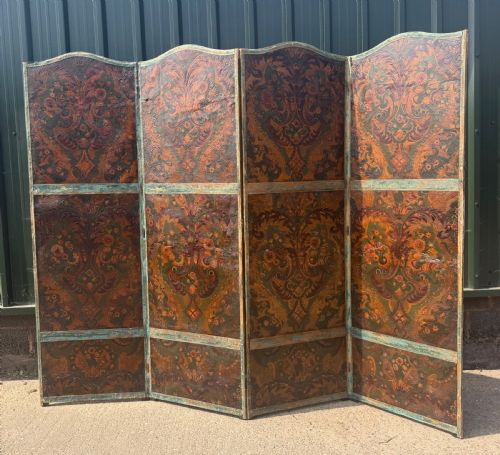
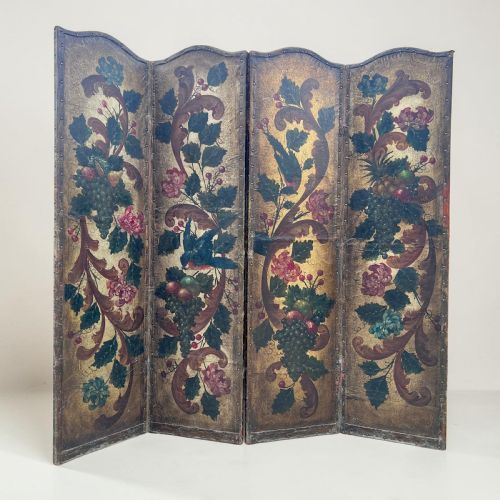
A painted leather room divider stands as a hinged folding screen designed to separate spaces or alter the proportions of a room. These decorative barriers combine utility with surface art, appearing in three-fold and four-fold configurations across various heights.
The pieces on this page span several centuries, with a strong representation of nineteenth-century examples alongside eighteenth-century works. Surviving screens frequently show the influence of French Chateau, Continental Baroque, and Chinoiserie styles.
Forms include folding screens and dressing screens created from multiple hinged panels. Many examples rely on oil paint and gold leaf applied over hide, canvas, or timber structures.
How they were made
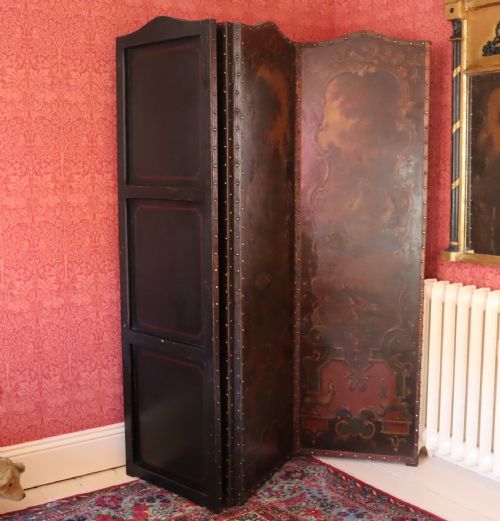
Construction relies on leather, timber, and canvas working together as a flexible support for decorative schemes. Artisans joined individual panels with brass hardware to create stable folding partitions.
Surface decoration involved oil paint and gold leaf applied directly to the hide. Many historic pieces utilised embossing techniques to raise the design before applying polychrome pigments and gilt finishes.
Country-house screens occasionally doubled as draught excluders near drafty fireplaces.
What varies in quality
Quality rests in the depth of the tooling and the preservation of the original hand-painted pigments. Screens featuring gilt embossed details and sophisticated polychrome decoration command greater attention than simpler iterations.
The complexity of the folding structure and the execution of the painting define the upper tier of these objects. Finer examples display meticulous brushwork and integrated stylistic references such as Dutch tooled leather or Chinoiserie motifs.
The Painted Leather Room Divider Glossary
- Cordoban
- Leather produced in Córdoba, Spain, known for its heavy quality and suitability for embossing and gilding. This material forms the basis of many fine historic screens.
- Polychrome
- Decoration employing multiple colours on a single surface. This technique appears across nineteenth-century and eighteenth-century panels.
- Embossed
- Raised design pressed or hammered into the surface of the leather. This process creates tactile relief beneath the paint and gold leaf.
- Gilt
- Covered with a thin layer of gold leaf or gold paint. This finish catches the light across many Baroque and Rococo Revival screens.
Painted Leather Room Divider: Frequently Asked Questions
How do I use a painted leather room divider?
These screens function to zone large spaces, conceal doorways, or create a backdrop within a room. Their folding panels allow them to stand freely and adjust to different angles depending on the floor space.
Position them away from direct heat sources and strong sunlight to protect the aged hide and historic pigments from drying out or fading over time.
How do I tell an eighteenth-century screen from a nineteenth-century one?
Eighteenth-century examples often display deep Cordoban embossing and specific regional styles such as Dutch tooled leather or Spanish gilt work. The materials and structural wear reflect an earlier period of manufacture.
Nineteenth-century pieces frequently embrace Victorian revivals or Chinoiserie aesthetics, using canvas supports alongside leather and incorporating different framing techniques.
What maintenance does antique leather require?
Historic painted leather needs stable indoor humidity and minimal handling of the decorated surfaces. Dusting with a dry, soft cloth is sufficient for routine care.
Avoid using modern leather conditioners or cleaning products, as these can damage the original oil paint and gold leaf layers.
Are all panels made entirely of leather?
Many screens combine leather with timber frames and canvas backings to provide structural support for the folding panels. Brass hardware typically joins the sections together.
Descriptions often note these supporting materials alongside the primary leather surface.