
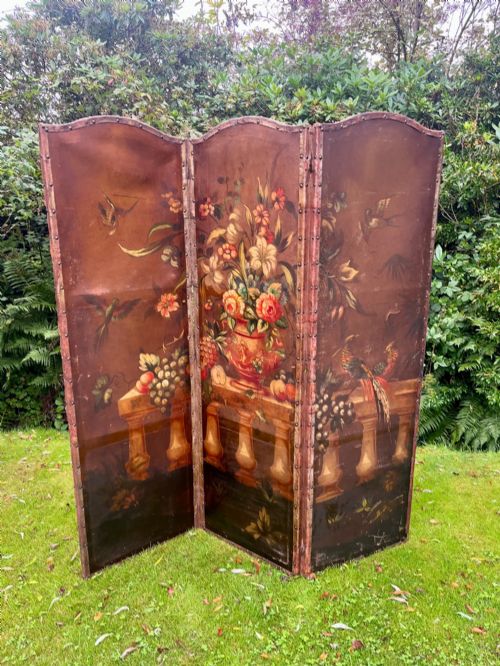
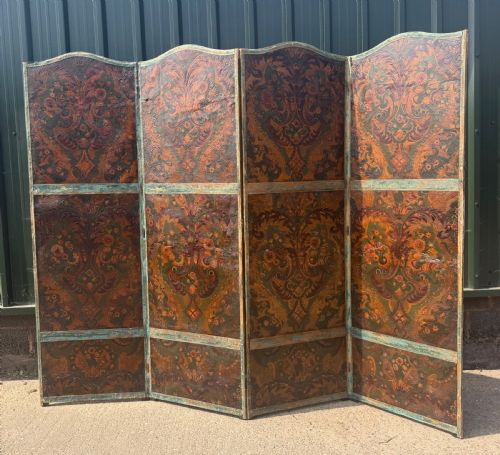
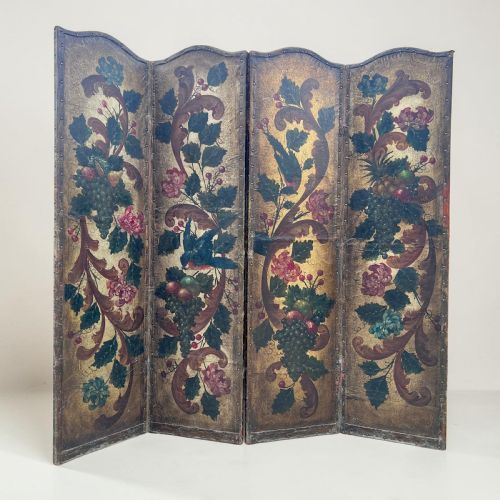
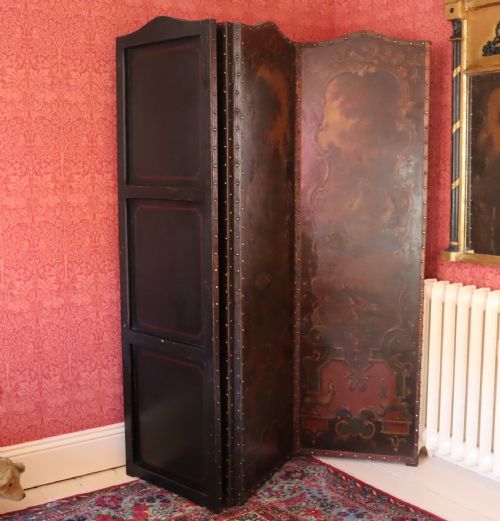


Painted Leather Divider
A painted leather divider transforms a tall interior space with rich oil paint and gold leaf over supple hide.
Painted Leather Divider
A painted leather divider is a folding screen designed to separate rooms or create intimate areas within large chambers. Buyers exploring this phrase encounter grand four-fold panels alongside modest three-fold examples originating from the eighteenth and nineteenth centuries.
The prevalent forms on this page include French, Dutch, and Spanish designs utilising traditional canvas and timber supports. Makers drew upon Continental Baroque, Chinoiserie, and Victorian Rococo Revival styles to decorate each folding screen.
These antique pieces range from mid-eighteenth-century Cordoban works to late-nineteenth-century country-house screens. Each folding screen provides a substantial physical barrier while displaying rich polychrome decoration and gilt embossed details.
Materials and construction methods
Artisans constructed these screens using heavy leather or canvas stretched over timber frames, securing the folds with brass hardware. The foundational hide often received intricate gilt embossing before receiving layers of oil paint.
Painters applied rich polychrome pigments and gold leaf to create elaborate figurative and floral motifs, notably in Chinoiserie and Continental Baroque designs. The backing panels typically utilised plain timber or supplementary canvas to maintain structural rigidity across multiple folds.
Listings feature items from the eighteenth and nineteenth centuries, including specific years like 1750, 1860, 1890, and 1900.
Qualities that separate the finest examples
The distinction between ordinary and exceptional screens rests upon the depth of the gilt embossing and the fidelity of the hand-painted artistry. Superior examples display crisp polychrome details and rich gold leaf that retain their brilliance across every fold.
Construction integrity also defines quality, evident in how smoothly the panels articulate and how securely the leather adheres to the underlying timber frame. Finer pieces demonstrate superior control in oil paint and greater complexity in their stylistic motifs.
The Painted Leather Divider Glossary
- Cordoban leather
- Heavy hide originating from Spain, traditionally stamped, gilt embossed, and painted for luxurious wall hangings and screens. This material forms the basis of some of the earliest and most opulent folding panels.
- Polychrome
- Decoration executed in multiple colours, frequently seen on nineteenth-century canvas and leather screens. Artisans utilised varied pigments to create vibrant floral or pictorial compositions.
- Gilt embossed
- A technique involving raised decorative patterns stamped into leather and highlighted with gold leaf. This method adds tactile depth and reflective brilliance to the surface of the divider.
Painted Leather Divider: Frequently Asked Questions
How do I use a leather divider at home?
These folding screens function to segment large rooms, create private dressing areas, or serve as striking visual backdrops against plain walls.
Position the panels at gentle angles to ensure stability while showcasing the painted and gilt leather surface fully.
How many folds do these screens usually have?
Most examples featured in the listings comprise three or four distinct panels hinged together to form a flexible barrier.
Four-fold configurations provide greater width and are frequently found in larger nineteenth-century country-house formats.
What periods do these painted screens come from?
The inventory spans from the eighteenth century, including mid-eighteenth-century Dutch and Spanish pieces, through to the Victorian era and late nineteenth century.
Earlier pieces often showcase Cordoban work or Chinoiserie motifs, while later examples embrace Victorian Rococo Revival styles.
Are these screens made of leather or canvas?
Many examples utilise traditional leather hide, sometimes combined with canvas supports stretched over timber frames.
Both materials received oil paint and gold leaf decoration, though genuine leather screens frequently feature heavy gilt embossing.