

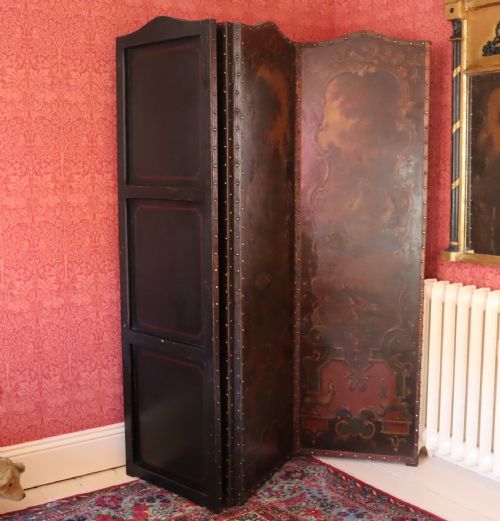


Brown Painted Folding Screen
A brown painted folding screen divides a room with hand-painted panels of leather, canvas, or wood.
Brown Painted Folding Screen
When you search for a brown painted folding screen, you are looking at room dividers and decorative panels spanning several centuries. These pieces appear in forms ranging from three-fold walnut frames to large four-fold canvas and leather partitions.
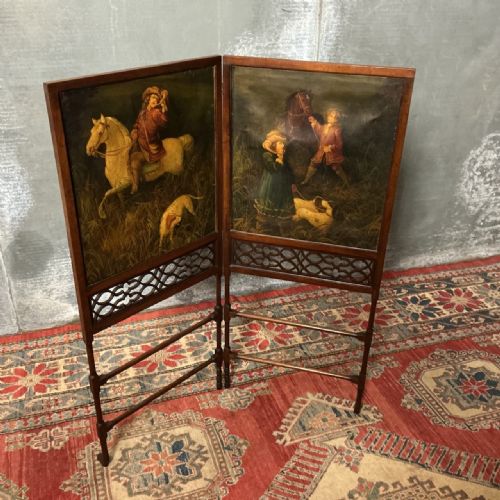
The versions most likely to meet you on this page include 19th-century painted examples, Edwardian mahogany sets with oil paintings, and earlier Continental styles. Makers utilised wood, timber, brass, and gold leaf alongside oil paint to construct these functional barriers.
How they were made
Craftsmen built the framework from timber and mahogany, frequently incorporating brass hinges to join multiple folds together. Panels consist of stretched canvas, leather, or wood ready to receive decoration.
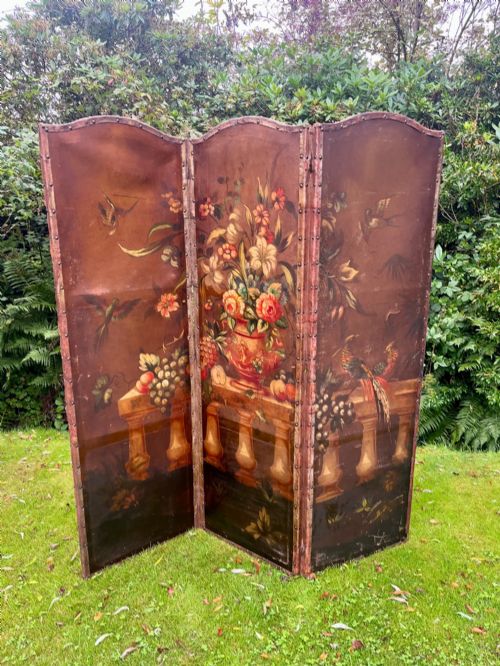
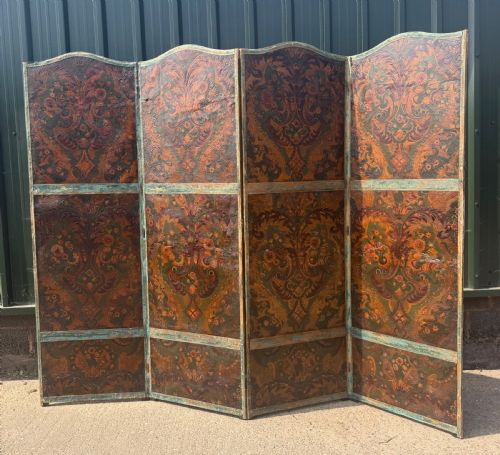
Artisans applied oil paint, polychrome decoration, and gold leaf to create pastoral scenes, Chinoiserie motifs, and Dutch tooled leather effects. Some examples also integrate fretwork alongside the painted imagery.
Some screens feature pastoral scenes painted so quietly they nearly let sheep wander across your floorboards.
What varies in quality
The standard of the hand-painted panels separates simpler items from superior works, particularly where artists rendered detailed pastoral scenes or intricate Chinoiserie. Rich gilding and embossing on leather elevate the finish of older pieces.
The underlying construction of the frame, whether solid walnut, mahogany, or carved fretwork, dictates the structural integrity of each multi-fold divider. Materials like Cordoban leather and fine oil paint indicate more ambitious manufacturing origins.
The Brown Painted Folding Screen Glossary
- Chinoiserie
- European interpretation of Chinese and East Asian artistic traditions, frequently seen in painted panels and screens. This style gained popularity across various centuries.
- Modesty screen
- A small folding screen historically used in interiors to shield occupants from drafts or conceal specific areas. These pieces often feature painted panels.
- Fretwork
- Ornamental design created by cutting patterns through wood. It appears on the frames of certain Edwardian and later screens.
Brown Painted Folding Screen: Frequently Asked Questions
How were folding screens used?
These screens divided large rooms, created private spaces, and blocked draughts near doors or fireplaces. They functioned as both architectural dividers and decorative artworks.
Historically, homeowners moved them around rooms to alter the proportions of a space or to hide utilitarian corners. Their portability made them versatile interior fittings.
What materials are common?
Makers constructed the panels from leather, canvas, and wood, supported by timber frames and brass hardware. Oil paint and gold leaf provided the decorative surface.
Some examples incorporate specialist finishes like Dutch tooled leather or intricate fretwork. The combination of materials often reflects the period of manufacture.
How do I date a screen?
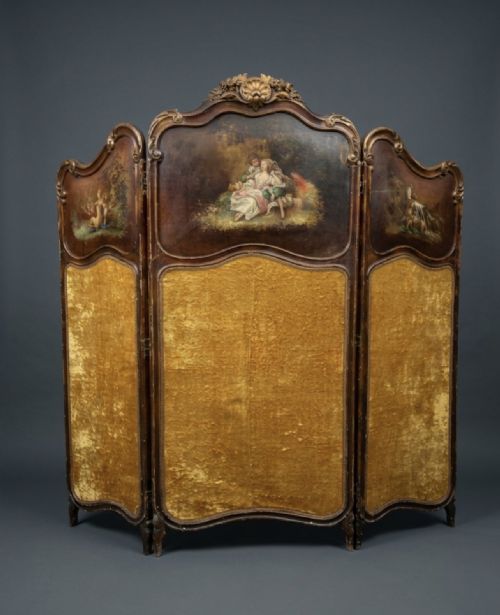
Dating relies on stylistic clues such as French Rococo Revival motifs, Edwardian framing, or 18th-century Spanish leather techniques. The choice of wood and paint application also points to specific eras.
Examining the hinges, stretcher construction, and wear patterns helps confirm the period. Earlier pieces frequently display hand-tooled details and specific regional painting styles.
Where should I place one?
Folding screens suit living rooms, bedrooms, and hallways where they can stand fully extended or partially folded against a wall. They introduce texture and colour to empty expanses.
Ensure the panels receive stable environmental conditions to protect painted leather, canvas, and wood from excessive light or moisture changes.