


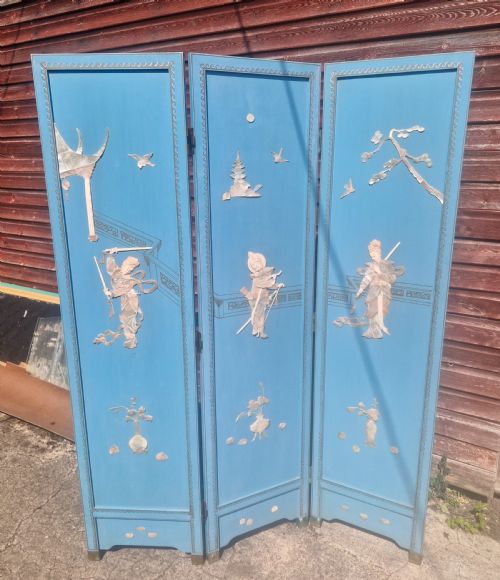


Antique Partition Screen
An antique partition screen divides a room, drafts or sightlines with folding panels of wood, lacquer, leather or silk.
Antique Partition Screen
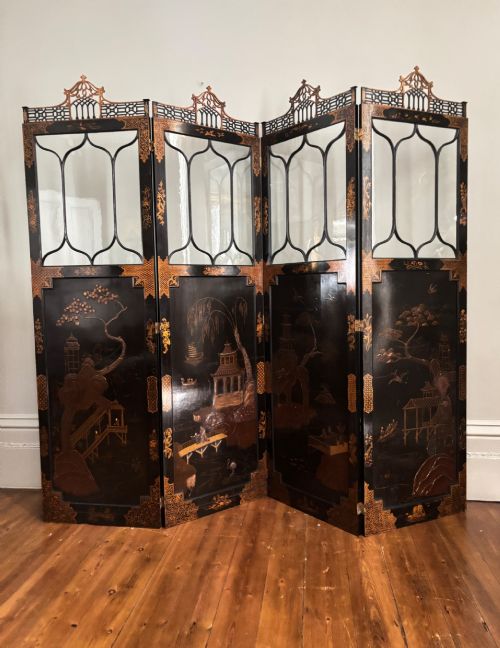
An antique partition screen most commonly appears as a folding room divider with multiple hinged panels, spanning Victorian, Edwardian and earlier periods. Pieces range from large four-fold or eight-fold Chinese lacquer screens to English mahogany frames and French giltwood vanity screens.
The category encompasses specialised forms such as tabletop screens, architectural entrance vestibules and low fire screens. Materials span from hardwood and oak to brass, glass and giltwood, reflecting diverse domestic and decorative functions.
Materials and construction methods
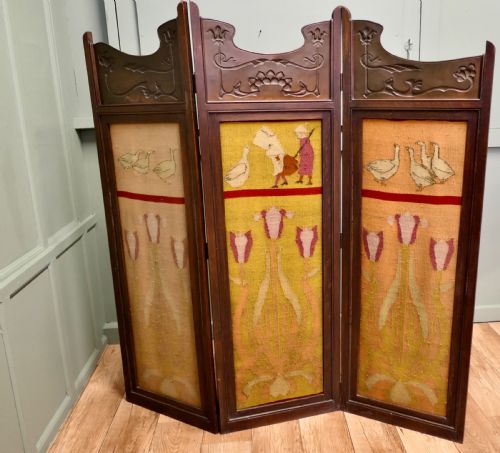
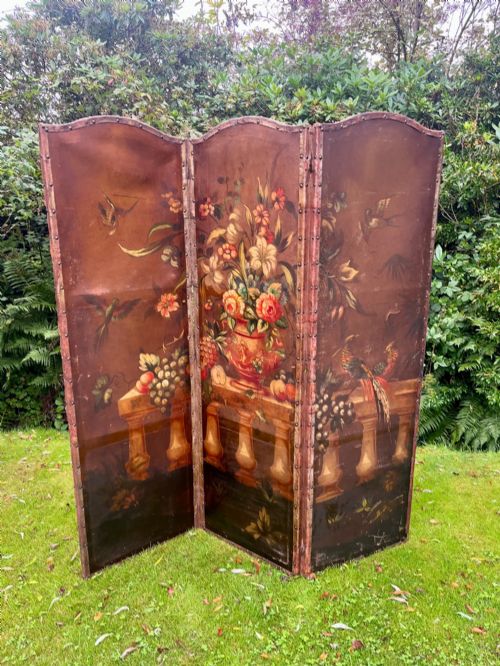
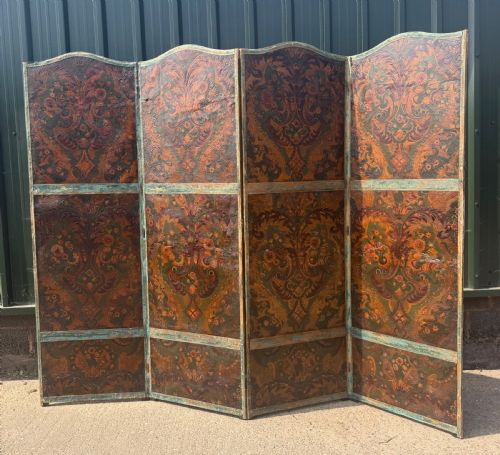
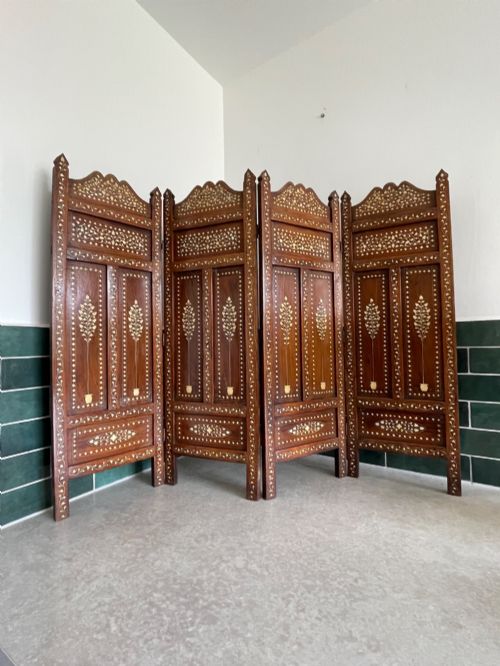
Makers constructed frames from timbers such as mahogany, oak, padauk and walnut, joining them with hinges to allow multi-directional folding. Panels were filled with inserted materials including hand-painted leather, needlepoint, silk, canvas and glass.
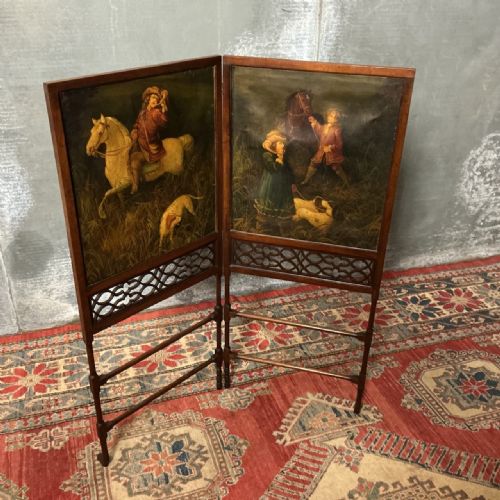
Surface decoration involved specialised techniques such as Chinoiserie lacquer, Coromandel incision, polychrome canvas painting, scrap work decoupage and oil painting applied directly to the panels.
Listings feature 19th-century, Edwardian, Victorian, and 1920s periods using wood, brass, lacquer, glass, mahogany, hardwood, giltwood, and leather.
Distinctions in craftsmanship and finish
Quality rests in the depth of hand-carving on hardwood frames, the complexity of lacquer layers and the execution of painted or embroidered panels. Superior examples display refined joinery and substantial hardware that support heavy multi-fold panels without sagging.
The integrity of surface decoration distinguishes workshop output, where hand-painted Chinoiserie, embossed Cordobahan leather or detailed needlework elevate a standard divider into a piece of fine art.
Paul Sormani
The Antique Partition Screen Glossary
- Chinoiserie
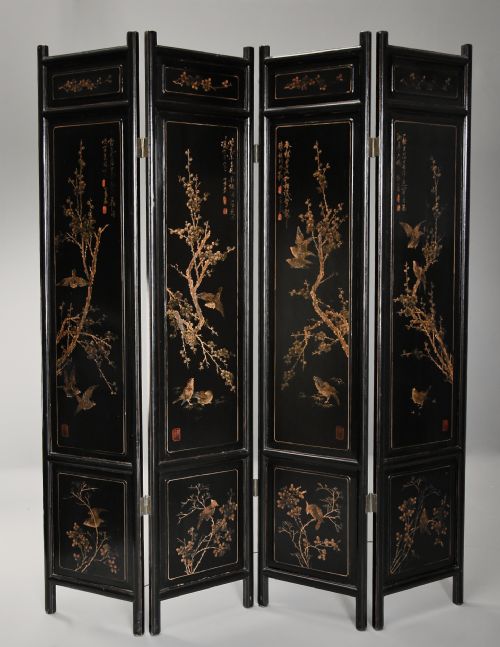
- European artistic interpretation of Chinese and East Asian decorative styles, commonly seen in lacquered screens with gilt motifs.
- Coromandel
- Chinese carved lacquer technique where designs are incised into a dark ground and filled with colours.
- Mashrabiya
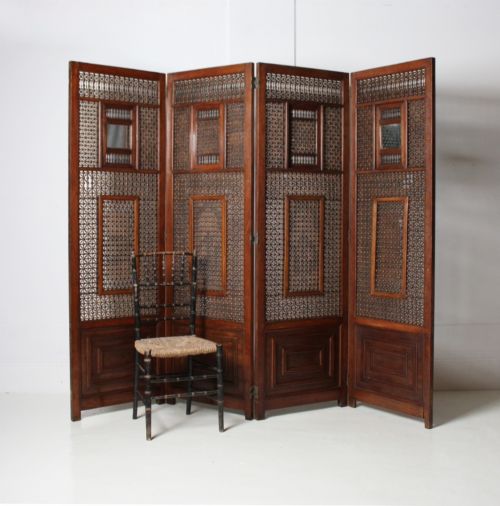
- Middle Eastern or Anglo-Indian architectural wooden lattice screen work formed of interconnected turned pieces.
- Scrap work
- Victorian decorative technique of applying numerous paper scraps, engravings or prints onto a canvas or wood panel before varnishing.
- Bergere
- French upholstered chair style featuring cane panels, occasionally referenced in screen panels utilising woven cane.
Antique Partition Screen: Frequently Asked Questions
How do I use a partition screen at home?
These screens divide large living areas, shield dressing spaces or mask doorways to alter sightlines within a room.
They stand freely on hinges and fold flat against walls when not required for spatial division.
What materials were used for these screens?
Frames utilise hardwoods like mahogany, oak, walnut and padauk, often paired with brass hinges and structural glass.
Panels incorporate decorative elements such as painted leather, silk, canvas, needlepoint and carved lacquer.
How do I distinguish Victorian screens from Edwardian ones?
Victorian examples often feature heavy scrap work, dark carved wood and elaborate fabric tapestries or needlepoint panels.
Edwardian versions typically show lighter mahogany frames, inlay work and refined oil paintings or simpler fabric inserts.
Are Chinese lacquered screens different from European ones?
Chinese screens utilise traditional black lacquer, Coromandel incision and hardwood frames depicting figures, dragons or landscapes.
European makers produced Chinoiserie interpretations, painted canvas or leather panels referencing Eastern styles within revival frameworks.