



Antique Dressing Screen
An antique dressing screen divides a room with folding panels, offering privacy and decorative impact.
Antique Dressing Screen
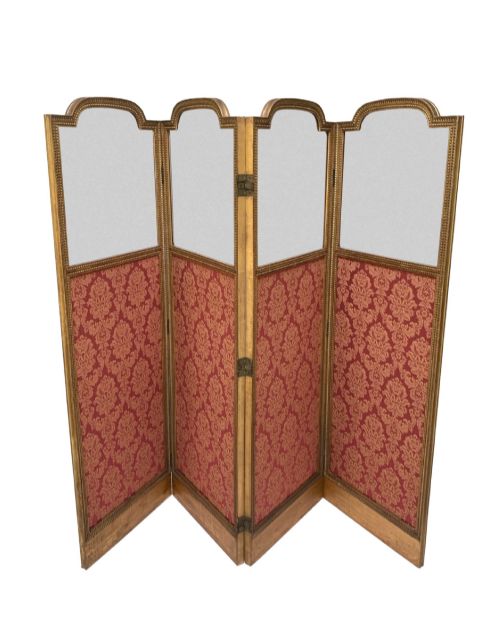
When you search for an antique dressing screen, you are looking at folding panels designed to divide interior spaces and provide privacy. These pieces appear in configurations ranging from three folds up to eight folds, functioning as room dividers, vanity screens or photographic props.
The pieces on this page span the Victorian and Edwardian eras, alongside Regency and mid-century examples. You will encounter straightforward timber frames, elaborate giltwood creations, and decorated folding panels bearing lacquer or painted surfaces.
Originating as practical barriers against draughts and prying eyes, these screens evolved into significant decorative furnishings. Whether configured as a compact triple panel for a vanity room or a tall four-fold canvas screen, each piece shapes the proportions and atmosphere of a room.
How they were made
Makers constructed the primary frames of these screens using solid woods such as mahogany, oak, pine, and carved giltwood. These structural elements were joined into hinged multi-fold panels designed to pivot smoothly.
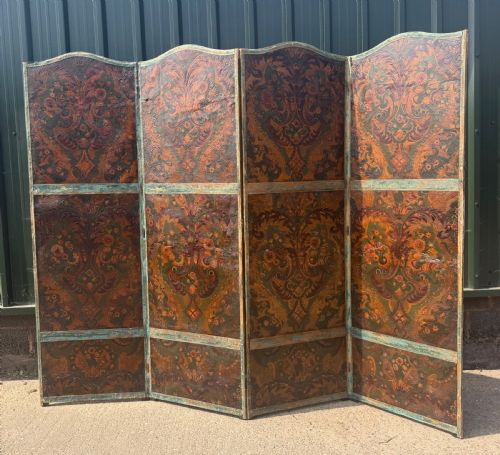
Surface decoration defined much of the craft, utilising black lacquer, papier-mâché, embossed leather, and polychrome painted canvas. Some examples incorporate textiles like silk cotton, glass mirrors, and intricate mother-of-pearl inlays.
Finishing techniques ranged from delicate hand-painted classical garden scenes and oil portraits to decoupage and tooled leather effects. These diverse methods ensured that each screen served as both a physical barrier and a substantial visual feature.
Materials recorded in current and archived pieces include brass, glass, lacquer, mahogany, mother-of-pearl, textile, and giltwood.
What varies in quality
The distinction between standard examples and top quality pieces rests primarily on the execution of the surface decoration and the richness of the materials. Fine items feature detailed hand painting, intricate black lacquer work, or skilled carving in giltwood rather than simple printed textiles or plain timber.
Construction robustness also sets pieces apart, particularly the integrity of the hinges and the stability of multi-fold frames like eight-fold or four-fold structures. Substantial timber framing and well-preserved canvas, leather, or paper-mâché panels maintain their alignment and visual weight over decades of folding.
Provenance and stylistic coherence dictate the upper tier of the range, where historical interpretations such as Chinoiserie or French Rococo Revival are executed with artistic conviction. The depth of the decorative scheme, whether depicting a classical garden scene or Dutch tooled leather effects, determines the lasting presence of the screen.
The Antique Dressing Screen Glossary
- Chinoiserie
- European decorative style reflecting Chinese artistic influences, frequently seen on black lacquer screens featuring gilt motifs and figures. This style gained immense popularity during the Victorian period.
- Giltwood
- Timber carved and coated with a thin layer of gold leaf or gold paint, providing a bright and opulent surface. It appears frequently on French Revival and Victorian frames.
- Decoupage
- The art of decorating a surface by applying paper cutouts and sealing them with layers of varnish or lacquer. This technique creates dense, layered pictorial scenes on nineteenth-century panels.
- Mahogany
- A durable, reddish-brown tropical hardwood prized for its stable grain and suitability for fine joinery. It forms the structural frame of many Edwardian and Regency pieces.
- Polychrome
- Decorated in multiple colours, typically applied by hand to canvas, leather, or wood surfaces. This treatment brings pictorial depth to country-house and garden scenes.
Antique Dressing Screen: Frequently Asked Questions
How were dressing screens used historically?
These screens provided instant privacy for dressing, washing, or changing clothes in larger bedchambers before fitted wardrobes and en-suites became common. They also served to block draughts from doors and windows.
In domestic settings, they created intimate seating areas within expansive rooms and concealed mundane corners. Their portable nature allowed owners to reconfigure room layouts effortlessly.
What is the difference between a room divider and a dressing screen?
While both terms describe multi-fold panels, dressing screens historically associated more closely with personal grooming spaces and bedrooms. Room dividers often imply larger architectural barriers intended for general living areas.
In practice, makers and dealers used the designations interchangeably, as the underlying construction of hinged panels remained identical across both applications.
How do I distinguish between Victorian and Edwardian screens?
Victorian examples often favour heavier ornamentation, darker finishes like black lacquer, and rich fabrics such as embossed leather or heavy giltwood. They lean towards dramatic styles like Gothic arches or elaborate Chinoiserie.
Edwardian pieces frequently display lighter mahogany frames with subtle inlay work and refined, balanced proportions. The decorative approach tends towards airier painted surfaces and simpler panel arrangements.
Can I use an antique screen to divide a modern room?
These screens function effectively in contemporary interiors to zone open-plan spaces, create home office corners, or soften bare walls. Their folding panels adapt easily to different spatial requirements.
Ensure the hinges and panels remain stable, and position the screen where it will not suffer from heavy foot traffic or unstable floor surfaces.