


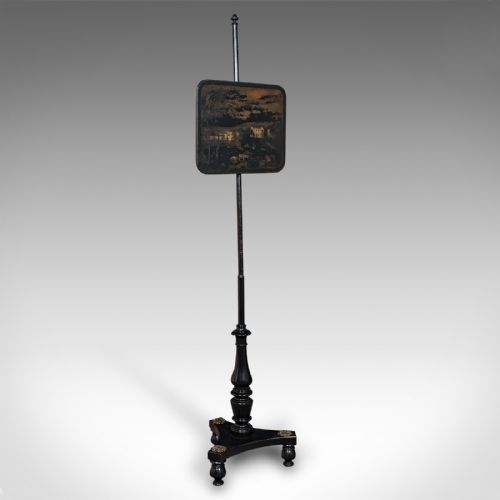
Black Lacquer Screen
A black lacquer screen brings depth and intricate detail to a room, functioning as both a dramatic room divider and a striking decorative focal point.
Black Lacquer Screen
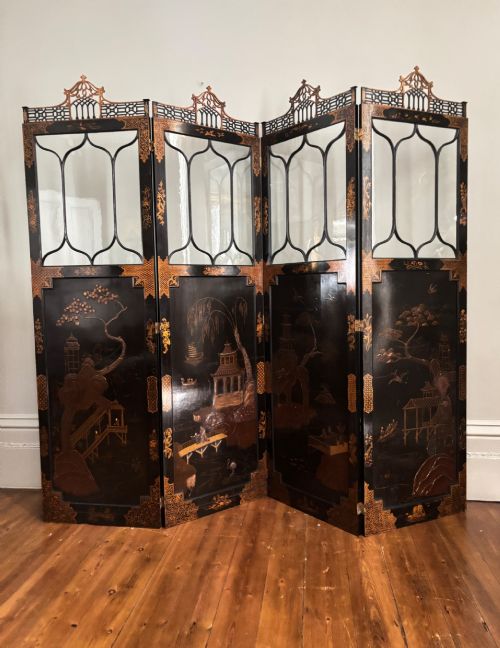
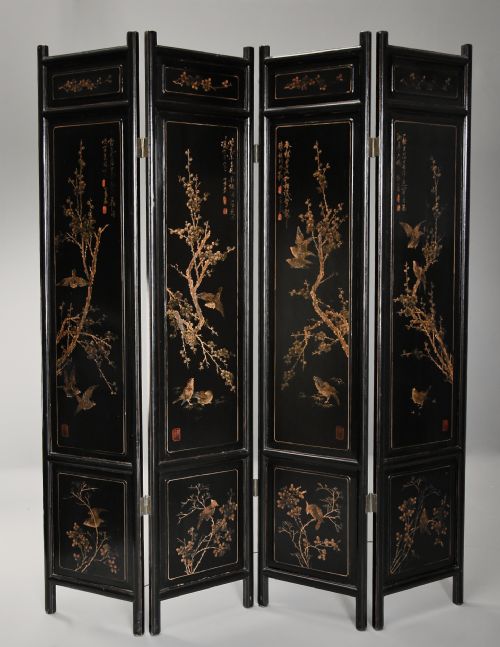
A black lacquer screen serves as a functional room divider or a decorative wall piece, shaped by traditions ranging from Chinese Coromandel work to Japanese Meiji craftsmanship and Victorian Chinoiserie. These pieces typically present as multi-fold folding panels, freestanding dressing screens, wall plaques, or compact fireside pole screens.
The versions most commonly encountered on this page date from the nineteenth century and the early twentieth century, spanning Regency, Victorian, and Chinese Qing or Republic eras. Large multi-fold panels dominate the selection, offering substantial surface area covered in deep dark finishes and elaborate painted or inlaid ornamentation.
Materials and construction
The foundation relies primarily on wood, hardwood, and ebonised wood, occasionally utilising papier mâché for lighter fireside pieces and pole screens. Artisans applied layers of lacquer to build a smooth, dark base before introducing decorative elements.
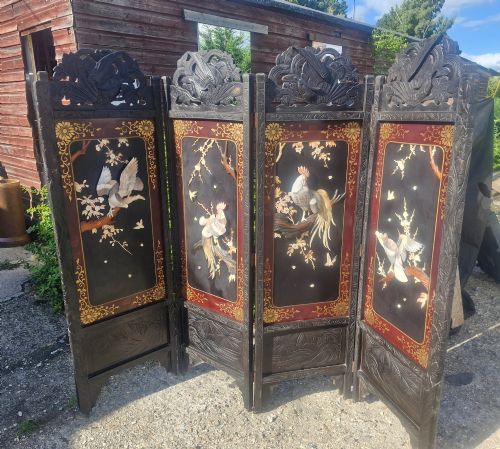
Surface enrichment involved gold leaf, gilt, and paint, frequently augmented by carved bone, mother-of-pearl, abalone inlay, and hardstone mounts. These diverse materials created raised textures and shimmering contrasts against the dark background.
The archive and active listings span styles from Regency Chinoiserie and Victorian Papier Mâché to Chinese Qing and Japanese Meiji.
Assessing quality
Quality rests in the depth of the lacquer finish and the precision of the hand-applied details, such as the registration of carved bone figures and the delicacy of painted foliage. Superior examples display crisp inlay work and harmonious composition across every panel.
The structural integrity of the hinges and the weight of the timber frame indicate the standard of manufacture. Finer pieces maintain alignment across multiple folds and demonstrate careful attention to the reverse sides and mounting details.
The Black Lacquer Screen Glossary
- Coromandel
- A type of Chinese incised lacquer ware where designs are cut into the dark ground and filled with colours or left exposed. This technique produces a rich, textured surface seen on multi-fold panels.
- Chinoiserie
- European artistic style reflecting Chinese motifs and decorative techniques, popular during the Victorian and Regency periods. It translates Asian aesthetics into Western furniture forms like dressing screens and pole screens.
- Pole screen
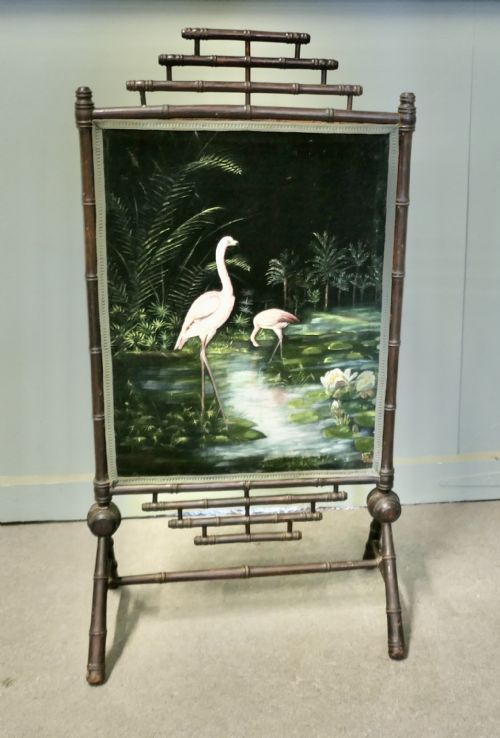
- A vertical screen mounted on a tall wooden stand with an adjustable height mechanism, historically placed near a fireplace to shield the face from radiant heat. Victorian examples often feature painted papier mâché plaques.
- Meiji
- Pertaining to the period of Japanese history spanning from eighteen sixty-eight to nineteen twelve, noted for intricate craftsmanship. Pieces from this era frequently incorporate detailed bone inlay and fine lacquer work.
Black Lacquer Screen: Frequently Asked Questions
How do I use a folding screen in a modern room?
A folding screen works effectively to zone open-plan spaces, create privacy in a corner, or stand flat against a wall as a large piece of art. Multi-fold panels can soften hard architectural angles and introduce vertical contrast to neutral walls.
Positioning the screen away from direct, harsh sunlight preserves the dark lacquer finish and prevents the inlaid bone or mother-of-pearl from drying out over time.
What is the difference between Chinese and Japanese screens here?
Chinese screens in this selection often feature heavy incised Coromandel work, hardstone mounts, or elaborate multi-fold room dividers depicting traditional landscapes and figures. The decorative scheme tends to rely on deep carved elements and rich gold foil accents.
Japanese pieces from the Meiji era frequently showcase delicate painted motifs alongside deep carved bone figures and textile panels. The overall aesthetic leans towards refined natural scenes involving birds, foliage, and subtle gilt detailing.
How should I clean and maintain black lacquer?
Maintenance requires only a soft, dry microfibre cloth to gently remove dust from the surface and crevices of the panels. Avoid all liquid cleaners, polishes, and chemical sprays, as moisture and solvents damage traditional lacquer.
Keeping the screen away from intense heat sources and rapid temperature fluctuations prevents the wooden core from warping and protects the delicate inlay work from loosening.
Are pole screens still functional today?
Pole screens are primarily collected and displayed for their decorative value rather than their original heat-shielding purpose. The adjustable height mechanism allows the decorative plaque to be positioned at eye level.
These smaller pieces fit well on side tables or in narrow spaces where a full-scale room divider would overwhelm the proportions of the room.