

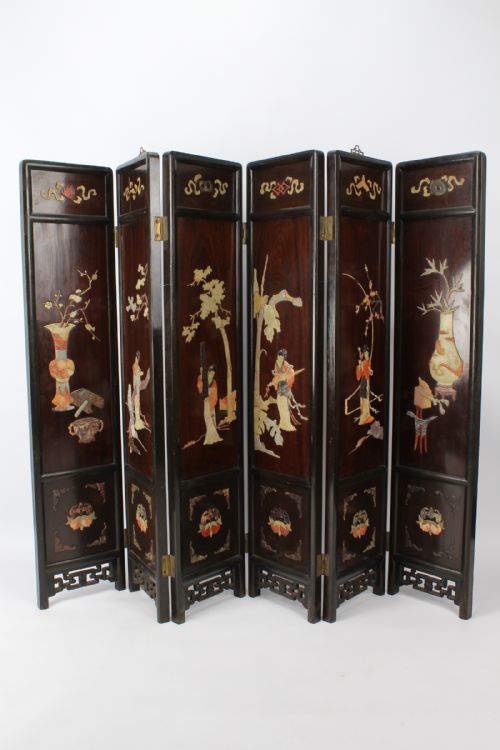


Lacquered Room Divider
A lacquered room divider brings deep, lustrous surfaces and architectural presence to a space, offering both division and rich decoration.
Lacquered Room Divider
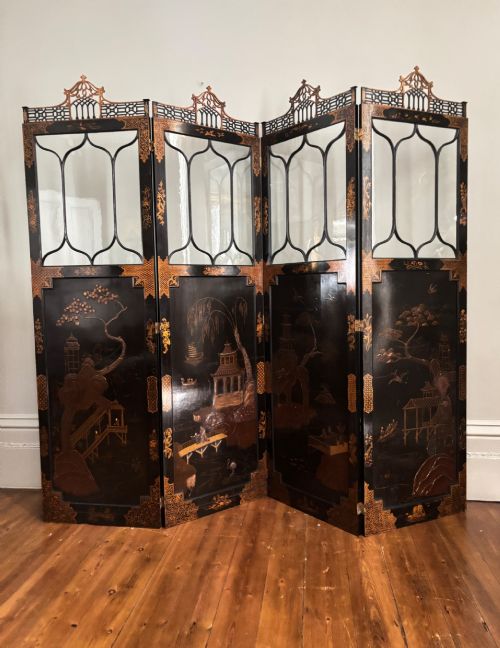
When you search for a lacquered room divider, you are looking at folding screens constructed from wood or hardwood and finished with layered lacquer, often incorporating multiple folds or panels. These pieces divide a floor plan or anchor a wall, originating from Chinese, Japanese, Burmese, and European workshops across periods from the eighteenth century to the mid-twentieth century.
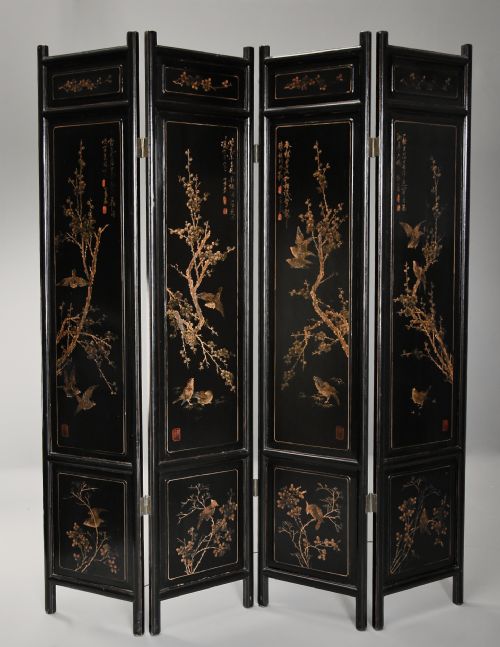
You are most likely to meet black lacquered or decorated fourfold and eightfold examples rendered in Chinoiserie, Qing Dynasty, and Japanese Meiji styles. Forms range from freestanding room dividers and dressing screens down to smaller folding fire screens and wall art panels.
How they were made
These screens rely on wooden or hardwood frames built with multiple hinged panels to support heavy surface treatments. Artisans applied successive coats of lacquer to build a deep, durable ground, which was then painted, gilded with gold leaf, or carved.
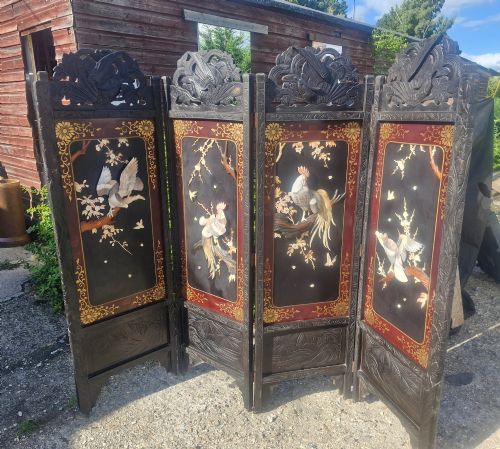
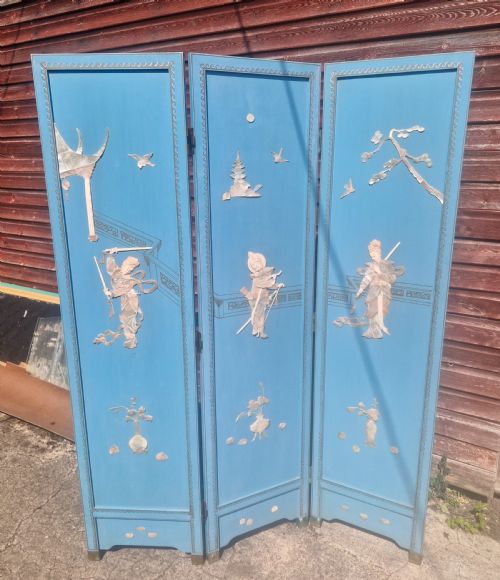
Decoration often involved intricate detailing such as deep carved bone figures, hardstone inlays, and painted motifs. Brass hardware frequently secured the folding leaves together, allowing the panels to articulate smoothly.
Listings feature periods spanning from the eighteenth century through the Victorian era and the early twentieth century to the nineteen-fifties.
What varies in quality
The distinction between ordinary and exceptional pieces lies in the depth of the lacquer surface and the crispness of the carving or painting. High-range examples display dense, multi-layered finishes that catch the light evenly across every fold.
Artisanal skill shows in the integration of applied elements like hardstone and bone, where the materials sit flush and secure within the lacquer ground. The weight of the timber and the precision of the panel joinery also separate mass-produced decorative items from masterwork screens.
The Lacquered Room Divider Glossary
- Coromandel
- A type of Chinese incised lacquer where designs are carved into a dark ground and filled with colours or gold leaf. This technique creates a rich, textured surface across multiple panels.
- Chinoiserie
- European decorative style reflecting Chinese artistic influences, popular in furniture and screens from the eighteenth century onwards. It employs whimsical landscapes, figures, and pavilions.
- Meiji
- A period in Japanese history spanning from 1868 to 1912, known for highly detailed craftsmanship in lacquer, metalwork, and inlay. Screens from this era often feature naturalistic motifs and deep carving.
- Hardstone
- Minerals such as jade, agate, or soapstone used for sculptural inlay work on lacquer panels. These stones add tactile relief and contrasting colour to the dark background.
- Papier mâché
- A composite material made from paper pulp or layers of paper bound with adhesive, moulded and lacquered. It provided a lightweight alternative to solid timber for Victorian dressing screens.
Lacquered Room Divider: Frequently Asked Questions
How do I use a room divider?
These screens stand independently to zone larger rooms, create dressing areas, or soften bare corners. They fold easily to adjust the width and angle of the display.
Position them away from direct heat sources and strong sunlight to protect the lacquer finish and wooden structure from warping.
How many panels do they have?
The pieces range from compact threefold and fourfold screens up to grand sixfold and eightfold examples. The number of panels dictates the overall width and the scale of the composition.
Larger multi-fold screens require adequate floor space to stand securely in a zigzag configuration.
What is the difference between Chinese and Japanese styles?
Chinese screens often feature deep incised coromandel work or applied hardstone and bone figures on dark lacquer grounds. Japanese examples tend to focus on painted landscapes, textiles, and refined surface decoration.
Both traditions utilise folding wooden panels but express distinct regional aesthetics and carving techniques.
How do I clean lacquered furniture?
Dust the panels gently with a soft, dry cloth to prevent scratching the polished surface. Avoid using chemical sprays, abrasive cloths, or excess water on the lacquer and gilding.
Maintain a stable indoor humidity level to preserve the wood and prevent the lacquer from cracking over time.