


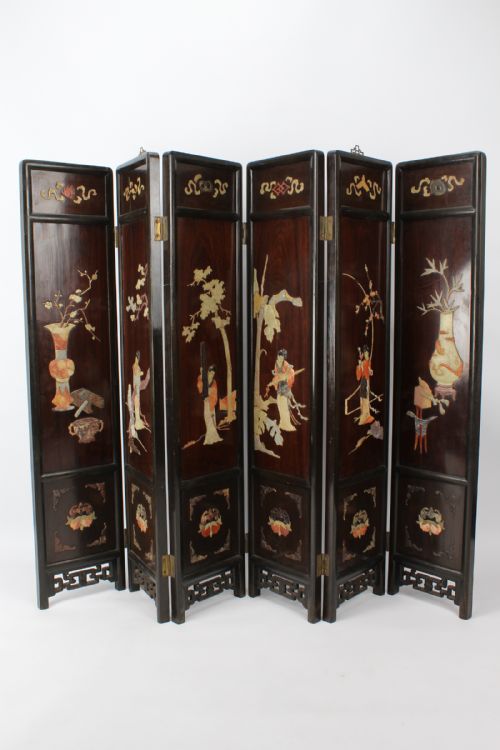


Inlaid Room Divider
An inlaid room divider brings segmented grace to an interior, offering folding and portable partitions crafted with intricate surface decoration.
Inlaid Room Divider
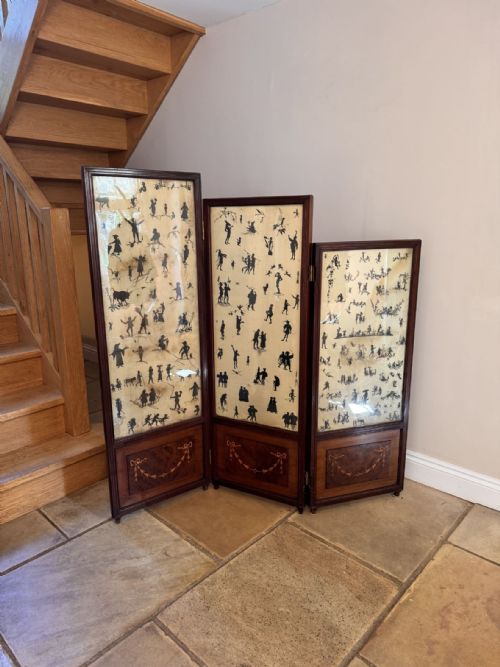
An inlaid room divider takes the form of folding screens, dressing screens, and table screens originating from periods such as the Edwardian era, the nineteenth century, and the early decades of the twentieth century.
These pieces function to divide spaces or decorate surfaces, appearing in formats ranging from three-fold and four-fold partitions to smaller table screens and fire screens.
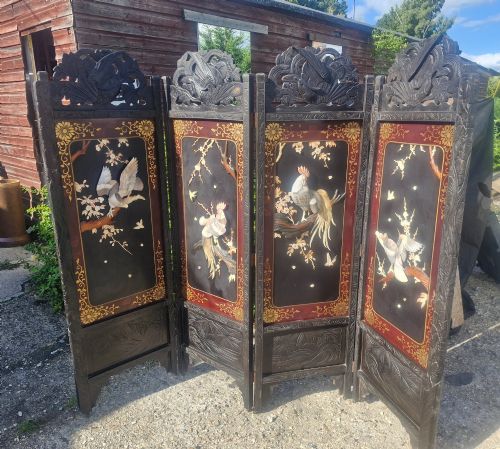
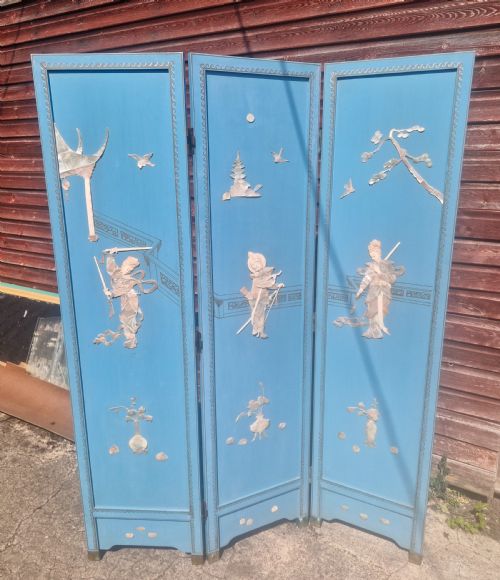
The aesthetic draws heavily from Chinoiserie, Qing Dynasty, Japanese Meiji, and Anglo-Indian traditions, alongside Edwardian and Victorian interpretations.
How they were made
The construction relies on woods and hardwoods such as mahogany and rosewood, as well as black lacquer and papier mâché.
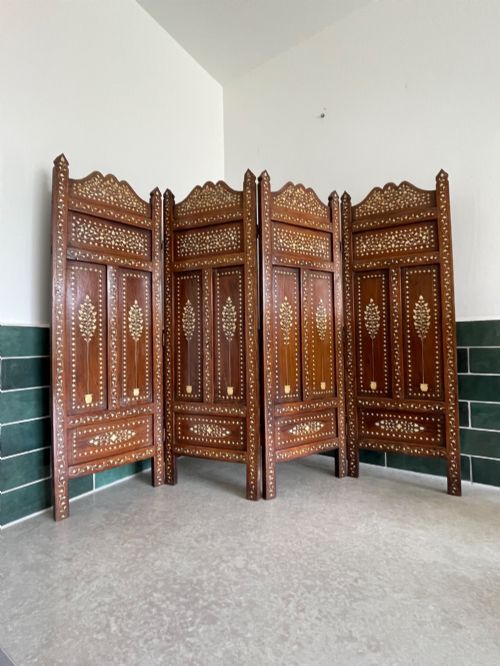
Makers embellished these surfaces through intricate inlay techniques utilising bone, mother-of-pearl, and hardstone, alongside deep carving and hand-painting.
Inlaid Room Divider Retail Price Guide 2026
Typical asking prices for inlaid room divider among the pieces listed under this phrase on Sellingantiques today, from the lower quarter to the upper quarter. They describe what is for sale here now, not the wider market.
Materials recorded across the selection include rosewood, mahogany, brass, lacquer, bone, and mother-of-pearl.
What varies in quality
Quality rests upon the depth and precision of the carving, alongside the neatness and complexity of the bone, mother-of-pearl, or hardstone inlay.
The integrity of the lacquer finish and the hand-painted detailing determine the visual strength of the piece across multiple panels.
The Inlaid Room Divider Glossary
- Chinoiserie
- European artistic style reflecting Chinese motifs and techniques. It dominated decorative arts during various periods.
- Meiji Period
- Era of Japanese history spanning from 1868 to 1912. It produced highly detailed export lacquerware and folding screens.
- Hardstone
- Term for semi-precious stones used in decorative inlays. They add colourful relief to lacquered panels.
- Hoshiarpur
- Town in India renowned for woodwork and intricate inlay. Pieces from here typically feature dense geometric or floral patterns.
Inlaid Room Divider: Frequently Asked Questions
What is an inlaid room divider?
An inlaid room divider is a folding or tabletop screen decorated with materials set into the surface. They serve to partition spaces or act as decorative focal points.
Examples span various global traditions, including Chinese Chinoiserie, Japanese export pieces, and Anglo-Indian woodworking.
How were these screens used?
Full-size folding screens were utilised to divide rooms, provide privacy in dressing areas, or shield from hearth drafts as fire screens.
Smaller table screens were placed on desks or tables purely for decorative contemplation and to display craftsmanship.
What materials appear in the inlay work?
Inlay materials include carved bone, iridescent mother-of-pearl, and various hardstones mounted onto wooden or lacquered foundations.
These elements create high-relief imagery against dark lacquer or polished hardwood backgrounds.
How do I distinguish different regional styles?
Chinese and Japanese examples frequently utilise black lacquer with bone or hardstone figures, reflecting Chinoiserie and Meiji aesthetics.
Anglo-Indian pieces, such as those from Hoshiarpur, tend to feature dense wood carving and distinct geometric inlay patterns.