


Black Chinoiserie Screen
A black chinoiserie screen brings dark lacquer and gilded detail into a room, offering both structure and decoration.
Black Chinoiserie Screen
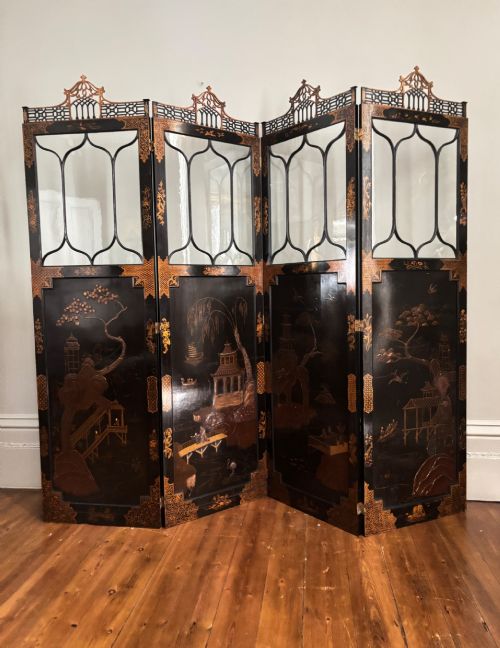
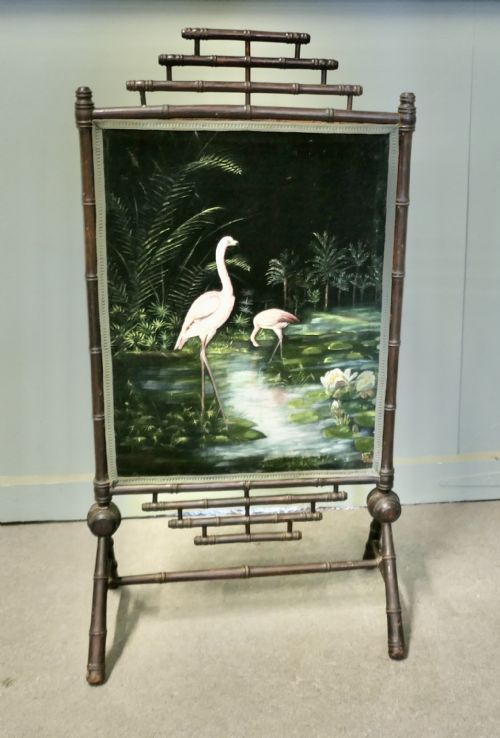
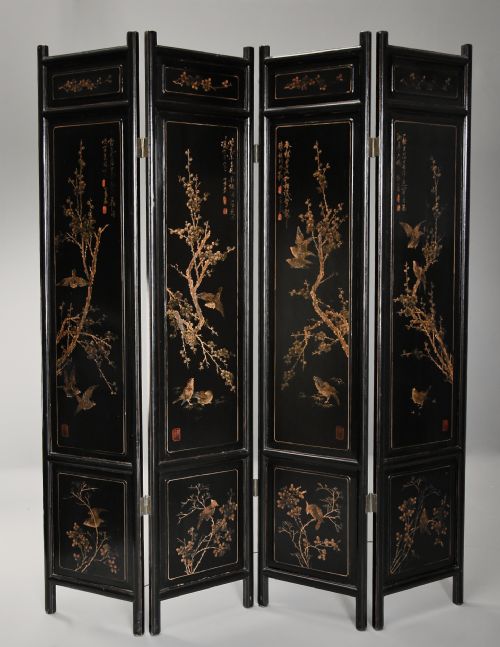
A black chinoiserie screen brings together dark lacquered wood and eastern-inspired painted decoration to divide a space or adorn a wall. The pieces listed here span the nineteenth century, the regency period, and the early twentieth century, taking the form of folding screens, room dividers, dressing screens, and smaller fire screens.
Most examples you meet on this page are four to eight fold folding screens or dressing screens built from lacquered wood, with several pieces showing the influence of Chinese Chippendale or Qing dynasty design. You also find wall art panels and pole screens alongside the larger freestanding room dividers.
The decorative schemes rely on black lacquer combined with gold leaf, oil paint, and occasionally hardstone mounts or glass. These panels function equally well as functional partitions in large rooms or as decorative backdrops in more intimate settings.
How they were made
The foundation of these pieces relies on wood, lacquer, and papier-mâché, shaped into multiple hinged leaves or single decorative panels. Artisans applied layers of black lacquer to build a deep, glossy surface before adding painted scenes.
Detailing often incorporates gold leaf and oil paint to render figures, landscapes, and floral motifs across the dark ground. Some examples include brass hardware for hinges and mounts, alongside hardstone inlays set directly into the lacquer.
The listings on this site feature lacquered wood, brass, glass, and papier-mâché across periods from the Regency era to the 1930s.
What varies in quality
Quality rests in the depth of the lacquer surface and the precision of the painted or inlaid decoration. Superior panels display crisp application of gold leaf and detailed hand-painting that remains sharp across multiple folds.
The substance of the wood frame and the integrity of the hinges dictate the structural success of larger folding screens. Pieces that retain their original hardstone mounts or retain rich coloration in the oil paint command greater visual presence.
The Black Chinoiserie Screen Glossary
- Chinoiserie
- European interpretation of East Asian artistic traditions, popular in furniture and decorative arts. It draws on Chinese and Japanese motifs rendered through western craftsmanship.
- Coromandel
- A type of Chinese incised lacquerware where designs are carved into a dark ground and filled with colours or gold leaf. The technique creates a textured surface across large wooden panels.
- Pole screen
- A small vertical screen mounted on a tall wooden pole with a tripod base, designed to shield a person's face from the heat of an open fireplace.
- Papier-mâché
- A composite material made from paper pulp or layers of paper bound with glue, then moulded and lacquered. It provides a lightweight yet durable base for decorative dressing screens.
- Hardstone
- Semi-precious stones such as jade, agate, or soapstone carved and mounted onto the surface of a lacquered panel. This technique adds relief and varied colour to the black background.
Black Chinoiserie Screen: Frequently Asked Questions
How do I use a folding screen in a modern room?
A large folding screen works well placed against a blank wall to add height and texture, or positioned to create a partition in an open-plan space.
Shorter four to eight fold pieces adapt easily to bedrooms as dressing screens, while smaller panels can be hung as wall art.
What is the difference between a dressing screen and a room divider?
Dressing screens typically consist of taller, hinged panels designed to create a private space for changing clothes in a bedroom.
Room dividers share a similar folding construction but serve to zone larger living areas or act as decorative architectural backdrops.
How do I care for black lacquer surfaces?
Dust the lacquer gently with a soft, dry cloth to prevent scratching the glossy finish.
Keep these pieces away from direct sunlight and sources of extreme heat to protect the wood and prevent the lacquer from cracking.
How can I tell the period of a screen?
Examine the materials used in the construction, such as papier-mâché, brass hardware, and the specific style of the painted motifs.
Nineteenth-century examples often show distinct Regency or Chinese Chippendale influences, while early twentieth-century pieces utilise modified manufacturing techniques and varied panel counts.