



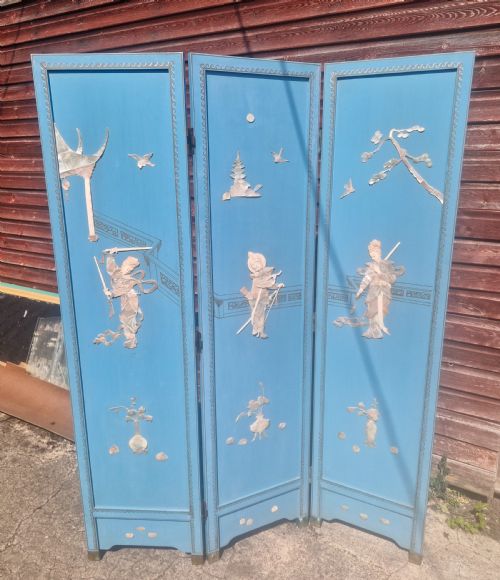


Decorative Floor Divider
A decorative floor divider shapes a room and hides a corner, combining utility with fine craftsmanship across centuries of design.
Decorative Floor Divider
A decorative floor divider splits a large room into smaller spaces or conceals areas, using multiple hinged panels that fold easily when not needed. These pieces take the form of folding screens and room dividers.
The selections here span from the mid-eighteenth century up through the nineteen-fifties, drawing on styles such as French Rococo Revival, Chinoiserie, and Japanese Meiji.
Most examples found on this page consist of three to six panels, often arranged to show painted pastoral scenes, carved figures, or elaborate lacquerwork.
How they were made
Makers constructed these panels using sturdy timbers like hardwood and walnut, applying surface treatments including hand-painted designs, lacquer, and gilt embossing.
Detailing often involved delicate inlay work utilising mother-of-pearl and bone, alongside textile inserts and hardstone mounts secured directly into the wooden frames.
Decorative Floor Divider Retail Price Guide 2026
Typical asking prices for decorative floor divider among the pieces listed under this phrase on Sellingantiques today, from the lower quarter to the upper quarter. They describe what is for sale here now, not the wider market.
Materials across these listings include walnut, hardwood, brass, bone, lacquer, paint, and mother-of-pearl.
What varies in quality
Quality rests in the depth and precision of the carving, the richness of the lacquer finish, and the intricacy of inset materials like bone and mother-of-pearl.
Better examples show careful attention to both sides of the panels, superior joinery on the hinges, and hand-painted artistry that remains crisp and detailed.
The Decorative Floor Divider Glossary
- Folding screen
- A piece of furniture consisting of two or more panels connected by hinges. This design allows the object to be angled or folded flat for storage.
- Chinoiserie
- European decorative art influenced by Chinese and East Asian artistic traditions. It frequently appears in lacquerwork and painted panel scenes.
- Cordoban leather
- Heavy leather that is hand-painted and gilt embossed. It provides a rich, textured surface often used on historical screens.
- Meiji
- A period in Japanese history associated with intricate craftsmanship. Pieces from this era often feature deep carvings and textile panels.
Decorative Floor Divider: Frequently Asked Questions
How do I use a room divider?
Place a divider across a corner to create a private dressing area or position it in a large open space to define a seating zone.
The hinged panels adjust easily to fit the exact angles required for your room layout.
Are these screens heavy?
Weight depends on the materials used, with solid hardwood and leather screens being substantially heavier than lighter textile versions.
Most pieces require two people to position safely without straining the hinges.
How do I care for lacquer?
Dust surfaces gently with a dry, soft cloth and keep the panels away from direct sunlight and excessive moisture.
Avoid chemical polishes that can damage the delicate antique finishes.
Can I fold the panels flat?
Most dividers feature bi-directional hinges that allow panels to fold in both directions for easy storage.
Check the movement of each hinge carefully before attempting to fold older screens.