
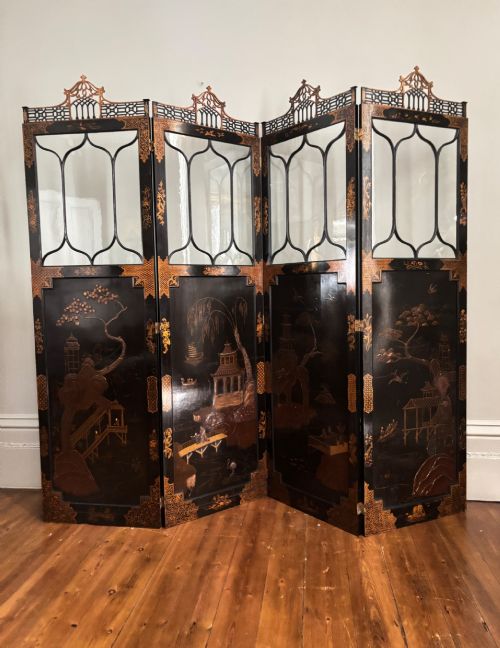
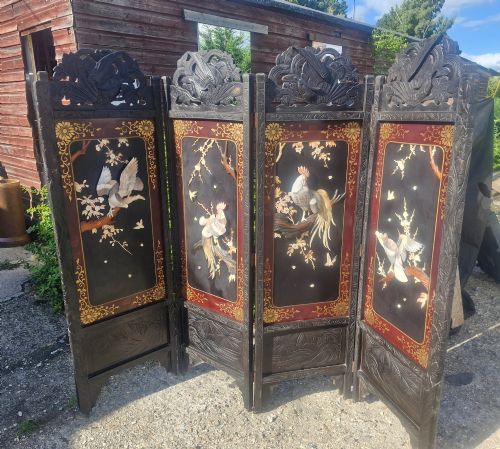
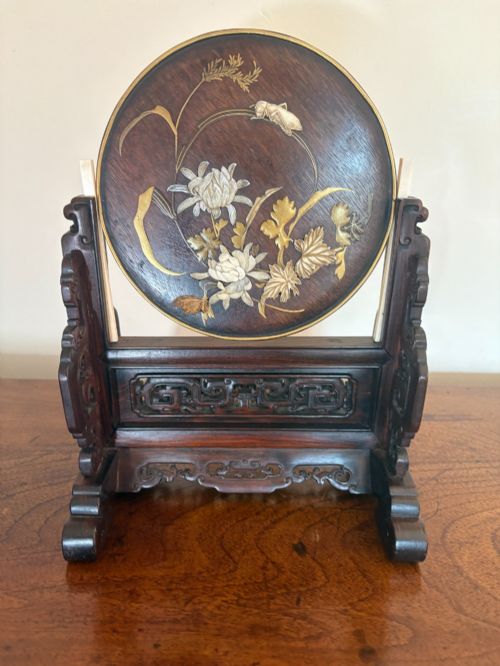
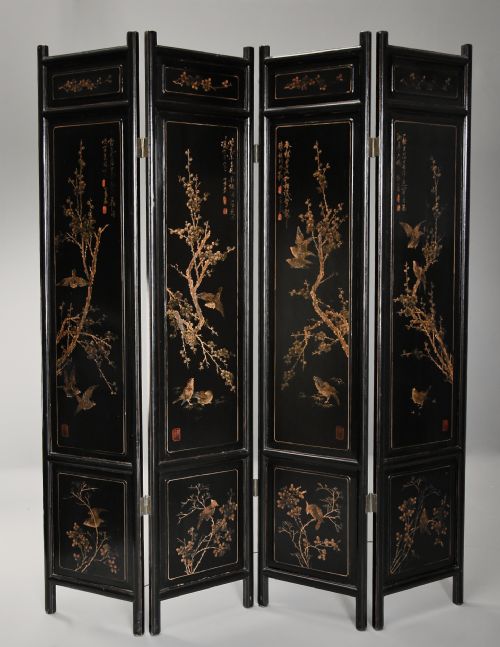
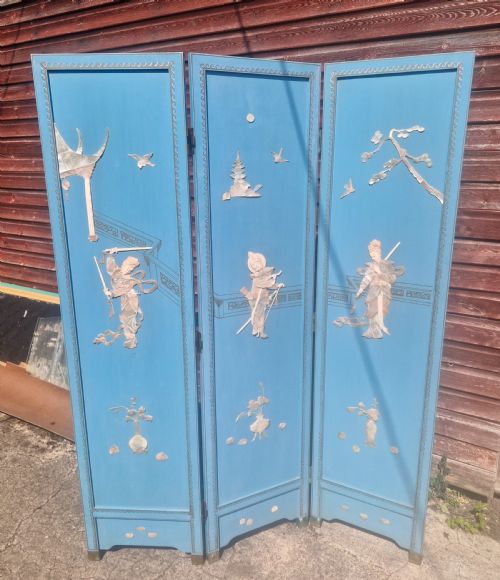

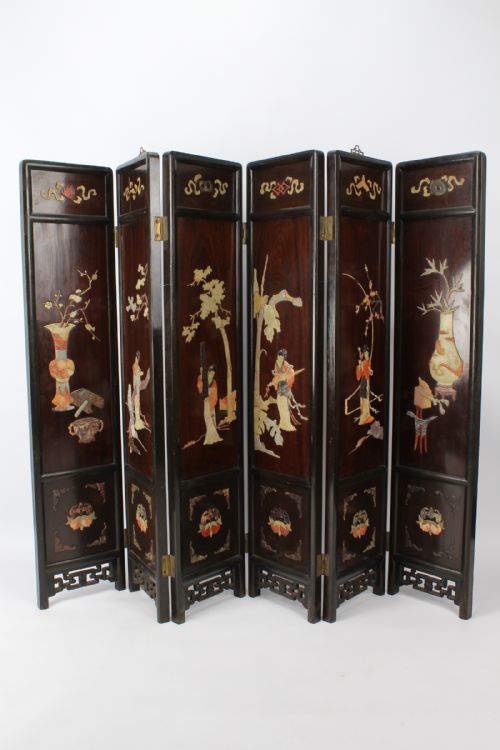


Oriental Lacquered Panel Screen
An oriental lacquered panel screen brings architectural depth and narrative surface to a room through centuries of refined East Asian decorative craft.
Oriental Lacquered Panel Screen
When you search for an oriental lacquered panel screen, you encounter everything from grand multi-fold room dividers to intimate table screens and wall plaques. The pieces range from large eighteenth-century Coromandel works to nineteenth-century Chinoiserie folding screens and twentieth-century decorative room dividers.
You are most likely to meet folding screens featuring black lacquer surfaces, alongside smaller wall-mounted panels and dressing screens. These objects serve both practical division purposes and purely decorative interior displays.
Origins span diverse traditions including Chinese Qing style and Meiji period Japanese craftsmanship, alongside British Regency and Victorian interpretations of Chinoiserie aesthetics.
Materials and Construction
Wood and lacquered wood form the foundational structure for these panels, providing sturdy support for layers of applied varnish and pigment. Artisans built freestanding frames and folding leaves using durable hardwoods.
Surface ornamentation relied on meticulous inlay techniques using bone, mother-of-pearl, abalone and hardstones to create raised pictorial reliefs of figures, birds and foliage. Gilding with gold leaf and detailed hand-painting further enriched the dark lacquered backgrounds.
The listings span the 18th, 19th, and 20th centuries, featuring materials such as brass, bone, gold leaf, and hardstone.
Craftsmanship and Detail
The distinction between standard decorative pieces and superior examples rests in the depth and precision of the surface work. Deep carved decoration and intricate inlaid materials demand advanced skill compared to simpler painted finishes.
The handling of the lacquer itself, from the smoothness of the black ground to the integration of gold leaf and foilage, dictates the visual weight and longevity of the piece.
The Oriental Lacquered Panel Screen Glossary
- Coromandel
- A type of Chinese incised lacquer where the design is cut into a ground of multiple lacquer layers and filled with pigments or gold.
- Shibayama
- A Japanese craft style utilising inlaid precious materials such as mother-of-pearl, ivory and bone to create pictorial motifs.
- Chinoiserie
- European decorative style reflecting Chinese artistic influences, prevalent during the Regency and Victorian periods.
- Pole screen
- A small vertical screen mounted on a freestanding wooden pole, designed to shield a person's face from fireplace heat.
Oriental Lacquered Panel Screen: Frequently Asked Questions
How are folding screens used in interiors?
These screens function primarily as room dividers, dressing screens, or striking architectural wall art.
Larger multi-fold versions zone open spaces while smaller panel formats hang directly on walls.
What is the difference between Coromandel and black lacquer?
Coromandel work involves incising deeply into layers of lacquer to reveal contrasting colours beneath.
Standard black lacquer relies instead on painted decoration, gilding, or applied inlays of bone and mother-of-pearl.
How do I care for an antique lacquer screen?
Keep the panel away from direct sunlight and steady heat sources to protect the wood and lacquer.
Dust gently with a dry, soft cloth and avoid chemical cleaning agents entirely.
How do I identify a Regency Chinoiserie screen?
Regency examples combine British furniture forms of the early nineteenth century with oriental lacquered finishes.
They often appear as pole screens or dressing screens reflecting the era's fascination with Eastern design.