



Brown Wooden Screen
A brown wooden screen orders a room or guards a hearth, bringing timber, textile and carved detail together in a single folding form.
Brown Wooden Screen
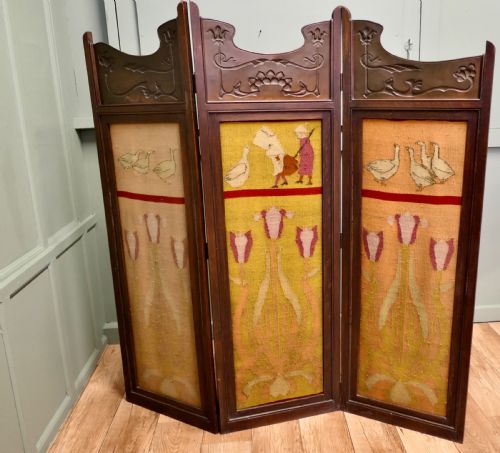
A brown wooden screen spans multiple centuries and geographic origins, appearing in forms from folding room dividers and modesty panels to freestanding pole fire screens. You will most frequently encounter nineteenth-century walnut and mahogany examples alongside larger folding partitions originating from India, China and Europe.
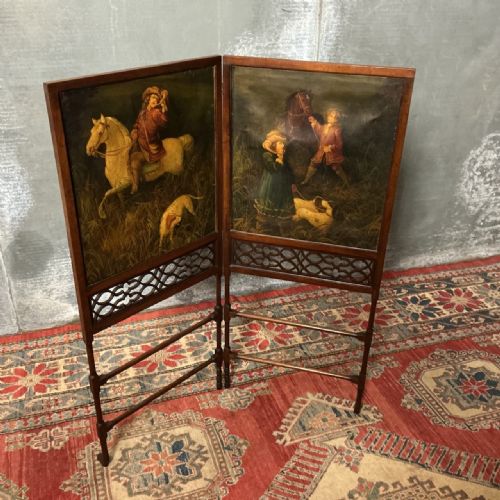
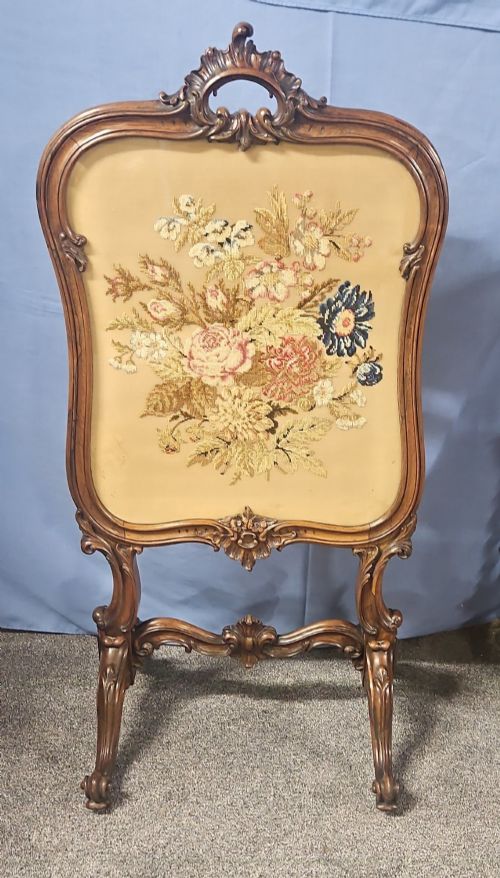
The objects serve diverse domestic functions, whether dividing an entrance vestibule, framing a hearth to block radiant heat or carrying hand-stitched needlework and oil paintings. The selection encompasses smaller table-height fire screens as well as imposing multifold room dividers.
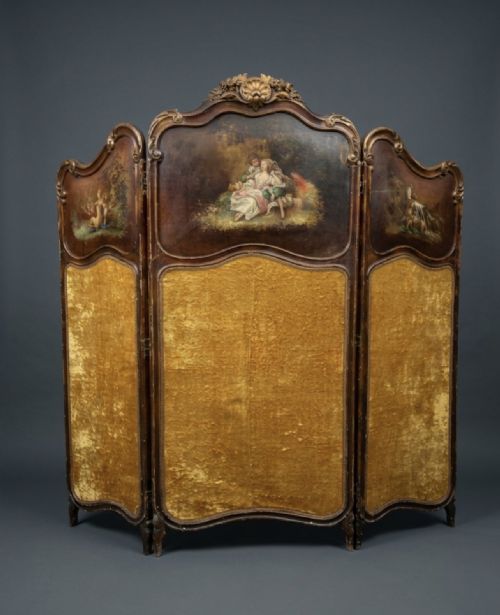
Makers utilised various regional timbers including oak, padauk, hardwood and walnut, often combining timber frames with inserted textile panels, carved fretwork or painted pastoral scenes. These pieces reflect the prevailing domestic tastes of Georgian, Victorian, Edwardian and Art Nouveau interiors.
Materials and construction methods
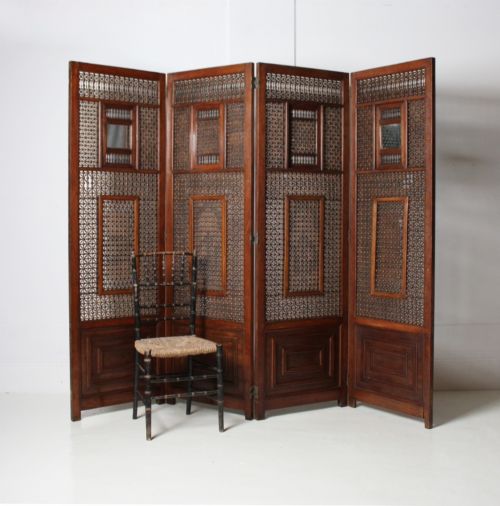
Carpenters constructed the primary frames using durable timbers such as mahogany, walnut and oak, joining the sections with hinges to allow multi-fold movement. Hardwood frames frequently incorporate detailed hand-carved ornamentation or fretwork panels.
Many screens integrate decorative infills, ranging from woolwork embroidery, needlepoint and tapestry to oil paintings and glass panels. Brass hardware and gilt accents frequently secure or support the folding leaves and pole screen mounts.
An eighteenth-century gentleman and a monkey stand guard as a lifesize dummy board among the folding timber partitions.
Assessing craftsmanship and condition
The distinction between standard and superior pieces rests upon the crispness of the timber carving and the complexity of the integrated panels. Fine examples display deeply carved detailing and hand-woven tapestry or needlework rather than machine-produced textiles.
Structural integrity of the hinges and stability of the folding leaves determine the daily utility of the divider. Well-preserved frames retain their original timber finish and undamaged textile or painted insertions without major alterations.
The Brown Wooden Screen Glossary
- Pole screen
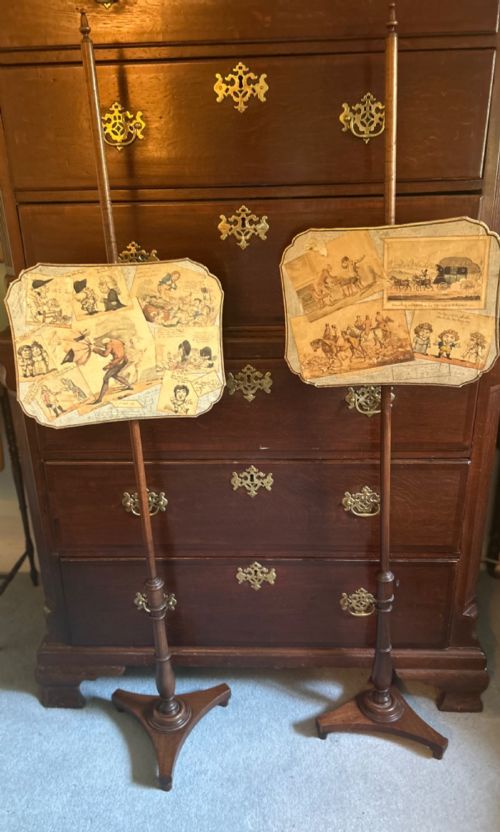
- A freestanding firescreen featuring a vertically adjustable panel mounted on a central wooden pole with a tripod base. This design allowed occupants to shield their faces from the intense heat of an open hearth.
- Modesty screen
- A low freestanding panel historically used to shield diners from draughts near doors or to conceal domestic activities. These often feature painted panels or detailed fretwork.
- Needlepoint
- A type of canvas work embroidery executed with wool or silk yarn, frequently seen mounted within nineteenth-century fire screen panels. The stitch density and colour retention indicate the quality of the textile work.
- Fretwork
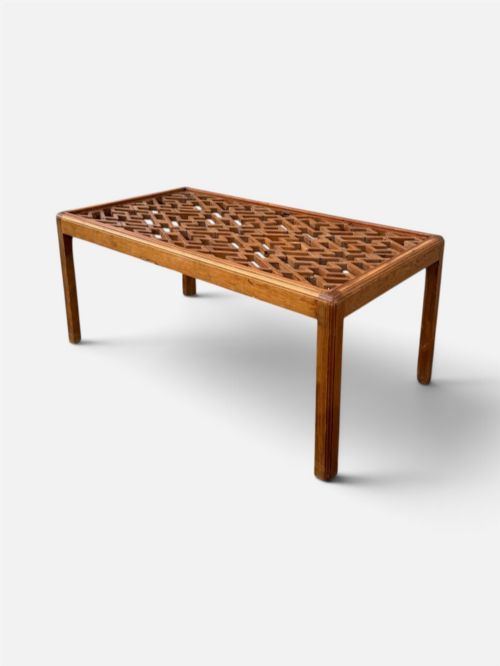
- An ornamental design cut out of wood using a fretsaw, creating intricate geometric or floral patterns. This technique appears on Chinese and Indian panels.
Brown Wooden Screen: Frequently Asked Questions
How were fire screens used?
Occupants placed them near open fireplaces to block radiant heat from melting heavy makeup or warming faces uncomfortably. They were adjusted as the fire burned down or as the room draught shifted.
They also served a decorative purpose during summer months when the hearth was unlit, providing a pleasant focal point of embroidery or painted wood instead of an empty grate.
Can large screens divide rooms?
Four-fold and multifold room dividers easily section off portions of open-plan spaces or create private areas within larger chambers. Their folding hinges allow them to stand in zig-zag configurations for stability.
Heavier hardwood and carved panels offer substantial visual and physical separation in entrance vestibules or sitting rooms.
How do I date a wooden screen?
Examining the timber species, joinery methods and decorative style provides clear chronological markers. Georgian pieces often feature neat mahogany frames, while Victorian examples frequently utilise walnut with tapestry panels.
Later nineteenth and twentieth-century pieces incorporate Art Nouveau copper elements, Edwardian oil paintings or mashrabiya woodwork characteristic of specific revival periods.
What maintenance do they require?
Keep wooden frames conditioned with appropriate furniture wax and avoid placing screens in direct sunlight to protect textiles and painted surfaces. Gentle dusting preserves delicate needlework and carved details.
Check folding hinges periodically to ensure they move freely without placing undue strain on the surrounding timber joints.