


French Chateau Screen
These french chateau screen examples are grand room dividers and fire guards brought together to shape large rooms.
French Chateau Screen
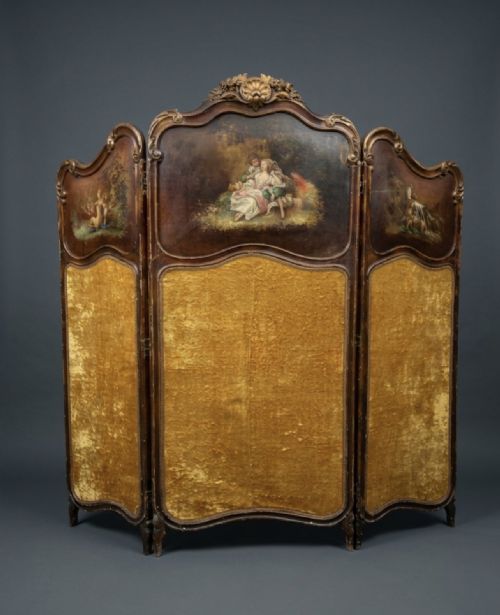
When you search for a french chateau screen, you encounter folding room dividers, modesty screens, wall panels, and fire guards spanning the eighteenth, nineteenth, and early twentieth centuries. These pieces originate from distinct periods including Victorian and Edwardian eras, alongside Louis XV style and French Rococo or Empire revivals.
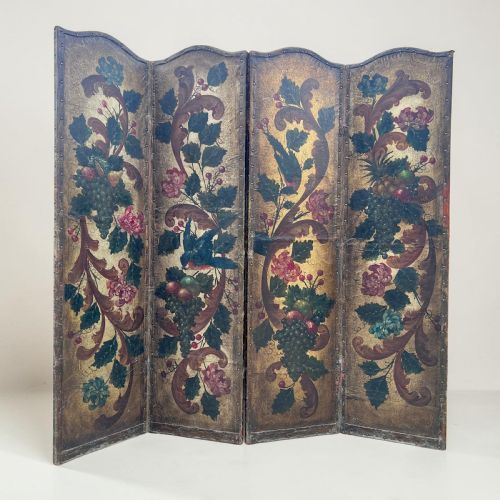
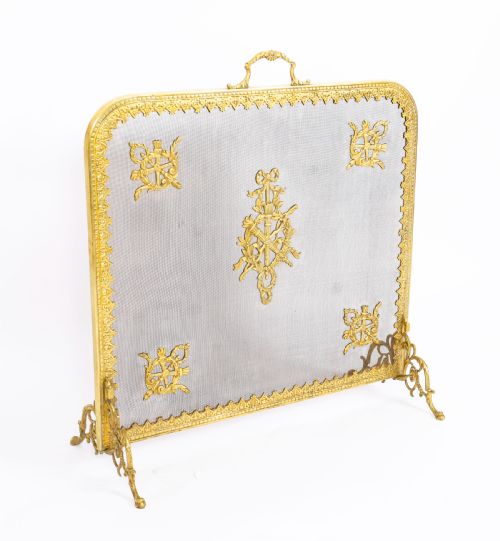
The version you are most likely to meet on this page is a multi-fold room divider or a gilt bronze fire screen. They appear in brass, giltwood, wood, and wire mesh, often housing painted panels, leather, canvas, or classical trophies.
How they were made
Maker construction relies heavily on sturdy wood and carved giltwood frameworks, frequently paired with flexible canvas, leather, or wire mesh for folding sections. Metal elements utilise brass and gilt bronze for structural guards and decorative mounts.
Surface decoration employs oil paint and hand painting directly onto leather, canvas, or wood panels. This incorporates stylistic motifs from Chinoiserie and classical empire traditions.
Listings feature items spanning the eighteenth, nineteenth, and early twentieth centuries, utilising brass, gilt bronze, wire mesh, canvas, and giltwood.
What varies in quality
The standard of carving and metalwork separates standard items from finer works. Finely cast gilt bronze mounts and deeply carved giltwood frames display greater definition than simpler brass wire mesh guards.
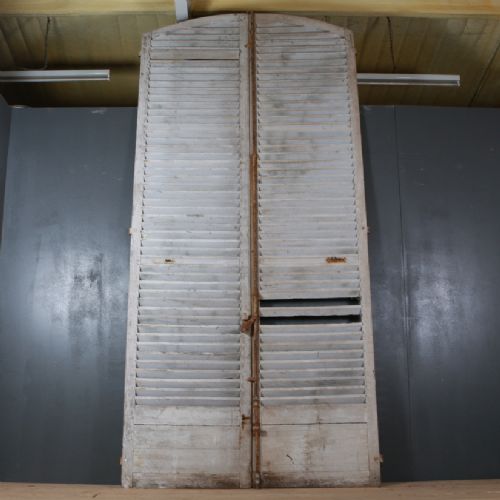
The execution of the painted panels dictates aesthetic success. Hand painted oil canvases and detailed leather sections demonstrate artistic skill distinct from plain folding wooden shutters or modesty screens.
The French Chateau Screen Glossary
- Modesty screen
- A freestanding screen designed to provide privacy or block draughts in a room. These often feature painted panels.
- Fire screen
- A decorative guard placed in front of a fireplace when not in use. They utilise brass, gilt bronze, and wire mesh.
- Gilt bronze
- An alloy treated with gold leaf or mercury gilding to produce a rich metallic finish. It appears frequently on revival pieces.
- Chinoiserie
- A European decorative style reflecting Chinese artistic traditions. It appears on painted canvas panels.
- Giltwood
- Wood carved and treated with gold leaf. This material defines many decorative room divider frames.
French Chateau Screen: Frequently Asked Questions
What is a french chateau screen?
A french chateau screen is a decorative room divider, modesty screen, or fire guard originating from historical French interior styles. These pieces range from multi-fold canvas and leather dividers to ornate gilt bronze hearth guards.
They utilise materials like brass, carved giltwood, and wire mesh, reflecting periods from the mid eighteenth century through the Edwardian era.
How were these screens used?
Room dividers and modesty screens partitioned large chambers, created private dressing areas, and blocked draughts in historic interiors. Fire screens and guards protected rooms from stray sparks while adding decorative elegance to the hearth.
Their folding designs allowed servants to reposition them easily according to the needs of the household.
How do I style a room divider?
A folding screen functions effectively as a striking backdrop behind seating or to soften an empty corner in a spacious room. Canvas and painted leather panels introduce colour and texture without requiring permanent wall alterations.
Matching the historical style, such as Louis XV or French Empire revival, helps anchor the piece within a traditional interior scheme.
How do I identify the period?
Dating relies upon examining the materials, framing techniques, and stylistic revival motifs present in the construction. Pieces from the seventeen fifties show different joinery and artistic hands compared to Victorian, Edwardian, or nineteen-tens productions.
Details like hand painted canvas and gilt bronze mounts align with specific decorative movements recorded across these eras.