





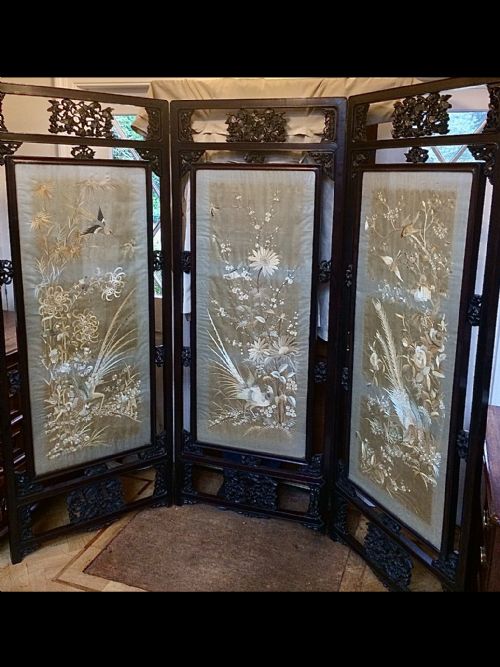

Chinoiserie Room Divider Screen
A chinoiserie room divider screen brings dramatic East Asian narrative panels and rich lacquer into an interior.
Chinoiserie Room Divider Screen
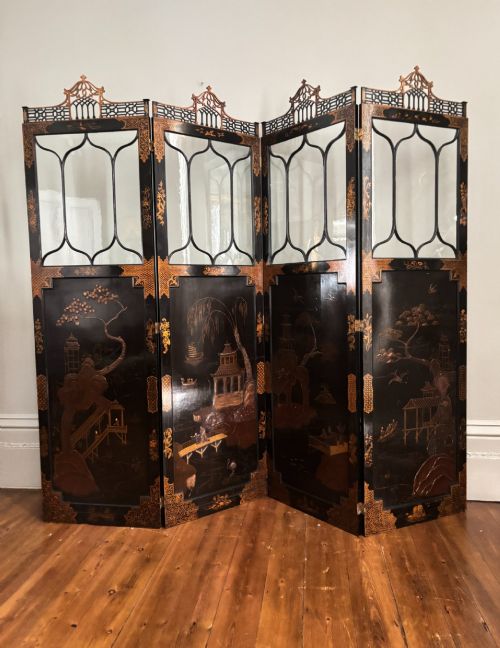
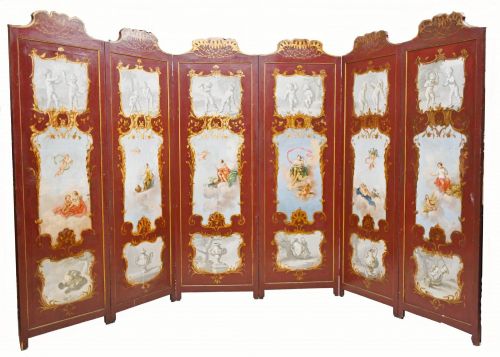
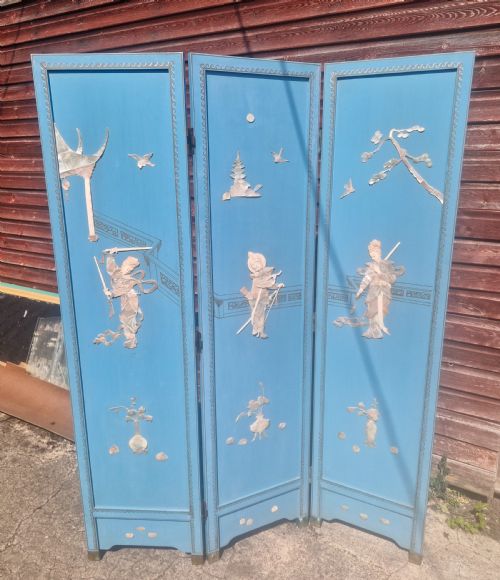
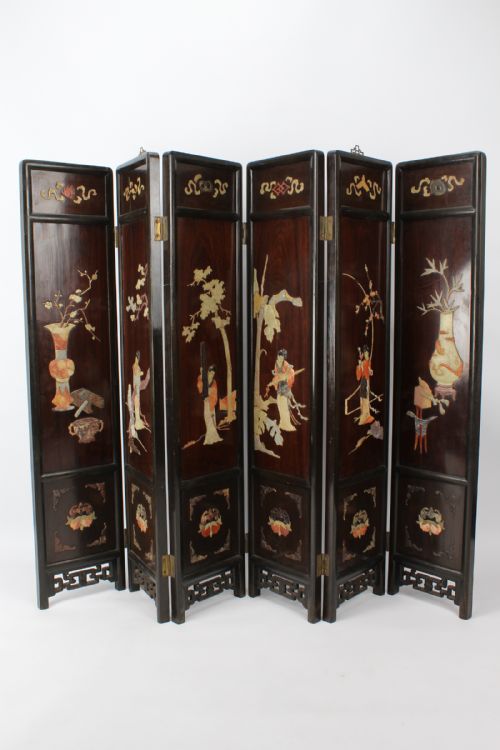
A chinoiserie room divider screen functions as both a flexible partition and a substantial decorative focal point within a space. These pieces appear in configurations ranging from compact three-fold dressing screens to expansive eight-fold panels. Forms include folding screens, freestanding room dividers, fire screens, and wall art.
Examples originate across several centuries, with pieces spanning the eighteenth century, the regency era, the nineteenth century, and twentieth-century decades up to nineteen fifty. Materials and design vocabularies blend European interpretations with traditional Asian motifs, encompassing Chinese Chippendale, Victorian chinoiserie, and Qing dynasty styles.
How they were made
Construction relies heavily on wood, hardwood, and lacquered wood substrates built into multi-fold panels. Artisans applied layers of lacquer to achieve deep, glossy surfaces suitable for intricate painting and carving.
Decoration incorporates gold leaf, mother-of-pearl, and hardstone inlays, alongside hand-painted polychrome details on leather, silk, and papier-mâché. Brass hardware frequently joins the hinged panels together, allowing smooth articulation across multiple folds.
Chinoiserie Room Divider Screen Retail Price Guide 2026
Typical asking prices for chinoiserie room divider screen among the pieces listed under this phrase on Sellingantiques today, from the lower quarter to the upper quarter. They describe what is for sale here now, not the wider market.
Some dressing screens even incorporated delicate silk and papier-mâché, proving that eighteenth-century privacy demands occasionally required surprisingly lightweight materials.
What varies in quality
The depth of the lacquer work and the complexity of the carving distinguish finer examples from simpler decorative items. Surfaces featuring dense incisions, multi-layered ground work, and precise material inlays demand superior technical skill.
The articulation of the hinges and the weight of the supporting wood framework dictate the physical stability of the panels. Intricate hand-painted pictorial narratives executed with fine brushwork separate standard production from exceptional artistry.
The Chinoiserie Room Divider Screen Glossary
- Coromandel
- A type of Chinese incised lacquer where the design is carved into a dark ground and filled with pigments or gold. This technique produces deeply textured pictorial surfaces across large folding panels.
- Chinoiserie
- The European interpretation and imitation of Chinese and East Asian artistic traditions, popular in furniture and decorative arts. It employs motifs such as pagodas, figures, and landscapes.
- Hardstone
- Dense minerals such as jade, agate, or soapstone carved and mounted onto a lacquered surface. These elements create raised, three-dimensional decorative details.
- Polychrome
- Decoration executed in multiple colours. This method brings vibrancy to painted leather, wood, and lacquer panels.
Chinoiserie Room Divider Screen: Frequently Asked Questions
How do I use a room divider screen at home?
These folding pieces partition large spaces, create private dressing areas, or stand against plain walls as decorative panels.
Their substantial height and hinged panels allow them to reshape the proportions of a room effortlessly.
What is the difference between coromandel and standard lacquer?
Coromandel involves cutting directly into layers of dark lacquer to reveal contrasting colours underneath, creating an incised relief effect.
Standard lacquer finishes often rely more heavily on surface painting, gilding, and applied inlays rather than deep carving.
How many panels do these screens typically have?
Configurations range from compact three-fold and four-fold designs up to extensive six-fold and eight-fold structures.
Larger panels provide greater coverage for dividing rooms or displaying expansive narrative scenes.
Where were nineteenth-century chinoiserie screens made?
Production occurred both in East Asia for export and within European workshops influenced by oriental design trends.
English and Dutch makers produced painted leather and papier-mâché variants alongside authentic imported Chinese screens.