




Painted Wooden Room Divider
A painted wooden room divider gives you instant architectural division and a surface of hand-rendered art.
Painted Wooden Room Divider
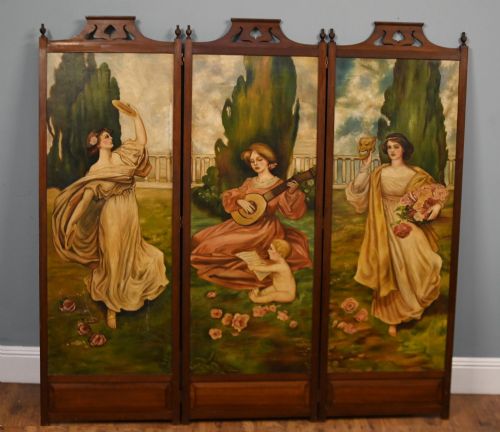
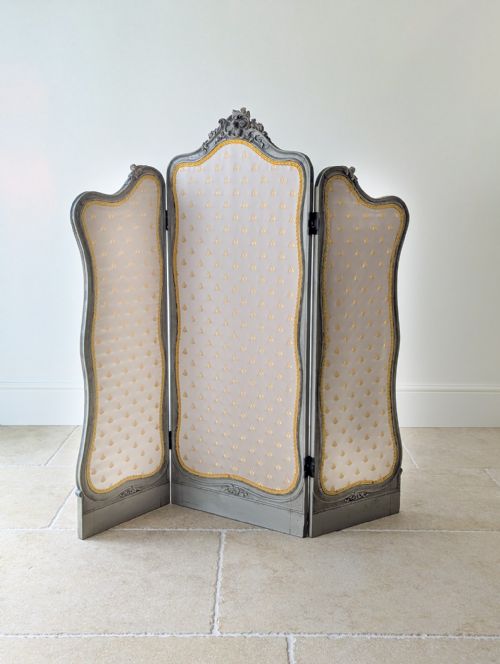
A painted wooden room divider is a hinged screen designed to segment a floor space or shield a corner, taking the form of folding screens, modesty screens, and wall art. When you examine this selection, you encounter pieces originating from diverse global traditions including French Rococo Revival, Scandinavian Country, and Chinese Republic Era aesthetics.
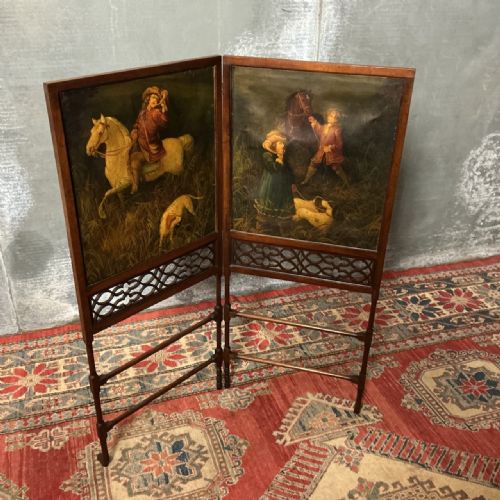
The objects listed span several periods, encompassing Victorian and Edwardian examples alongside 1900, 1910, and 1930 creations. Folding screens dominate the current offering, accompanied by fire screens and individual panels designed for privacy and spatial partitioning.
Construction and Materials
Makers constructed the primary framework using hardwoods such as mahogany, walnut, and general timber, joining the sections with brass hinges to enable multi-fold movement. Fretwork carving frequently appears within the wooden structure to introduce light and textural contrast.
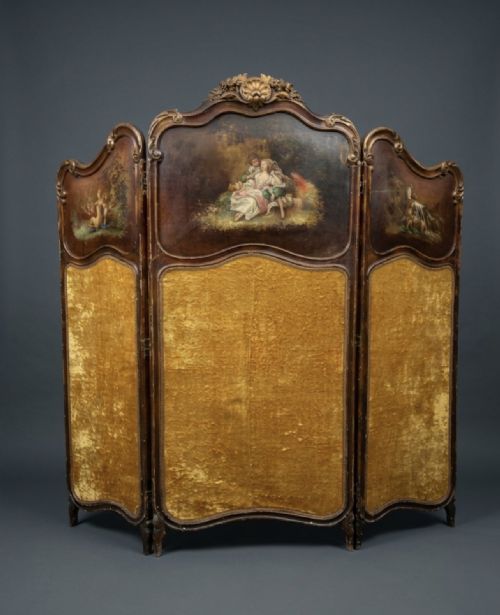
Surfaces received layers of paint, lacquer, or oil paint applied directly to wood or stretched canvas panels. Artisans embellished selected areas with gold leaf and handpainted details, particularly in French, Japanese, and Chinese workshops.
Painted Wooden Room Divider Retail Price Guide 2026
Typical asking prices for painted wooden room divider among the pieces listed under this phrase on Sellingantiques today, from the lower quarter to the upper quarter. They describe what is for sale here now, not the wider market.
The listings on this page span the Victorian and Edwardian eras up to nineteen thirty, utilising mahogany, walnut, lacquer, and oil paint.
Assessment of Quality
Quality rests in the execution of the painted surface, where the skill of the artist dictates the depth and fidelity of the pastoral scenes or decorative motifs. Finer examples display meticulous brushwork in oil paint or lacquer that integrates seamlessly with the surrounding timber frame.
The structural joinery and the integrity of the hinges dictate the durability of a multi-fold screen. Superior pieces maintain stable wooden panels and robust brass hardware that support the weight of the wings without sagging.
The Painted Wooden Room Divider Glossary
- Folding screen
- A piece of furniture consisting of two or more panels that are connected by hinges. These panels can be folded back on one another to alter the span of the divider.
- Modesty screen
- A low folding screen historically utilised to shield occupants from draughts or to provide visual privacy in a room.
- Fire screen
- A decorative panel placed in front of a fireplace when not in use. It often shares the painted wooden construction of larger room dividers.
- Lacquer
- A durable resin finish applied to wooden objects in Asian and European decorative traditions. It provides a glossy, protective surface for painted ornamentation.
- Fretwork
- Ornamental perforated woodwork created by cutting patterns through the board. It appears on screens to lighten the visual weight of the timber.
Painted Wooden Room Divider: Frequently Asked Questions
How do I use a room divider in a small space?
You can position a three-fold screen across a corner to create a dedicated dressing area or use it to soften an empty wall.
The folding panels allow you to adjust the width to fit the exact proportions of your room without permanent installation.
What is the difference between French and Oriental screens?
French screens often showcase Rococo Revival styling with oil-painted pastoral scenes on walnut or mahogany frames.
Oriental and export pieces typically employ lacquer and gold leaf finishes with distinct stylistic motifs from Chinese and Japanese traditions.
How do I care for the painted wooden panels?
Keep the screen away from direct sunlight and steady heat sources to protect the wood and prevent the paint from cracking.
Dust the surface gently with a dry, soft cloth and avoid chemical cleaners that might damage the oil paint or lacquer.
How many panels do these screens usually have?
The pieces in this selection most commonly feature three or four folding panels linked by brass hinges.
Some examples also exist as single wall art panels or paired screens designed to flank a space.