


Folding Screen Divider
When searching for a folding screen divider, you find architectural panels hinged to segment rooms or frame corners.
Folding Screen Divider
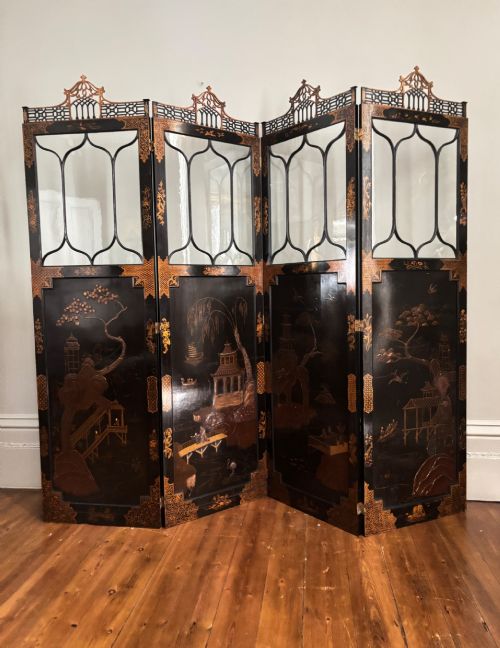
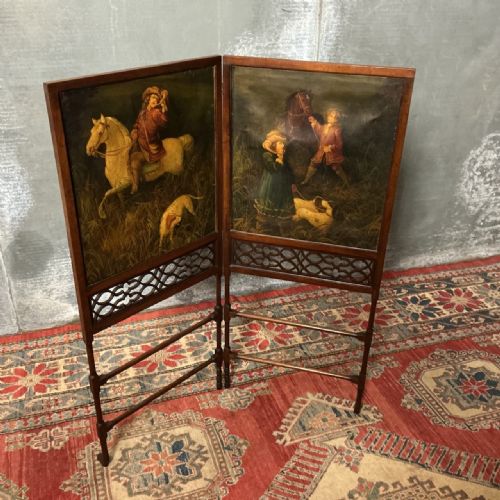
A folding screen divider serves to partition open interiors or establish private corners within larger chambers. These panels appear across 18th century, Victorian, and Edwardian eras, taking the form of dressing screens, modesty screens, and fire screens.
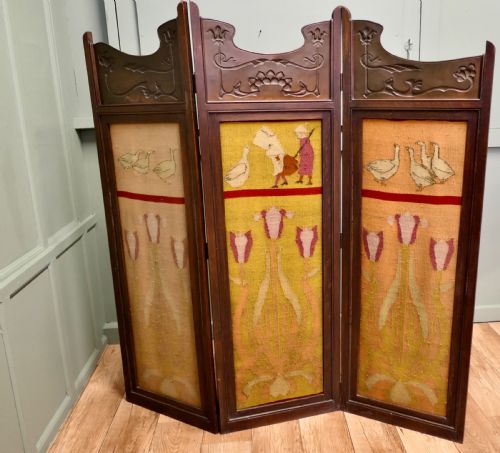
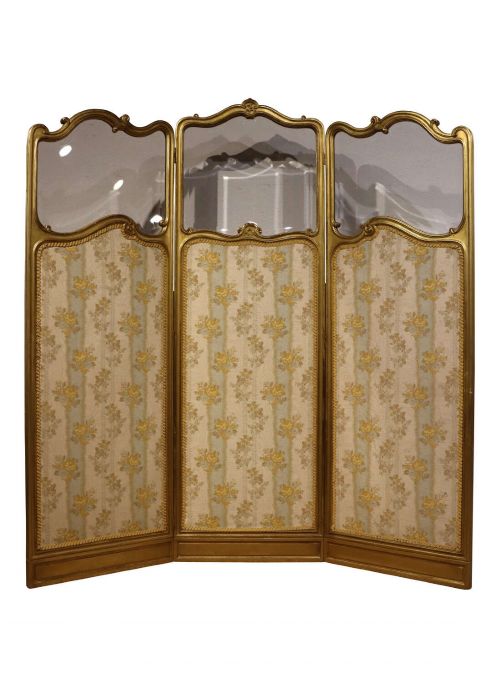
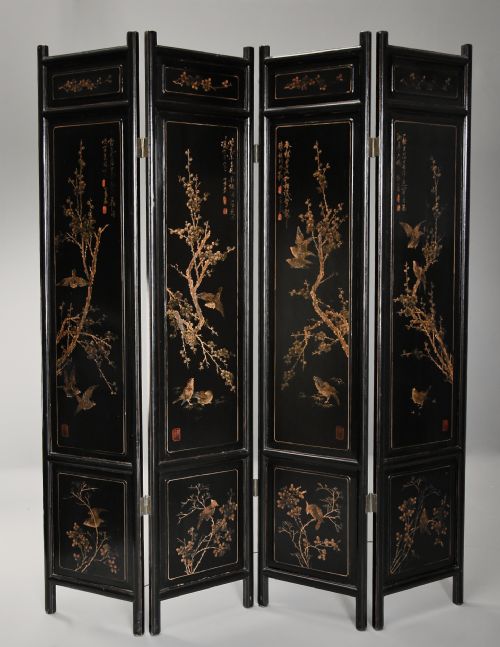
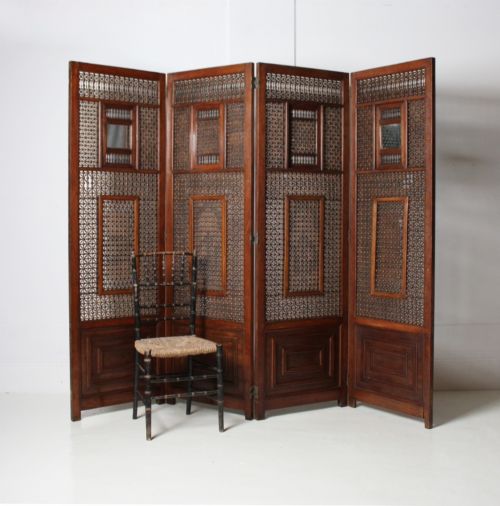
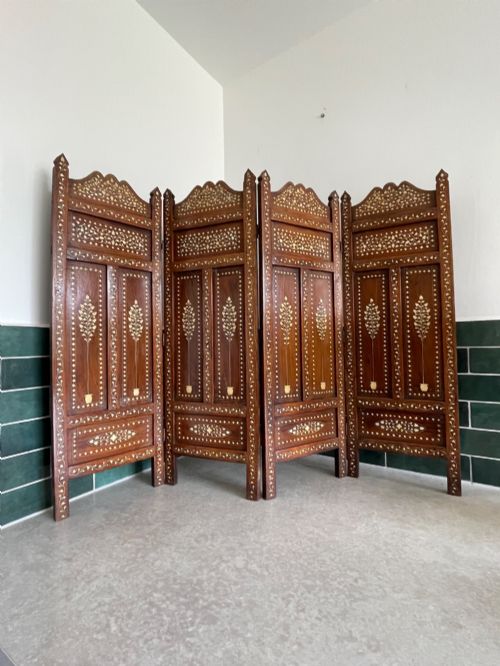
The objects span diverse stylistic origins, encompassing French giltwood pieces, Chinese coromandel lacquer examples, and Anglo-Indian carved hardwoods. Domestic variations include scrap work panels and needlepoint upholstery designed for country houses.
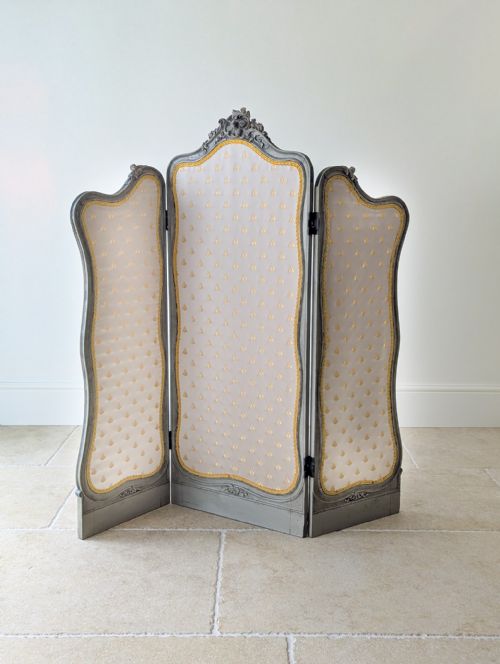
Tall multi-fold configurations dominate the selection, functioning as portable partitions or decorative backdrops. Smaller table screens and three-fold vanity models also occur frequently in walnut and mahogany.
How they were made
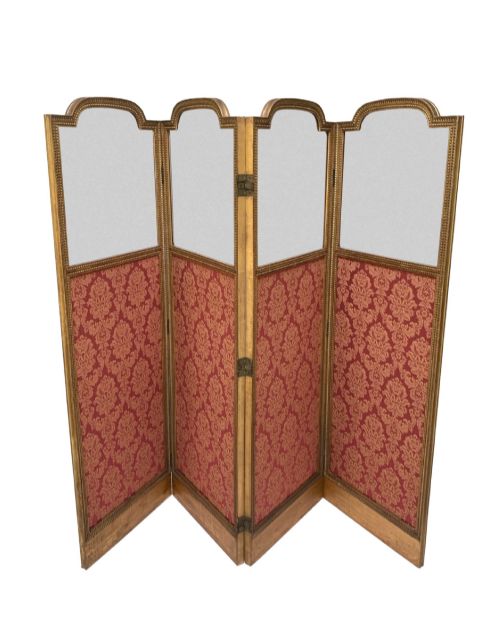
Carpenters constructed the structural frames using hardwoods such as mahogany, walnut, and oak, joined with hinges to permit multi-directional folding. Some examples incorporate brass fittings, giltwood carvings, or intricate mashrabiya lattice work.
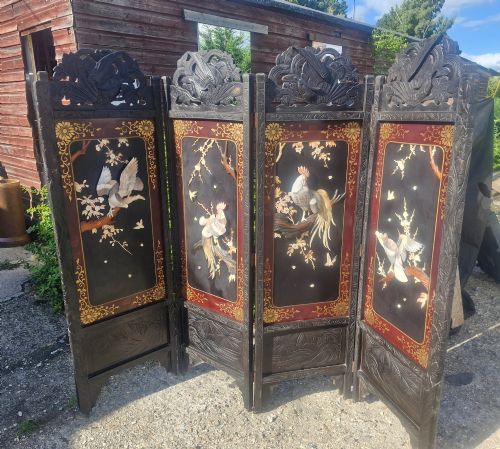
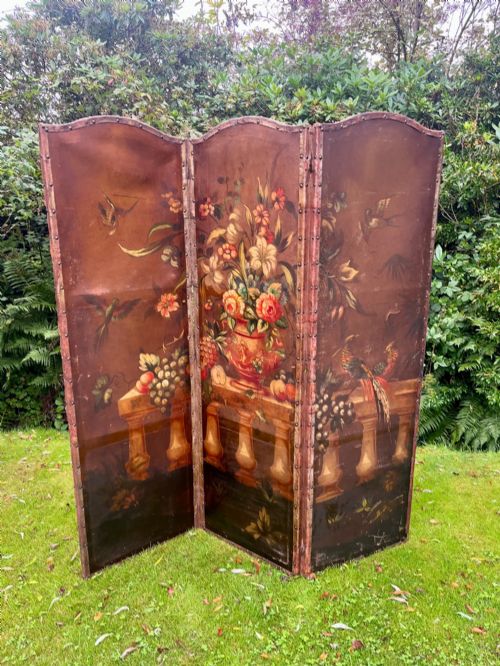
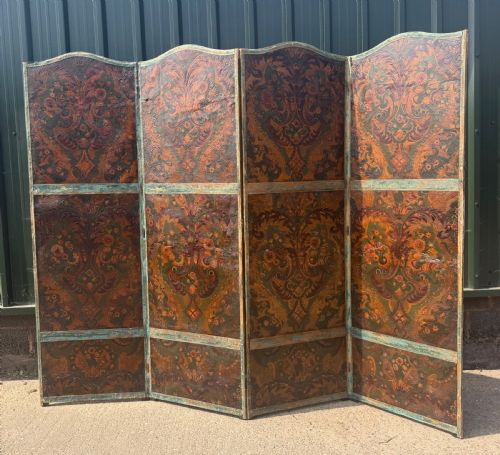
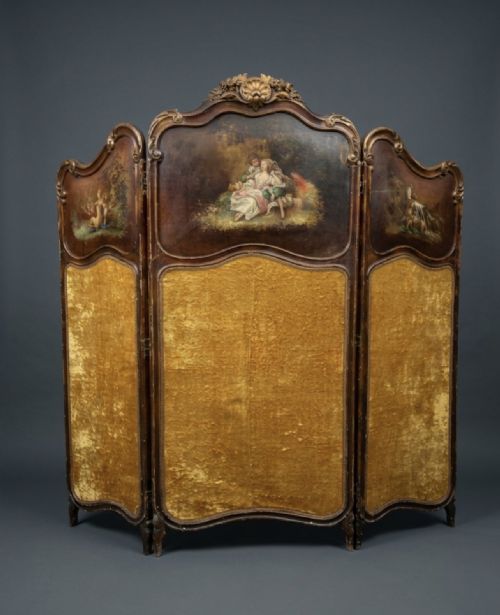
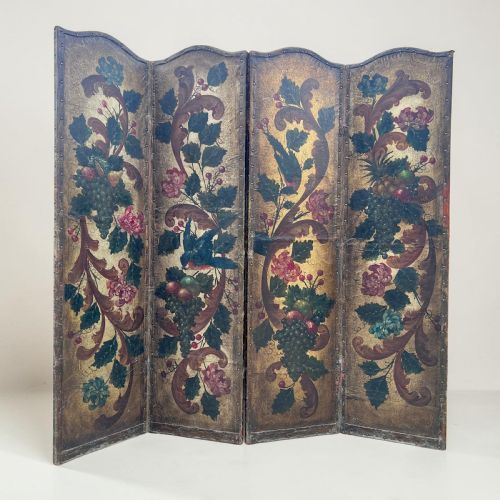
Infill panels display varied artistic techniques, ranging from hand-painted oil canvases and lacquered finishes to embossed leather and needlepoint woolwork. Artisans applied polychrome decoration, deep-carved bone figures, and silk inserts to create visual depth across the leaves.
The archive includes Japanese textile screens, French walnut modesty panels, and English needlepoint privacy partitions.
What varies in quality
Quality rests upon the execution of the frame joinery and the integrity of the hinges connecting each fold. Superior examples maintain structural stability across multiple leaves without sagging or straining the joints.
The artistry applied to the panels distinguishes higher tiers, seen in finely hand-painted pastoral scenes, deeply incised coromandel lacquer, and well-preserved needlework. Lesser items utilise simpler printed textiles or plain secondary woods lacking artistic embellishment.
WILLIAM MORRIS
The Folding Screen Divider Glossary
- Coromandel
- A type of Chinese carved lacquer work where layers of dark lacquer are incised and filled with pigments. This technique produces rich pictorial surfaces on folding screens.
- Mashrabiya
- An architectural wooden lattice screen traditionally used for privacy and ventilation. These intricate turned-wood panels appear in regional room dividers.
- Verdure
- A style of tapestry or painted screen depicting lush landscapes, foliage, and trees. These pastoral scenes often feature animals and birds within a woodland setting.
- Scrap work
- A Victorian craft method involving the application of numerous printed paper scraps onto a backing board. These panels were then varnished to create dense collages on room dividers.
- Modesty screen
- A low folding panel historically utilised to shield occupants from draughts or direct view near fireplaces and doorways. They offer subtle partitioning in domestic spaces.
Folding Screen Divider: Frequently Asked Questions
How were folding screens used historically?
Historic households utilised these panels to block draughts near doors, create private dressing areas within bedrooms, and segment large reception rooms into intimate spaces.
They also functioned as decorative backdrops for furniture or as fire screens to protect occupants from excessive hearth heat.
How do I place a room divider in a modern home?
Position multi-fold panels across open-plan corners to define distinct functional zones like home offices or reading areas. They also work effectively as art pieces against plain walls.
Ensure the panels have adequate clearance to fold and adjust without striking surrounding furniture.
How do I tell Victorian screens apart from 18th century examples?
Victorian iterations frequently feature scrap work collages, heavy needlepoint, or revivalist Chinoiserie lacquer styles influenced by industrial production methods. Eighteenth century pieces typically display authentic Cordoba leather or deep hand-carved coromandel lacquer.
Examining the construction of the wooden frames and the type of hinges utilised helps confirm the manufacturing era.
What materials should I expect on antique screens?
Surviving examples primarily employ wooden frames made from mahogany, walnut, oak, or giltwood. The infill panels incorporate oil paint on canvas, hand-tooled leather, silk, glass, and wool needlework.
Eastern pieces frequently showcase black lacquer, inlaid bone, and intricate wood carvings.