




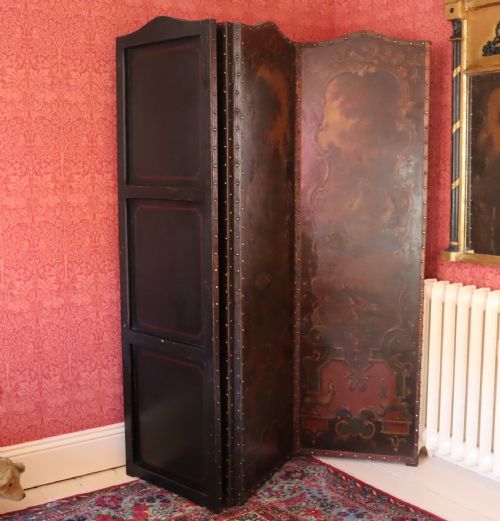


Antique Privacy Screen
An antique privacy screen partitions a room with folding panels, offering seclusion and decorative division in a parlour or dressing area.

Antique Privacy Screen
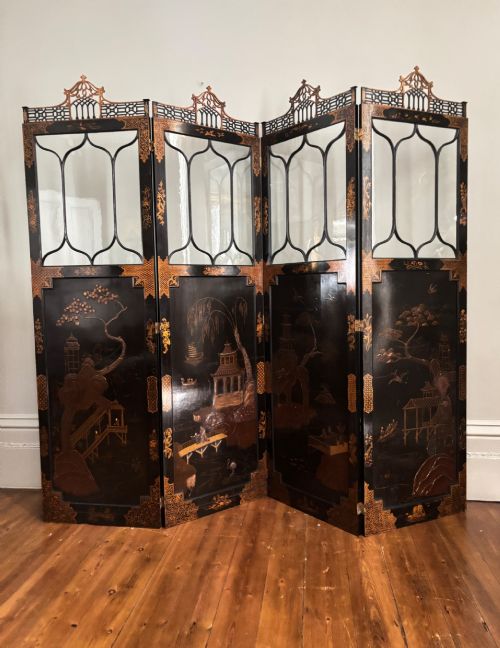
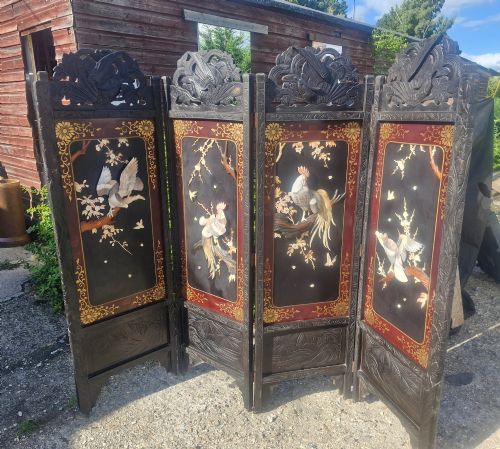
An antique privacy screen comprises multiple hinged panels designed to divide interior spaces and provide seclusion. The pieces appearing in this collection span the nineteenth and early twentieth centuries, encompassing Victorian, Edwardian, and Regency examples alongside Continental and Oriental imports.
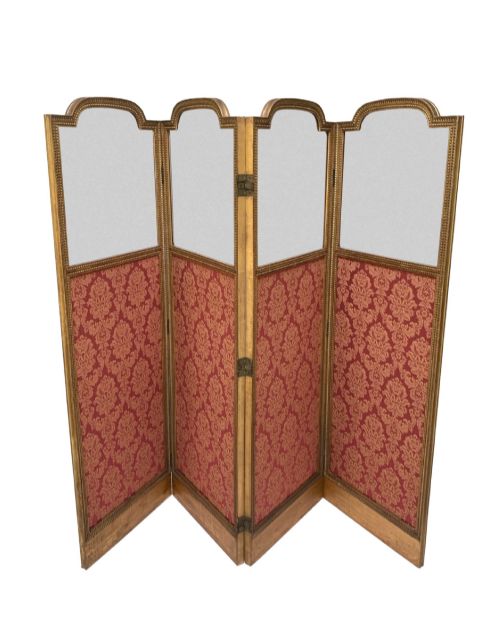
Most items on this page take the form of folding screens or room dividers constructed with three, four, or more panels. They serve to partition corners, conceal dressing areas, or act as decorative backdrops within a room.
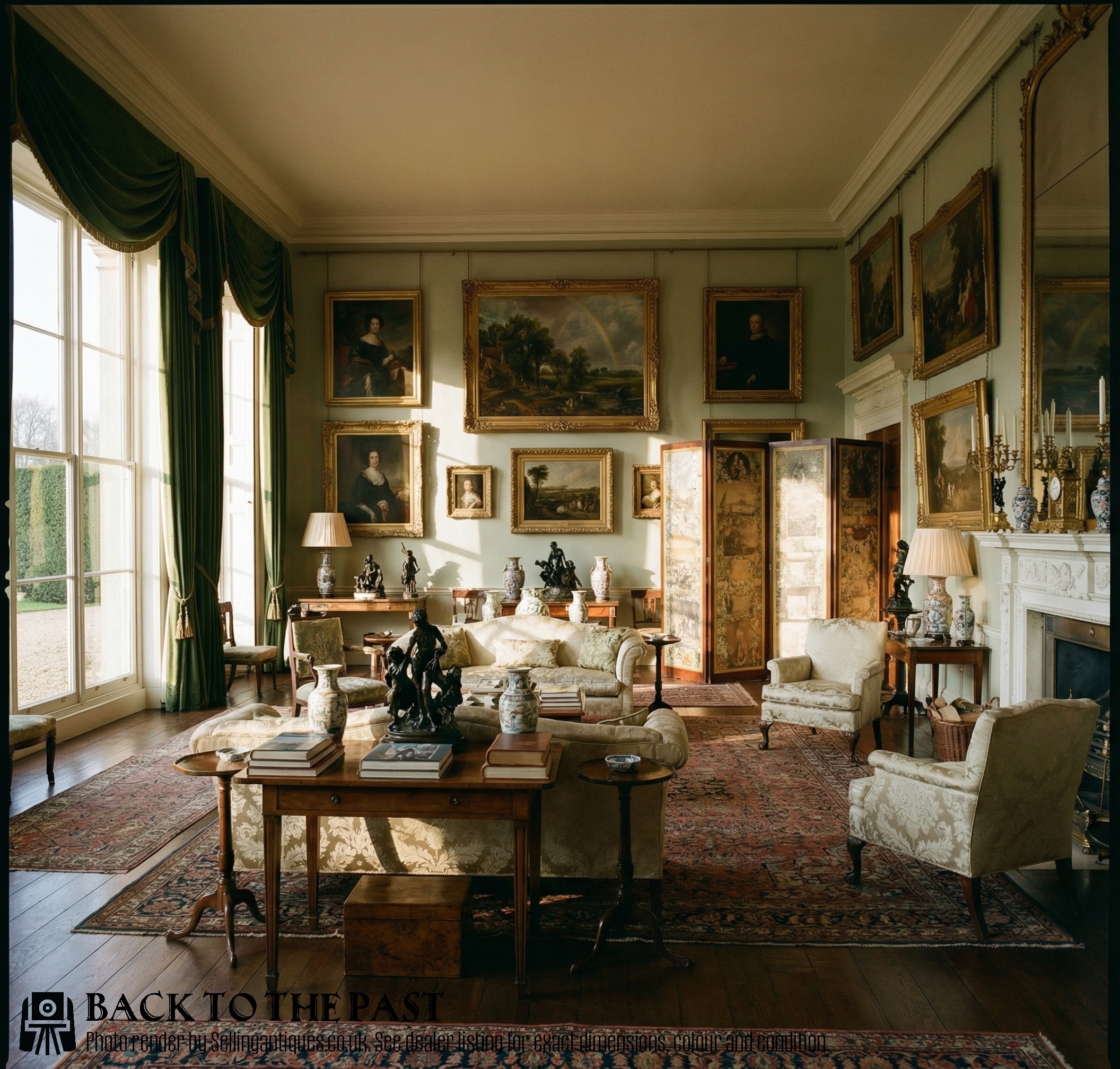
Materials and Construction Methods
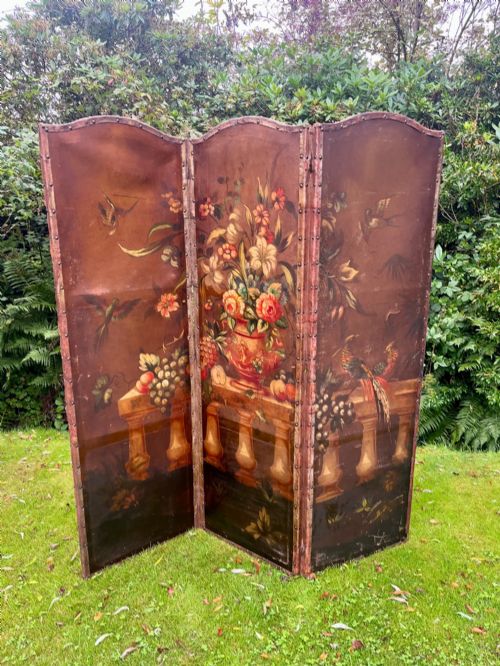
Makers utilised timber frames of mahogany, walnut, oak, and giltwood to support panels of leather, canvas, silk cotton, and glass. Traditional joinery secures the folding hinges, allowing the panels to articulate smoothly in both directions.
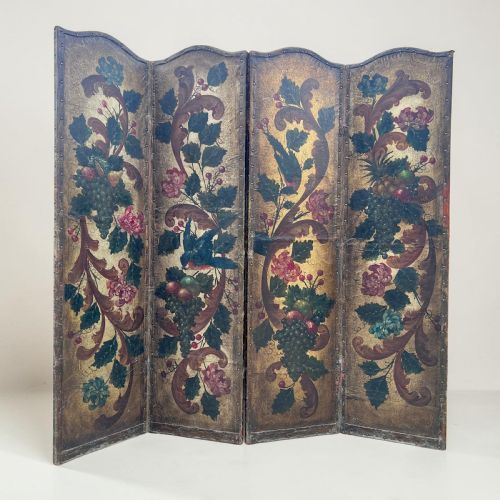
Surface decoration frequently involves hand-painting, lacquering, needlepoint, and papier mâché, with some examples incorporating carved bone or hardstone mounts. Artisans applied polychrome pigments, oil paint, and gilt embossing directly onto the leather or canvas surfaces.
Antique Privacy Screen Retail Price Guide 2026
Typical asking prices for privacy screen among the pieces listed under this phrase on Sellingantiques today, from the lower quarter to the upper quarter. They describe what is for sale here now, not the wider market.
One historical screen doubled as a political debating society prop at Eton College, bearing witness to youthful arguments.
Evaluating Craftsmanship and Detail
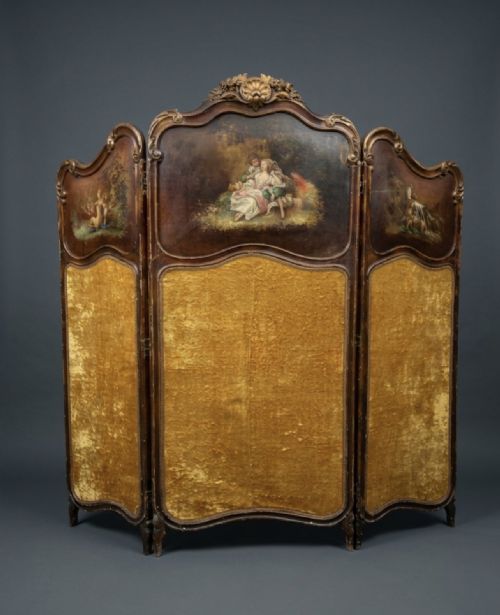
The distinction between standard examples and the finest pieces lies in the execution of the surface artwork and the substance of the framing timbers. Hand-painted panels featuring intricate pastoral scenes or detailed Chinoiserie motifs demonstrate superior artistic input compared to simpler printed or plain textiles.
Structural integrity of the hinges and the weight of the timber frame dictate durability across multiple folds. Finer pieces display careful carving, substantial hardwood or giltwood construction, and well-preserved original finishes.
The Antique Privacy Screen Glossary
- Modesty screen
- A low-standing panel historically used to shield a person from the direct heat of a fireplace or to provide seated privacy. These smaller screens are typically configured with three or four hinged folds.
- Chinoiserie
- A European artistic style reflecting Chinese motifs and decorative techniques, popular in lacquerwork and painted panels. This style appears frequently on black lacquer screens from the nineteenth and early twentieth centuries.
- Mashrabiya
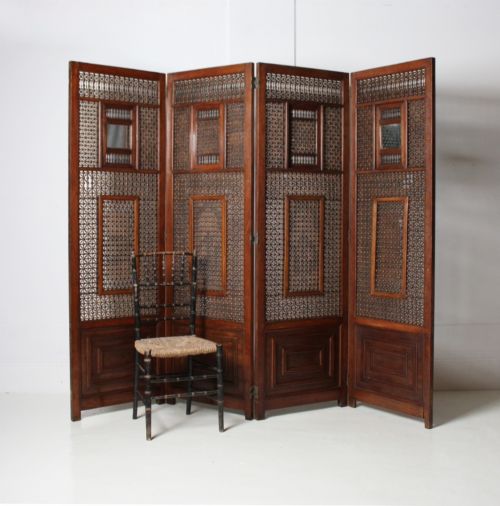
- An architectural element adapted into room dividers, featuring intricate wooden lattice work. These panels provide partial visibility while maintaining partition and airflow.
- Scrap work
- A technique involving the application of numerous paper scraps, prints, and photographs onto a backing surface to cover a screen. These pieces document Victorian and later collage traditions.
- Cordoban leather
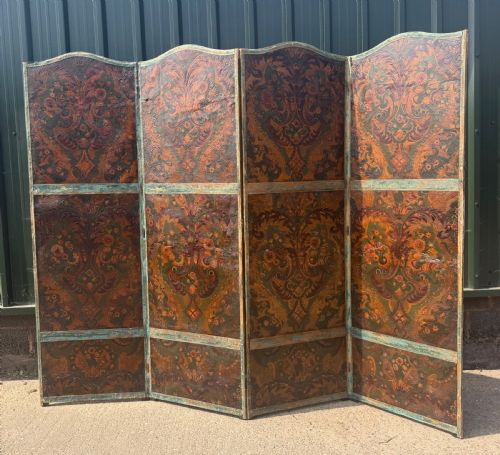
- Embossed, painted, and gilt leather originating from Spanish craftsmanship traditions. The technique produced opulent, tactile panels utilised in grand interior screens.
Antique Privacy Screen: Frequently Asked Questions
What is an antique privacy screen used for?
These folding panels partition large rooms to create intimate seating zones or private dressing enclosures. They shield specific areas from draughts and direct view.
Historically, they also served as photographic backdrops or decorative room dividers in period interiors.
How do I care for a painted leather screen?
Keep painted and leather surfaces away from direct sunlight and excessive moisture to prevent cracking or fading. Dust gently with a dry, soft cloth.
Avoid chemical cleaning agents that might damage the original hand-painted pigments or gilt embossing.
How can I tell the period of a screen?
Examine the framing timber, hinge construction, and underlying materials such as papier mâché or needlepoint. Victorian and Regency pieces often feature distinct carved details or specific needlework styles.
Stylistic markers like Art Nouveau curves or Japanese Meiji motifs help narrow down the date of manufacture.
Are these screens stable on carpets?
Folding screens stand independently when the panels are angled correctly to distribute weight. Thick carpets may require careful positioning of the hinges to maintain balance.
Heavier hardwood and multi-fold frames provide greater stability on various floor surfaces.