



Four Fold Room Divider
A four fold room divider creates architectural division and privacy, bringing substantial presence to high ceilings and generous floor plans through centuries of craft.
Four Fold Room Divider
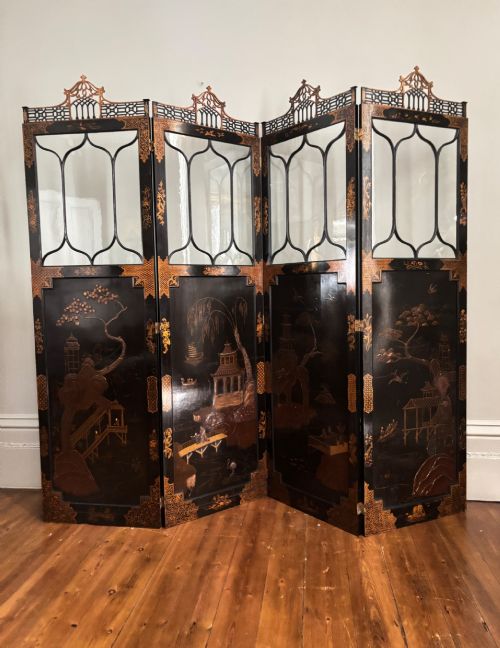
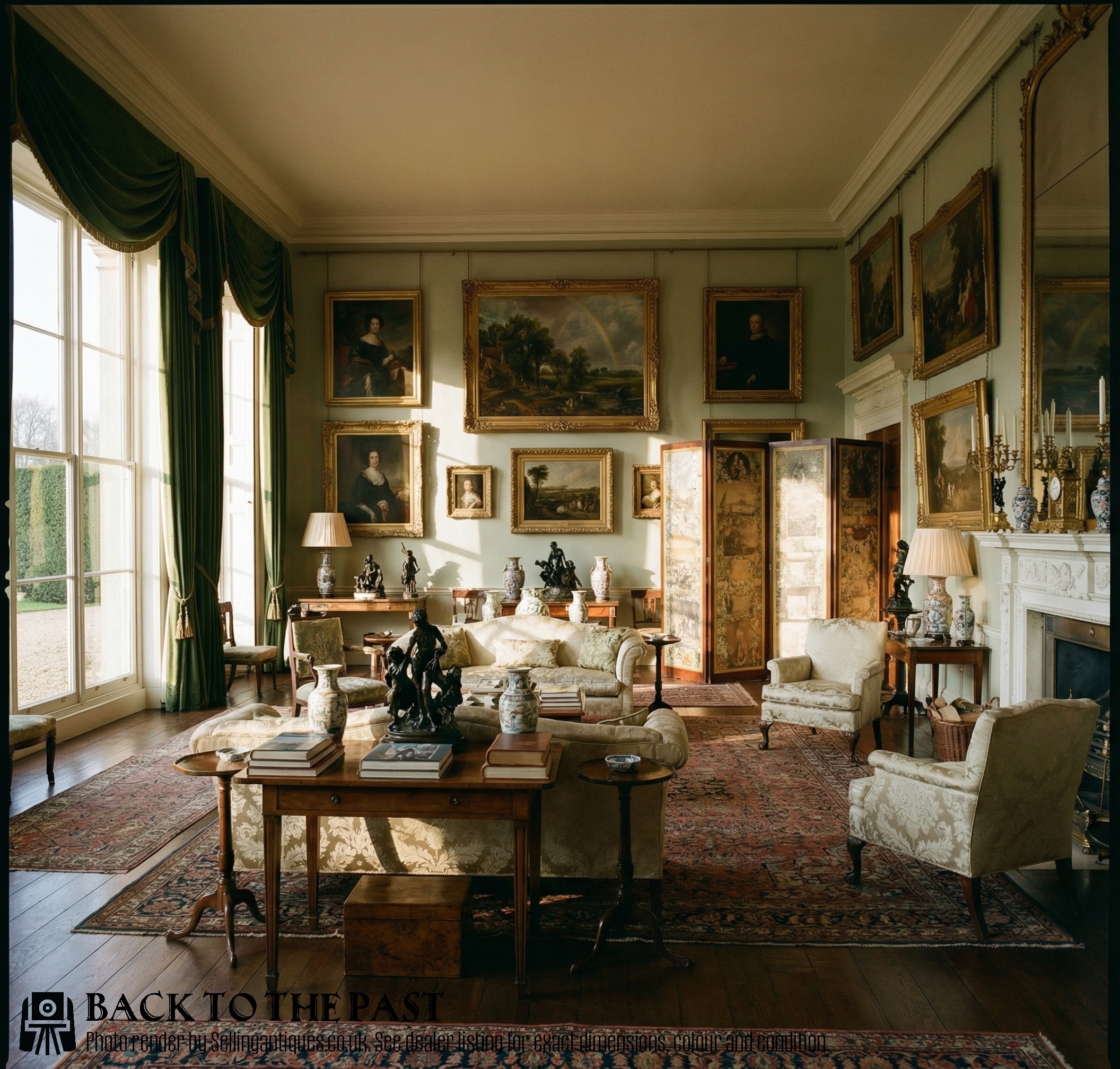
A four fold room divider functions as a movable partition, creating intimate zones within larger rooms while introducing dramatic height and decorative surface to an interior. When searching for a four fold room divider, buyers encounter examples spanning from the eighteenth century through the twentieth, with Victorian and early twentieth-century interpretations appearing most frequently.
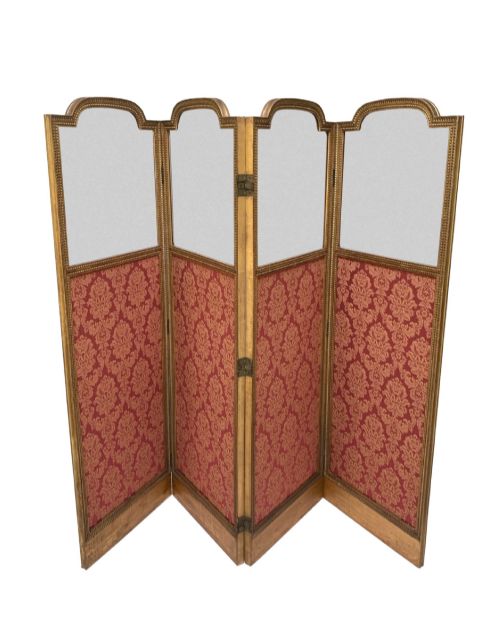
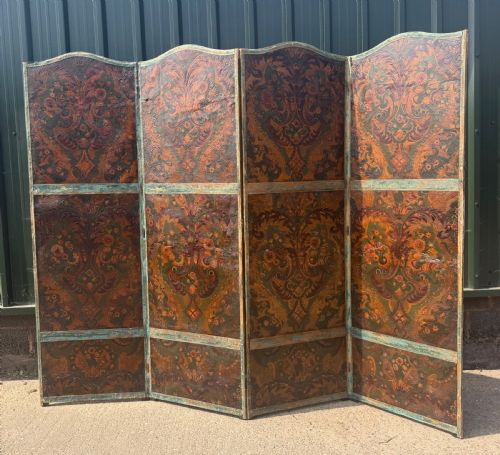
The selection ranges from substantial architectural wooden frames to decorative dressing screens covered in painted leather, canvas, needlepoint, or silk. These pieces served practical domestic purposes in country houses and town residences alike, acting simultaneously as draught exclusions, photographic props, and grand visual centrepieces.
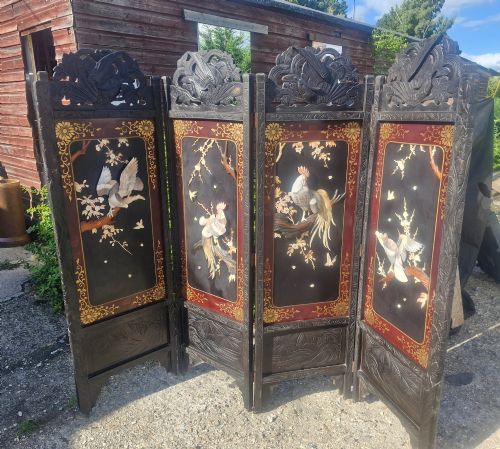
Origins vary widely across the inventory, moving from English mahogany and walnut frameworks to French giltwood and leather, alongside significant East Asian black lacquer and carved wooden screens. This geographical breadth ensures that each panel configuration carries distinct cultural and stylistic signatures, from Chinese Chippendale to Arts and Crafts simplicity.
Materials and Construction
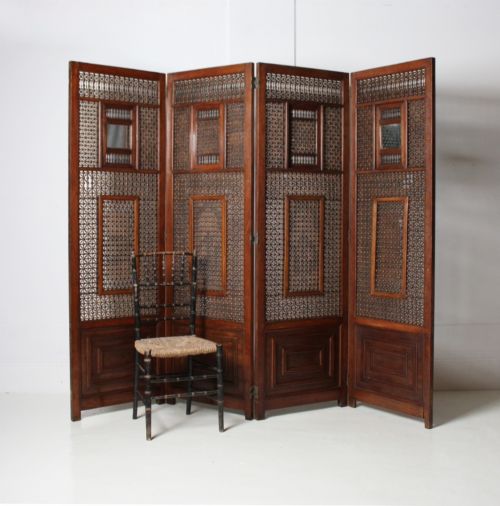
Makers constructed the primary structural frameworks using solid timbers including mahogany, walnut, oak, and ebonised hardwood, joined by sturdy hinges to support multiple heavy leaves. These wooden skeletons frequently incorporated fretwork, carved bone, or mashrabiya panels to add texture and architectural depth.
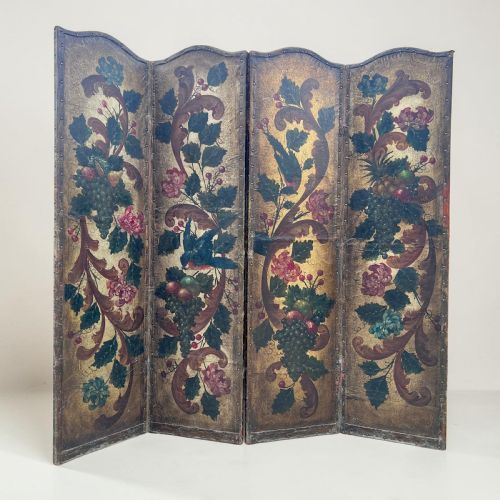
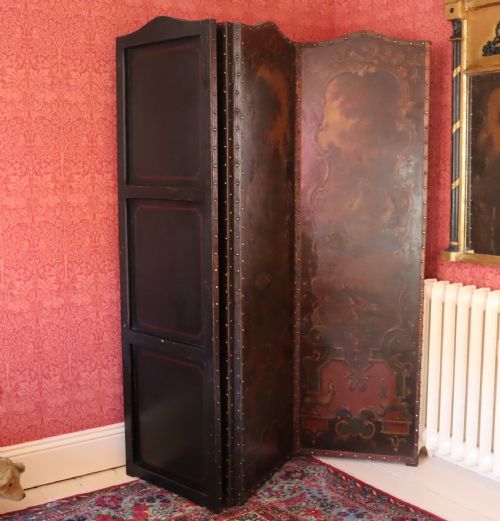
Surfaces received rich decorative treatments involving hand-painted lacquer, gilt embossing, tooled Dutch leather, and polychrome canvas. Textile elements such as needlepoint, silk cotton, and jacquard panels were stretched directly across internal frames to soften the overall aesthetic and provide domestic warmth.
Listings feature traditional folding screens spanning the eighteenth, nineteenth, and twentieth centuries, constructed in mahogany, brass, leather, and canvas.
Distinctions in Quality
Quality reveals itself primarily in the depth and execution of the surface ornamentation, separating standard decorative pieces from exceptional works of fine art. Finely carved bone figures, meticulous hand-painted Chinoiserie details, and deeply embossed gilt leather demand superior artisan skill compared to simpler painted or scrap-work panels.
The underlying carpentry of the hinges and framing timber dictates structural longevity, particularly given the physical strain placed on four-fold joints over decades of movement. Heavier materials like solid mahogany or intricate fretwork require precise joinery to maintain stability across all four connected leaves.
Paul Sormani·William Morris
The Four Fold Room Divider Glossary
- Coromandel
- A dense, dark East Asian hardwood frequently utilised for luxury screens, or a style of deep incised lacquer work filled with colour.
- Chinoiserie
- European decorative style reflecting Chinese artistic motifs, prominent in lacquered and painted screen surfaces from the eighteenth and nineteenth centuries.
- Mashrabiya
- An architectural wooden screen characterised by intricate lattice-work turned balusters, providing privacy while allowing air circulation.
- Scrap work
- A Victorian craft technique where numerous printed paper scraps were meticulously collaged across a canvas or wooden panel background.
- Cordoban
- Embossed and gilt-painted leather originating from Spanish traditions, prized for rich texture and durability on large decorative panels.
Four Fold Room Divider: Frequently Asked Questions
How were four fold room dividers originally used?
These screens managed draughts in large country houses, created private dressing areas in bedrooms, and divided expansive reception rooms into intimate seating zones. Photographers also utilised them as elaborate backdrops for studio portraits.
Their mobility allowed residents to reconfigure interior spaces instantly according to the season or the specific demands of daily domestic life.
What materials are typical for these screens?
Frameworks rely on solid hardwoods like mahogany, walnut, and oak, while decorative panels utilise leather, canvas, silk, and heavy paper mache. Surface decoration ranges from hand-painted lacquer and gilt embossing to needlepoint textiles and carved bone.
Combinations of wood and fabric allowed makers to balance structural stability with rich, colourful visual textures.
How do I care for a antique leather or fabric screen?
Keep textile and leather panels away from direct sunlight and excessive humidity to prevent fading, cracking, or warping of the organic materials. Dust wooden frames gently with a dry cloth and avoid harsh chemical cleaners on painted or gilt surfaces.
Position the folding leaves with balanced support to minimise unnecessary physical stress on the connecting hinges.
How can I tell the period of a room divider?
Stylistic clues such as Regency needlepoint, Victorian scrap work, or Arts and Crafts ebonised oak provide immediate chronological markers. Construction methods, hinge types, and the specific wear patterns on lacquered or painted finishes further clarify the era of manufacture.
Comparing the primary timber and decorative motifs against documented historical examples helps confirm whether a piece belongs to the eighteenth, nineteenth, or twentieth century.