



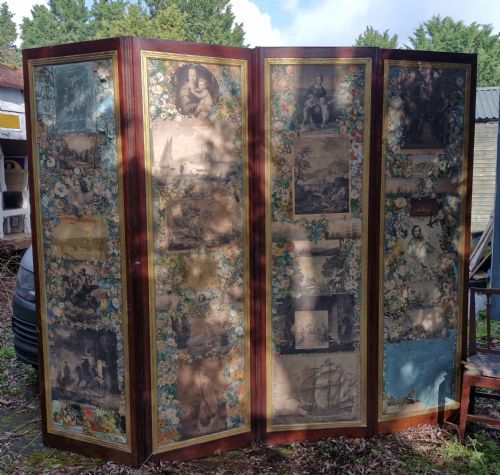

Victorian 4 Fold Screen
A victorian 4 fold screen divides a room or frames a hearth with the architectural presence that only nineteenth-century craftsmanship provides.
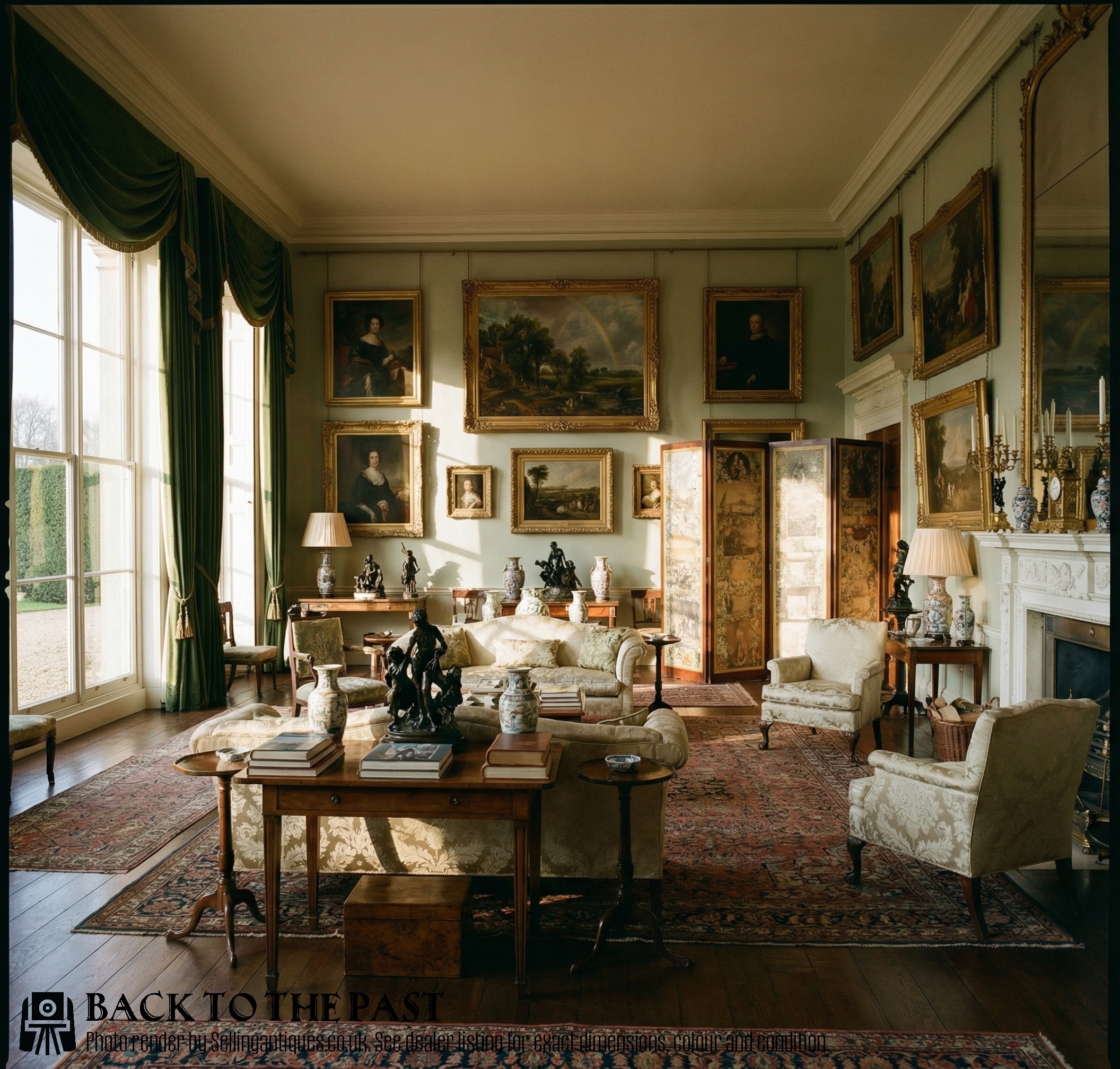
Victorian 4 Fold Screen
When you search for a victorian 4 fold screen, you encounter tall room dividers and expansive panels built to segment interior spaces or manage draughts. The pieces appearing here span large country-house canvas examples, mahogany frames, and layered scrap-work panels originating across the nineteenth century.
Most entries follow standard multi-panel configurations designed to fold flat or angle neatly against a wall. Alongside full-height room dividers, the selection includes related folding forms intended for domestic hearths and intimate dressing areas.
Materials and Construction
Timbers such as mahogany and walnut form the structural bones of many larger folding panels, providing the rigidity required for tall wooden frames. Surface treatments range from hand-painted leather and polychrome canvas to intricate paper scrap-work applications.
Metal elements appear frequently in the form of brass spark guards and ormolu mounts, while glass panels and silk inserts introduce translucency and lighter decorative textures to the heavier wood foundations.
The listings span the nineteenth century through the Edwardian era, incorporating materials from brass and glass to canvas, leather, and giltwood.
Assessing Craftsmanship
The distinction between standard utility items and finer examples rests upon the execution of the surface decoration, whether in the precision of hand-painted leather or the density and arrangement of decoupage and scrap work. Superior pieces demonstrate careful joinery in the hinge mechanisms and stability across multiple folding sections.
Choice of primary wood and the integrity of applied finishes further differentiate the inventory, where genuine period patination outweighs uniform modern replacement.
The Victorian 4 Fold Screen Glossary
- Scrap work
- A decorative technique utilising layered paper cut-outs, prints, and ephemera affixed to a panel surface. This method creates dense pictorial collages popular in nineteenth-century domestic interiors.
- Chinoiserie
- European theatrical or decorative interpretations of Chinese artistic traditions. These designs often feature lacquer work, motifs, and gilt detailing.
- Ormolu
- Gilded bronze or brass mounts applied to furniture and screens for decorative enrichment. The technique involves mercury amalgamation or electroplating on a metallic base.
- Giltwood
- Timber treated with a thin layer of gold leaf or powder over a prepared gesso ground. It provides reflective highlights on carved frames and mouldings.
- Polychrome
- The application of multiple colours to decorated surfaces such as canvas, leather, or wood. This finish defines painted scenic compositions on large room dividers.
Victorian 4 Fold Screen: Frequently Asked Questions
How do I use a four fold screen at home?
These folding sections adapt easily to open-plan layouts by partitioning living spaces, creating private dressing areas, or softening corners. Their hinged design allows them to stand in shallow zig-zags or fold completely flat for storage.
Positioning them away from direct heat sources protects delicate canvas, paper, and painted leather surfaces from drying out or warping over time.
Are these screens stable on carpets?
Most multi-panel room dividers stand securely on firm flooring when angled correctly to distribute weight across the hinges. Thick carpets may require careful positioning to ensure the base remains balanced.
Heavier wooden frameworks maintain better upright equilibrium than lighter decorative screens, which benefit from gentle corner placement.
How do I clean painted leather panels?
Dusting gently with a dry, soft cloth prevents particulate accumulation on painted or tooled leather surfaces. Moisture and chemical cleaning agents risk damaging nineteenth-century pigments and varnishes.
Consulting a professional conservator remains the safest approach for addressing deep accumulated grime or surface cracking on historical screens.
What is the difference between a room divider and a fire screen?
Room dividers stand at full height to partition spaces or provide privacy, whereas fire screens are smaller units placed before hearths to deflect heat or block sparks. The materials also differ, with fire screens frequently incorporating brass mesh, ironwork, or folding fan guards.
Scale serves as the primary indicator when distinguishing between domestic dividers and hearth accessories in historical inventories.