



Black Lacquer Room Divider
A black lacquer room divider brings depth, dark sheen, and architectural presence to a room.
Black Lacquer Room Divider
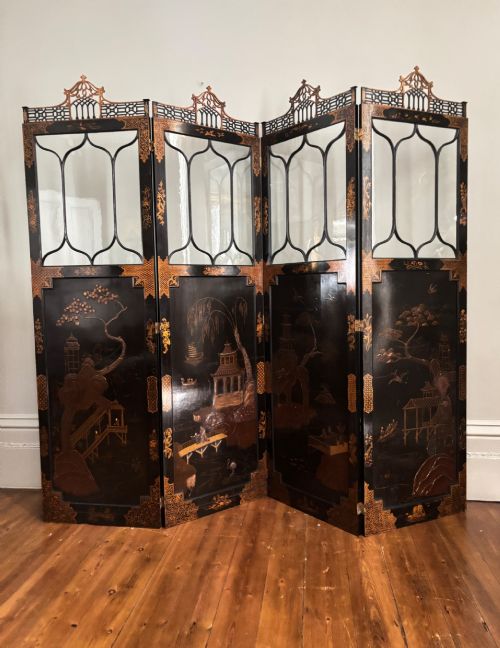
A black lacquer room divider is typically constructed as a folding screen with multiple panels designed to partition space or decorate a wall. These pieces draw on traditions from China, Japan, and Burma, alongside British interpretations like Victorian Chinoiserie and Chinese Chippendale styles.
You are most likely to encounter four-fold and eight-fold screens originating from the nineteenth and early twentieth centuries. Forms range from freestanding dressing screens to substantial folding panels finished in deep black lacquer.
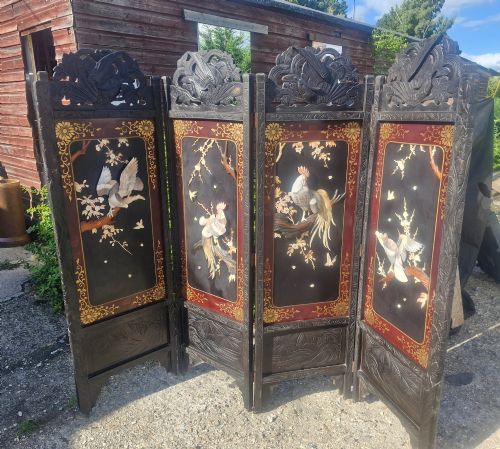
Makers utilised various traditional formats, including Coromandel screens with incised lacquer and panels decorated with applied bone, hardstone, and gold leaf. Some examples function primarily as wall art or decorative partitions rather than portable dressing screens.
How they were made
The primary structure relies on wood or hardwood frames built to support multiple folding panels. Artisans applied successive layers of lacquer to achieve a smooth, durable black surface capable of taking intricate painted or carved decoration.
Surface ornamentation frequently incorporates gold leaf, paint, and carved bone or hardstone inlays. Coromandel techniques involve incising the lacquer ground and filling the recessed areas with pigments, while other examples integrate silk or textile elements.
Black Lacquer Room Divider Retail Price Guide 2026
Typical asking prices for black lacquer room divider among the pieces listed under this phrase on Sellingantiques today, from the lower quarter to the upper quarter. They describe what is for sale here now, not the wider market.
Some screens incorporate intricate bone figures peering out from dark lacquered landscapes, quietly watching over the room from their folded perch.
What varies in quality
Quality rests upon the depth and stability of the lacquer ground and the precision of the joinery connecting the folds. Superior examples display crisp carving, secure inlays of bone or hardstone, and finely executed gold leaf detail rather than flat, stencilled decoration.
The weight of the timber and the integrity of the hinges dictate how well the panels hang and fold over decades of use. Substantial hardwoods and thick, stable lacquered wood indicate workshop standards superior to lighter decorative constructions.
The Black Lacquer Room Divider Glossary
- Coromandel
- A type of Chinese incised lacquer where the surface is carved away to create designs that are then filled with colour. This technique produces a distinctive textured finish across multiple folding panels.
- Chinoiserie
- The European interpretation and imitation of East Asian artistic traditions, popular in British furniture design. It frequently appears on Victorian dressing screens and black lacquer room dividers.
- Lacquer
- A durable finish derived from tree sap or resin, applied in multiple layers to wood surfaces. It yields a hard, lustrous black coating that protects the timber and accepts detailed painting or carving.
- Hardstone
- Minerals such as jade, agate, or soapstone carved and mounted onto lacquer panels. These elements provide relief and contrasting colour against the dark background.
Black Lacquer Room Divider: Frequently Asked Questions
How do I clean a black lacquer screen?
Dust gently with a soft, dry microfibre cloth to protect the delicate lacquer surface and any applied gold leaf.
Avoid using liquid cleaners, solvents, or silicone polishes, as these can soften or discolour the historic finish over time.
Are these screens stable on carpets?
Most folding screens stand adequately on firm carpets, but deep-pile flooring can cause uneven weight distribution across the hinges.
Position the panels with a gentle zig-zag fold to ensure physical stability without needing wall anchors.
How can I tell a nineteenth-century screen apart from a later piece?
Examine the construction of the wooden frames, the weight of the panels, and the wear patterns within the lacquer layers.
Nineteenth-century examples often exhibit hand-carved details and traditional joinery distinct from twentieth-century reproductions or decorative items.