




Chinese Floor Screen
A Chinese floor screen divides a room with folding panels of lacquer and carved wood, bringing centuries of craftsmanship into a modern interior.
Chinese Floor Screen
When you search for a Chinese floor screen, you are looking at substantial folding panels designed to partition interiors or decorate a wall. These objects range from multi-fold room dividers to three-panel dressing screens.
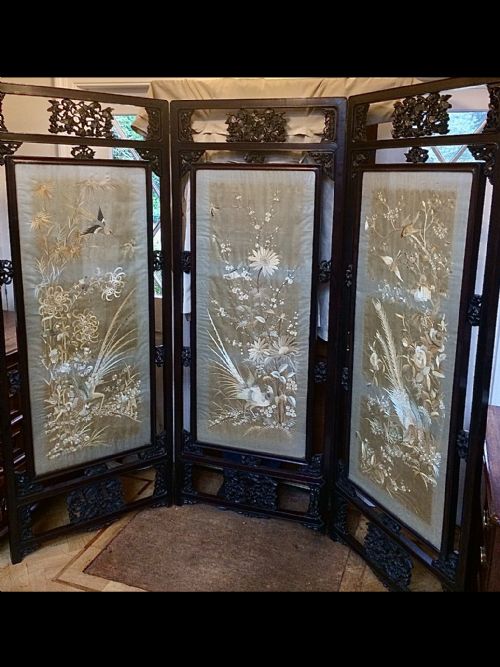
The versions you are most likely to meet on this page span several decades and centuries, incorporating traditional forms alongside later interpretations. They appear as black lacquered pieces, Coromandel works, and silk panels.
Originating from periods including the eighteenth and nineteenth centuries as well as the early twentieth century, these screens showcase styles such as Chinese Qing Dynasty, Chinoiserie, and Chinese Export Art Deco.
How they were made
Makers constructed these panels using wood and hardwood as the primary structural support. Lacquer was applied in multiple layers to create a deep, lustrous surface.
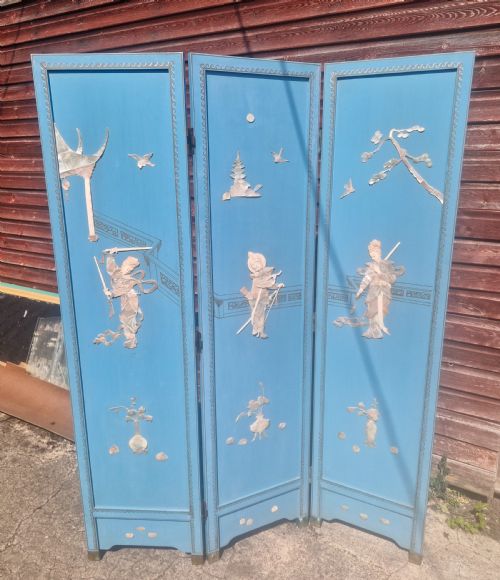
Artisans embellished the structures with materials such as mother-of-pearl, brass, gold leaf, soapstone, and polychrome pigment. Techniques also included carving dragons and mounting hardstone onto the lacquered ground.
Chinese Floor Screen Retail Price Guide 2026
Typical asking prices for chinese floor screen among the pieces listed under this phrase on Sellingantiques today, from the lower quarter to the upper quarter. They describe what is for sale here now, not the wider market.
The styles represented across these folding screens include Chinoiserie, Qing Dynasty, Chinese Export Art Deco, and Chinese Traditional.
What varies in quality
The distinction between standard examples and finer pieces lies in the depth and precision of the carving, particularly on Coromandel and dragon-carved panels. The complexity of the inlay work, whether utilising mother-of-pearl, soapstone, or gold leaf, also dictates the standard of execution.
The richness of the lacquer finish and the preservation of polychrome pigments contribute significantly to the visual weight of a screen. Early pieces from the eighteenth century demonstrate distinct handling compared to twentieth-century interpretations.
The Chinese Floor Screen Glossary
- Coromandel lacquer
- A Chinese incised lacquer technique where the design is carved into a built-up ground, filled with pigments, and finished with clear lacquer. This method produces deeply recessed colourful motifs against a dark background.
- Chinoiserie
- European artistic styles reflecting Chinese decorative motifs, frequently found on screens produced for export. These designs interpret traditional Eastern themes through Western aesthetic lenses.
- Hardstone-Mounted
- Decoration utilising minerals such as soapstone carved into figurative or floral shapes and applied to the screen surface. This technique adds tactile dimension and varied colour to the lacquer panels.
- Folding Screens
- Room dividers constructed from multiple panels hinged together to stand in a zigzag configuration. They allow spaces to be divided flexibly and folded flat when not in use.
Chinese Floor Screen: Frequently Asked Questions
How were Chinese floor screens used?
These screens served primarily to partition large rooms, create private dressing areas, or act as decorative backdrops against walls.
In traditional settings, they helped manage drafts and direct movement through a space while displaying artistic narratives.
What periods do these screens come from?
The pieces available span from the eighteenth century through the nineteenth century and into the mid-twentieth century.
Earlier examples often feature Coromandel lacquer, while later twentieth-century items include Art Deco export pieces and dressing screens.
How do I live with a floor screen?
Position the panels securely on level flooring, allowing the hinges to form a stable zigzag shape that supports the weight.
Keep them away from direct sunlight and excessive moisture to protect the delicate lacquer, wood, and inlaid materials.
What materials make up these screens?
Construction relies heavily on wood and hardwood substrates finished with layers of black or polychrome lacquer.
Decorations incorporate mother-of-pearl, soapstone, brass hardware, gold leaf, and occasionally hand-painted silk panels.