



Chinese Panel Screen
A Chinese panel screen brings dramatic scale, intricate carving, and deep lacquer work straight into an interior.
Chinese Panel Screen
When you search for a chinese panel screen, you encounter a diverse range of room dividers, wall plaques, and table screens originating from various periods including the eighteenth, nineteenth, and early twentieth centuries. The pieces on this page span multiple folds and configurations, from large freestanding eight-fold room dividers down to intimate table screens and framed wall panels.
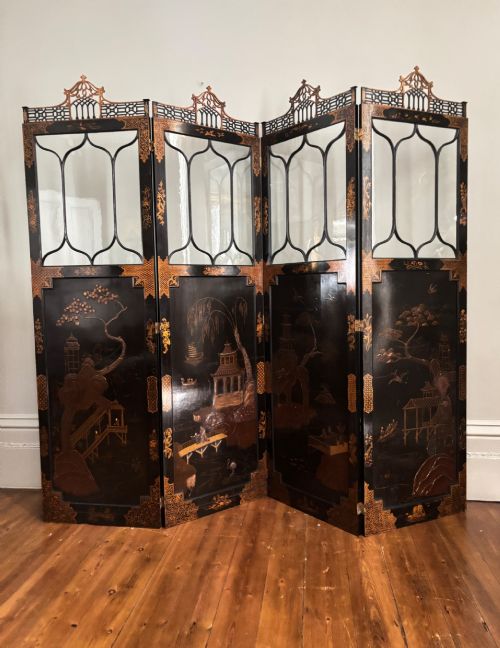
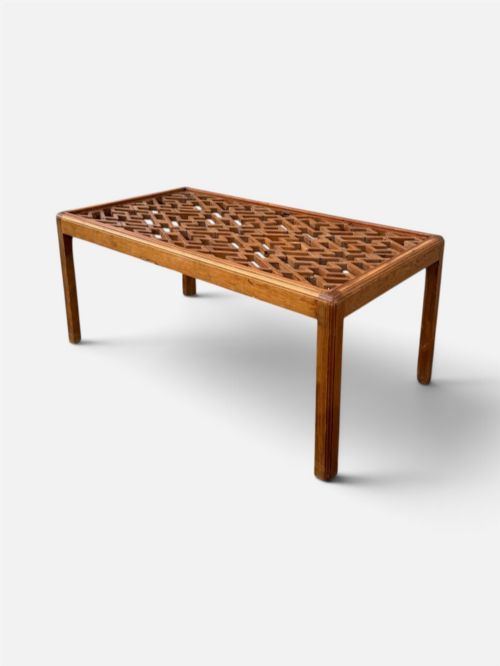
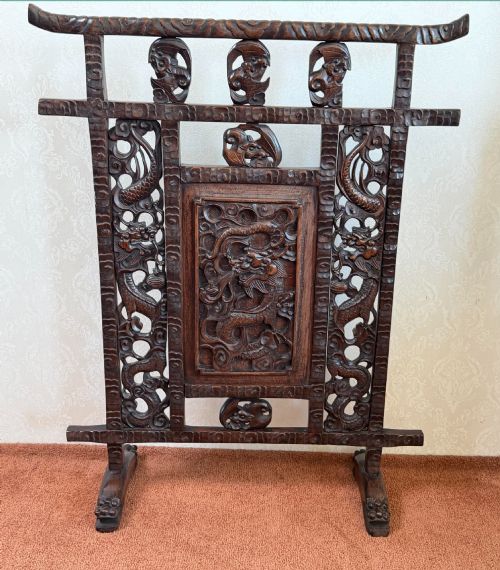
The most common formats you will meet here are folding screens and room dividers built from multiple leaves, alongside smaller carved wooden window panels and silk firescreens. Styles stretch from traditional Qing Dynasty workmanship and Coromandel lacquer to nineteenth-century Chinoiserie interpretations and twentieth-century coffee tables adapted from antique fretwork panels.
How they were made
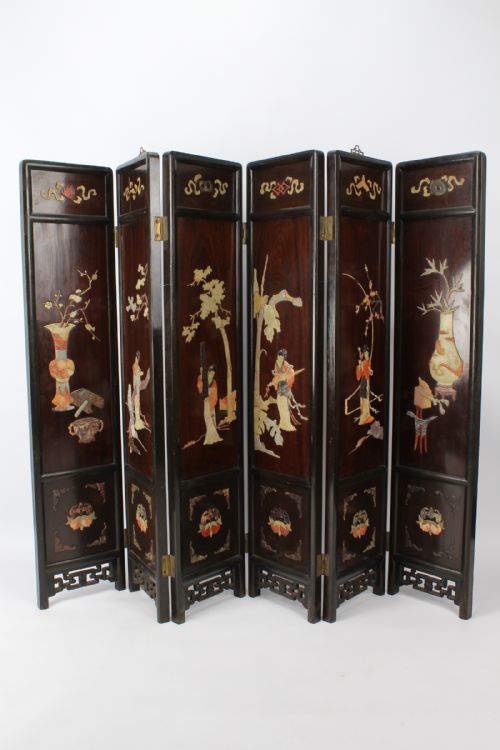
Wood serves as the primary structural foundation for these objects, frequently utilising dense hardwoods or papier-mâché finished with layers of black lacquer and gold leaf. Craftsmen built folding frames and panels using intricate joinery, then applied decorative surfaces featuring mother-of-pearl, abalone, and hardstone inlay.
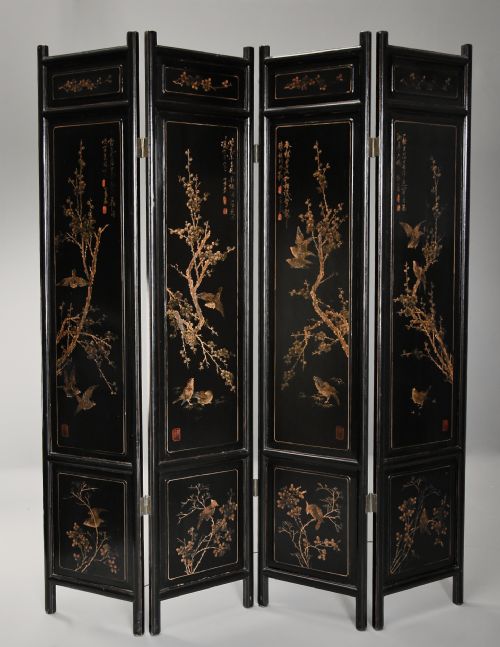
Surface decoration often involves Coromandel lacquer techniques, where makers incised designs into deep layers of lacquer before filling them with colour, alongside hand-carved wooden motifs depicting birds, foliage, and dragons. Silk panels additionally incorporate fine painted or embroidered textiles held within carved wooden stands and ebonised frames.
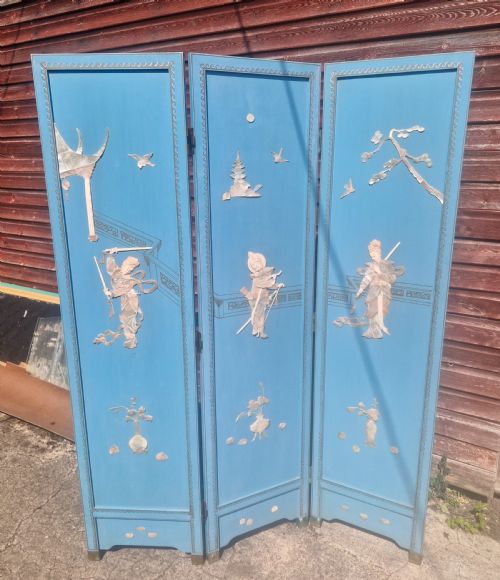
Several panels incorporate delicate abalone inlay depicting birds perched among foliage, giving stationary timber a permanent, shimmering garden canopy.
What varies in quality
The depth and crispness of the hand-carving define the upper tiers of quality, separating deeply undercut wooden panels and finely incised Coromandel lacquer from simpler, shallower decorative surfaces. Superior examples display meticulous attention to detail in the depiction of natural motifs, human figures, and mythological subjects across every fold.
The integrity of the materials and the complexity of the assembly also drive distinctions in standard. Screens utilising high-grade hardwoods, substantial brass hinges, genuine mother-of-pearl inlay, and hand-painted silk retain their structural and visual coherence far better than lighter, purely decorative interpretations.
The Chinese Panel Screen Glossary
- Coromandel
- A type of Chinese incised lacquer work where dark surfaces are carved out, filled with pigments, and sealed. This technique creates a rich, textured relief effect across multi-fold screens.
- Chinoiserie
- European decorative style reflecting Chinese artistic influences. It appears frequently in nineteenth-century British adaptations of oriental motifs.
- Qing Dynasty
- The last imperial dynasty of China, spanning the seventeenth to early twentieth centuries. Pieces from this era often feature traditional carving and lacquer techniques.
- Hardwood
- Dense, durable timber utilised for the structural frames and carved elements of superior screens. It provides the weight necessary for large freestanding dividers.
Chinese Panel Screen: Frequently Asked Questions
How do I use a large screen?
Large multi-fold screens function primarily as freestanding room dividers to zone open spaces or create private areas within a room. They also serve as dramatic decorative backdrops when placed flat against a wall.
Smaller variants, such as table screens and framed wall plaques, offer versatile accent decoration for sideboards and display spaces without requiring floor clearance.
What is Coromandel lacquer?
Coromandel lacquer is an Asian technique where wooden panels receive numerous layers of dark lacquer before artisans carve designs directly into the surface. The recessed areas are then painted with colours or gold leaf to create high-contrast pictorial scenes.
This method yields durable, deeply textured surfaces that often depict landscapes, flora, fauna, and traditional narrative figures.
How do I date a lacquer screen?
Dating relies on examining the construction methods, the composition of the wood, and the wear patterns within the lacquer layers. Eighteenth and nineteenth-century pieces typically display hand- mixed pigments, traditional joinery, and natural ageing in the finish.
Twentieth-century interpretations and later Chinoiserie pieces often reveal different hardware, machine-finished elements, or synthetic binders upon closer inspection.
Are silk panels fragile?
Silk panels require careful placement away from direct sunlight and excessive moisture to protect the delicate threads and painted surfaces. They are best suited to stable indoor environments where temperature fluctuations remain minimal.
When housed securely within carved wooden frames or firescreen stands, protected textiles can endure successfully for generations.