
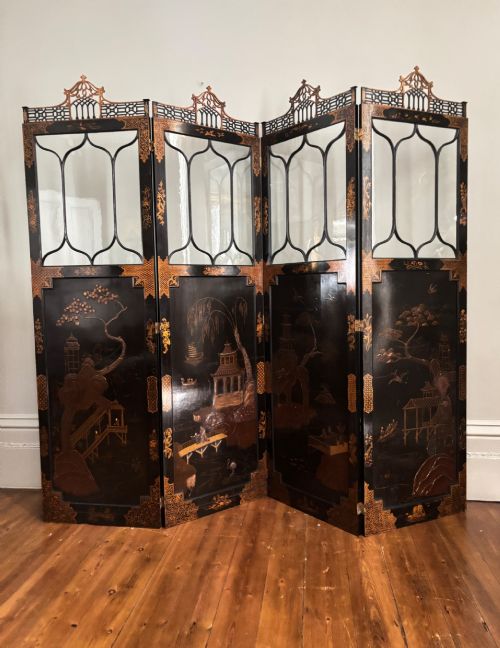
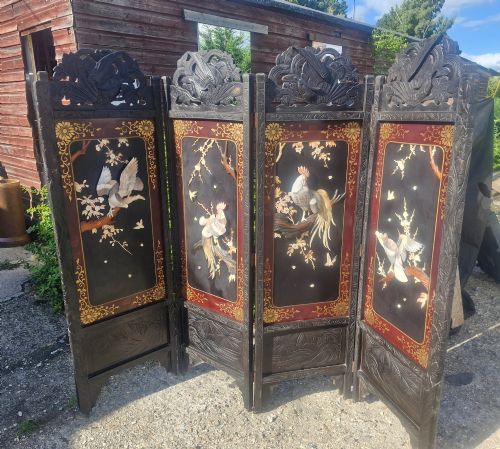
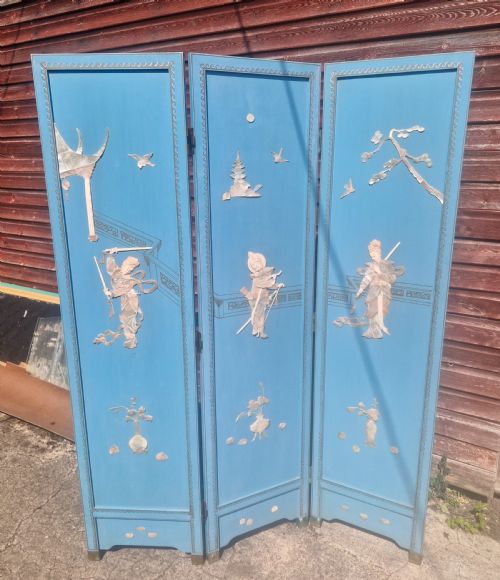
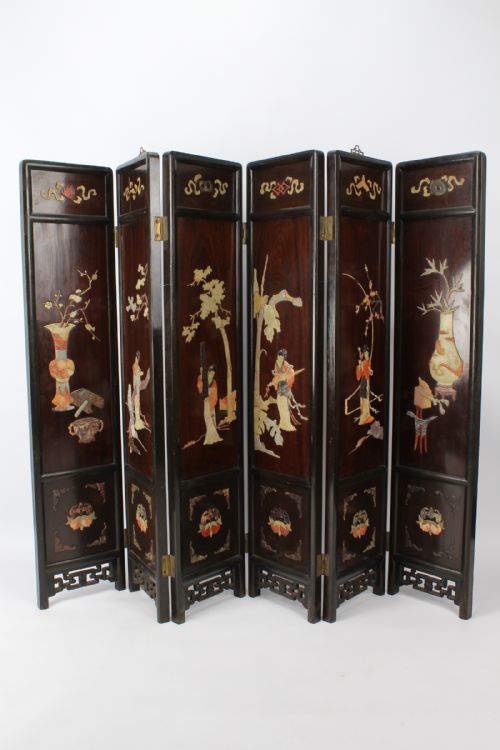


Carved Lacquer Folding Screen
These carved lacquer folding screen pieces bring depth and intricate detail to a room, offering both division of space and rich visual texture.
Carved Lacquer Folding Screen
A carved lacquer folding screen acts as a functional room divider or a decorative fire screen, dividing spaces while adding texture. The examples available range from compact three-fold dressing screens to substantial eight-fold panels.
Most pieces date from the nineteenth and early twentieth centuries, drawing on Chinese Qing Dynasty, Republic Era, and Japanese export traditions. Buyers frequently encounter black lacquered coromandel screens and decorated panels featuring multiple folds.
How they were made
Craftsmen built these screens using wood and hardwood as the structural base, applying multiple layers of lacquer to create a smooth, durable surface. Deep carving into the lacquer coats exposes contrasting layers of pigment beneath.
Many panels incorporate inlaid materials such as bone and hardstone to build raised pictorial scenes. Brass hardware typically joins the individual folds together, allowing the panels to articulate smoothly.
Listings span periods from the eighteenth century through to the 1950s, with a strong concentration of pieces originating in the early twentieth century.
What varies in quality
The depth and precision of the carving separate standard items from finer works, with superior pieces showing crisp relief across complex figures and foliage. The complexity of the panel count and the scale of the composition also influence the character of each piece.
The richness of the pigment application and the subtlety of inset bone or hardstone details distinguish the most accomplished examples. Superior execution in the lacquer layering creates a durable depth that flat finishes lack.
The Carved Lacquer Folding Screen Glossary
- Coromandel
- A type of Chinese incised lacquer where the background is carved away and filled with colours or left plain. It creates a distinctive layered appearance across folding screens.
- Chinoiserie
- A European artistic style reflecting Chinese motifs and techniques. It appears frequently in nineteenth and twentieth-century decorative screens.
- Hardstone
- Minerals such as jade or agate used for inlays. Craftsmen mounted these stones into lacquer panels to depict figures and landscapes.
- Fire screen
- A small decorative panel placed in front of an unused fireplace. These screens protect a room from drafts or simply ornament the hearth.
Carved Lacquer Folding Screen: Frequently Asked Questions
How do I use a folding screen in a room?
These screens work well to divide large spaces, create dressing areas, or conceal corners. Position them against a wall as a backdrop or angle the folds to partition an open plan.
Ensure the panels have adequate clearance to articulate without striking surrounding furniture. Placing them away from direct heat sources protects the lacquer and wood.
How do I tell Chinese coromandel from Japanese lacquer?
Chinese coromandel pieces often feature incised lacquer work where designs are cut into the dark surface and tinted. Japanese examples in the listings tend to utilise deep relief carving with applied bone and hardwood elements.
Looking closely at the motifs and the handling of the figures helps clarify the regional origin. The evidence shows distinct export traditions from both nations during the nineteenth and twentieth centuries.
How many panels do these screens usually have?
The pieces span from compact three-fold dressing screens up to grand eight-fold room dividers. Four-panel and six-panel configurations are also common across the available inventory.
Selecting the panel count depends on the scale of the room and the intended placement. Larger screens function as substantial room dividers, while smaller versions suit intimate corners.
What materials are used besides lacquer?
Wood and hardwood form the underlying structural panels that support the lacquer layers. Inlaid elements frequently include bone, hardstone, and painted pigments.
Brass hinges typically connect the individual folds together. These supporting materials contribute to the overall weight and stability of each screen.