




Lacquered Folding Room Divider
A lacquered folding room divider organises a grand interior, dividing space with rich Oriental artistry and polished panels.
Lacquered Folding Room Divider
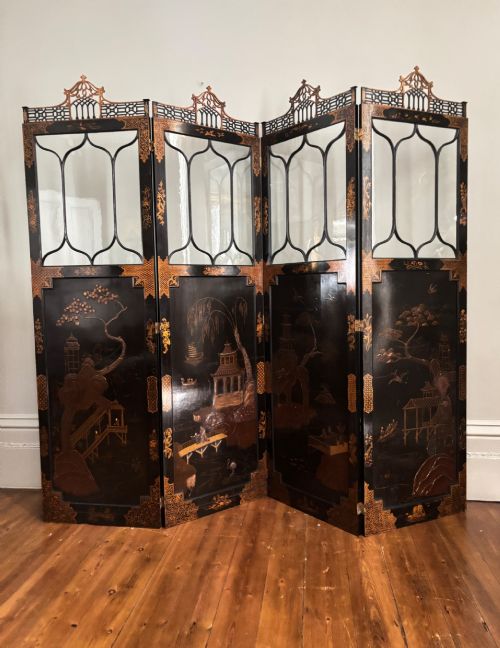
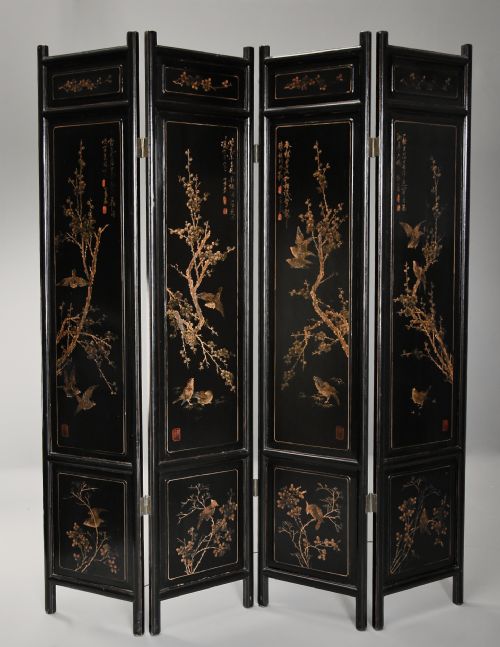
A lacquered folding room divider stands as a multi-panel screen used to segment rooms or create private corners within a floor plan. The selection encompasses large eight-fold examples, four-leaf freestanding screens, and lower fire screens designed for hearth placement.
The objects stem from diverse origins including China, Japan, and Burma, spanning periods from the Regency era through to the twentieth century. Chinese Chinoiserie and Japanese Meiji styles appear frequently alongside Victorian interpretations and Burmese variants.
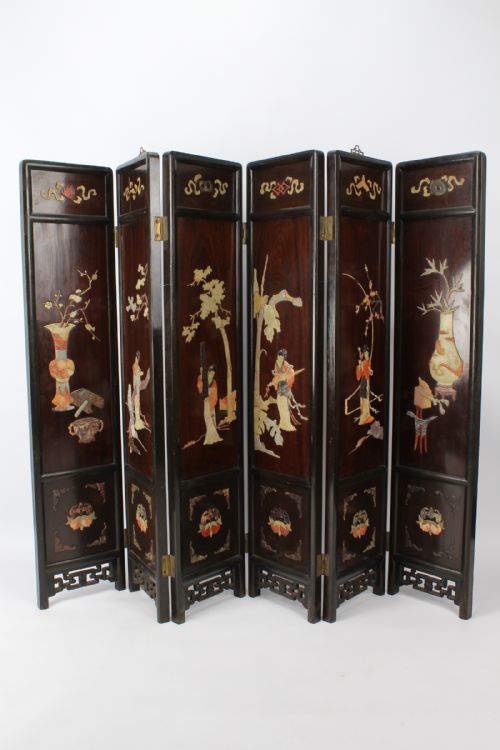
Forms range from tall dressing screens to expansive room dividers featuring three, four, six, or eight interconnected panels. These pieces combine practical space management with decorative storytelling through painted, carved, and inlaid surfaces.
How they were made
Construction relies upon wood and hardwood frames built into hinged leaves that allow the screen to fold neatly in alternate directions. Lacquer is applied in successive layers to build a smooth, deep foundation across the wooden substrate.
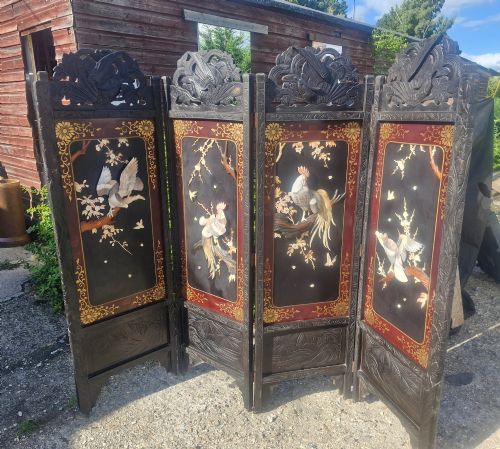
Surface decoration incorporates intricate techniques such as deep carving into coromandel lacquer, applying gilt paint, and mounting contrasting materials. Artisans embed bone, hardstone, and mother-of-pearl to create raised pictorial scenes against the dark lacquered ground.
Several panels double as silent witnesses to domestic life, featuring carved bone figures caught mid-gesture across the dark lacquer.
What varies in quality
Quality rests upon the depth of the lacquer layers and the precision of the joinery connecting the folding panels. Superior pieces display harmonious proportions across numerous leaves without sagging hinges or warped wooden frames.
The artistry of the surface embellishment dictates the standing of the piece. Finely executed hand-carved bone figures, detailed hardstone inlay, and carefully applied gilt work distinguish exceptional screens from simpler painted decorations.
The Lacquered Folding Room Divider Glossary
- Coromandel lacquer
- A Chinese incised lacquer technique where the surface is covered in layers of dark lacquer, carved into, and filled with colours or gilt. This method produces recessed pictorial designs with textured depth.
- Chinoiserie
- A European artistic style reflecting Chinese motifs and decorative techniques. It appears on domestic furniture and screens produced during the Victorian period and earlier.
- Hardstone
- Minerals such as jade or agate utilised in decorative inlays. Artisans mount these stones onto lacquer panels to create colourful, tactile floral and figural elements.
- Meiji
- A period of Japanese history spanning from 1868 to 1912 known for accomplished decorative arts. Screens from this era often feature detailed lacquerwork and bone appliques.
- Fire screen
- A small freestanding screen placed before a fireplace when not in use. These domestic objects block radiant heat and decorate the hearth area.
Lacquered Folding Room Divider: Frequently Asked Questions
How do I clean a lacquered screen?
Dust the panels gently with a dry, soft microfibre cloth to remove surface particles without scratching the finish.
Avoid using liquid cleaners, solvents, or furniture polishes which can damage delicate lacquer and inlaid bone or hardstone elements.
Can I use an eight fold screen in a small room?
An eight fold screen requires substantial floor space to stand securely in a zig-zag configuration without tipping.
Smaller rooms are better suited to three or four panel variations that divide space efficiently without dominating the floor plan.
What is the difference between a dressing screen and a room divider?
Dressing screens traditionally functioned as private partitions for changing clothes within bedrooms or boudoirs.
Room dividers typically feature greater height and panel counts designed to segment larger living spaces permanently.
How do I tell Chinese coromandel from Japanese lacquer?
Chinese coromandel screens feature distinctive incised carving where the design is cut into the dark lacquer layers.
Japanese lacquerwork frequently emphasises raised metallic maki-e painting, applied textiles, and dimensional carved bone figures.