




Chinese Folding Partition Screen
These Chinese folding partition screen examples provide a practical division of space through traditional craftsmanship.
Chinese Folding Partition Screen
A Chinese folding partition screen provides a flexible method for dividing interior spaces using hinged panels that fold together when not in use. These pieces function as decorative barriers or dressing dividers within a room.
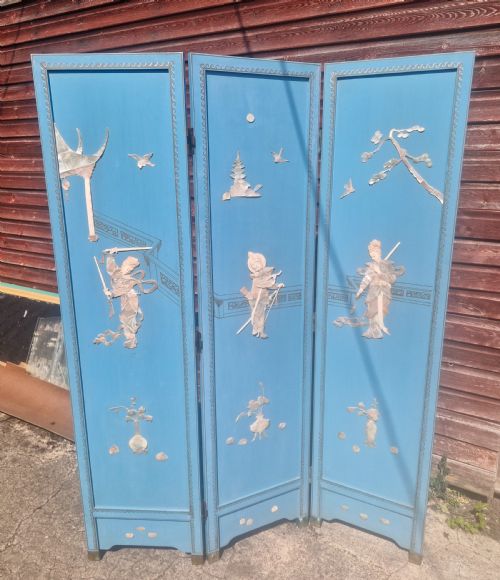
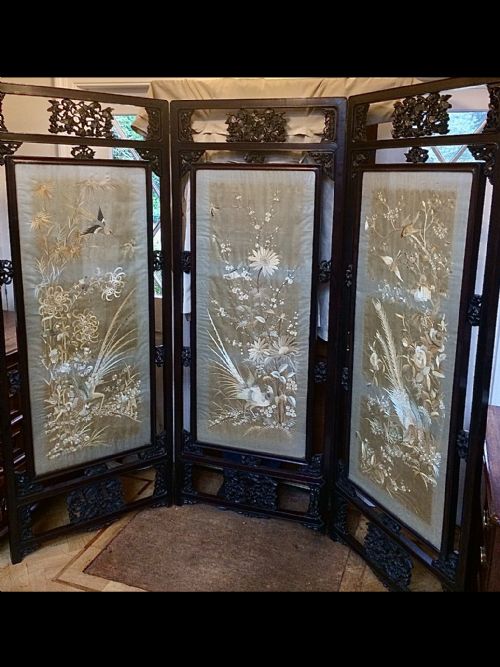
The selections on this page span from the nineteenth century through the mid twentieth century, incorporating styles such as Chinese Traditional, Chinoiserie, and Chinese Republic Era. Most examples feature multiple folding leaves constructed for freestanding placement.
Buyers encounter formats ranging from three-fold dressing screens up to expansive eight-fold room dividers. Common forms include lacquered surfaces, carved woodwork, and silk insertions.
How they were made
Construction relies upon timber frames joined to form multiple panels connected by hinges. Wood and hardwood form the structural core of these partitions.
Surface decoration frequently utilises lacquer techniques applied in layers to the wooden panels. Artisans also integrated gold leaf, mother-of-pearl, and glass details into the finished pieces.
Chinese Folding Partition Screen Retail Price Guide 2026
Typical asking prices for chinese folding partition screen among the pieces listed under this phrase on Sellingantiques today, from the lower quarter to the upper quarter. They describe what is for sale here now, not the wider market.
Listings feature items from the nineteenth century through the nineteen-fifties, utilising materials such as lacquer, hardwood, brass, and silk.
What varies in quality
Quality rests in the depth and execution of the surface carving and lacquer application. Finer panels display intricate detail work across the woodwork and decorative motifs.
The complexity of the folding mechanism and the stability of the multi-panel structure distinguish different grades. Superior examples maintain balanced alignment across all leaves when extended.
The Chinese Folding Partition Screen Glossary
- Coromandel
- A type of Chinese incised lacquerware where the background is carved away and filled with colours or gold. This technique produces deeply textured decorative panels.
- Chinoiserie
- A European artistic style reflecting Chinese motifs and decorative traditions. It appears frequently in export pieces from later periods.
- Lacquer
- A durable resin finish applied in multiple coats to wooden surfaces. It provides a smooth, glossy protective layer that accepts intricate artwork.
- Fold
- An individual panel connected by hinges within a multi-panel screen. Screens are commonly measured by the total count of these leaves.
- Mother-of-pearl
- An iridescent inner layer of mollusc shell used for inlay work. Craftsmen embed these thin pieces into lacquer surfaces to create contrasting highlights.
Chinese Folding Partition Screen: Frequently Asked Questions
How are folding screens used in rooms?
These partitions create private zones within open spaces or act as decorative backgrounds against walls.
Their hinged panels adjust to fit different room layouts and fold flat for storage when not needed.
What materials make up these screens?
Construction primarily involves wood and hardwood frameworks finished with lacquer coatings.
Additional elements such as brass, glass, gold leaf, and mother-of-pearl enhance the surface decoration.
How do I count the folds?
Each vertical panel connected by hinges represents a single fold in the total structure.
Listings typically state the number of leaves, ranging from three-fold up to eight-fold configurations.
What periods do these pieces date from?
The available selection covers items produced from the nineteenth century through the mid twentieth century.
Dates range across specific decades including the early twentieth century and the Republic Era.