



Gilded Folding Screen
A gilded folding screen divides a room with instant presence, catching the light across multiple panels of carved wood, lacquer, or tooled leather.
Gilded Folding Screen
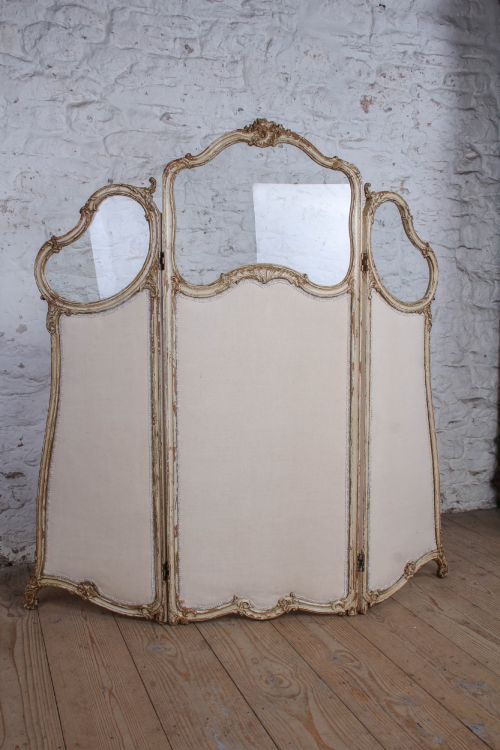
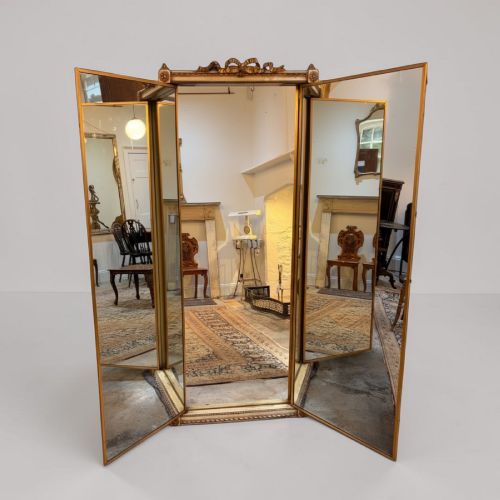
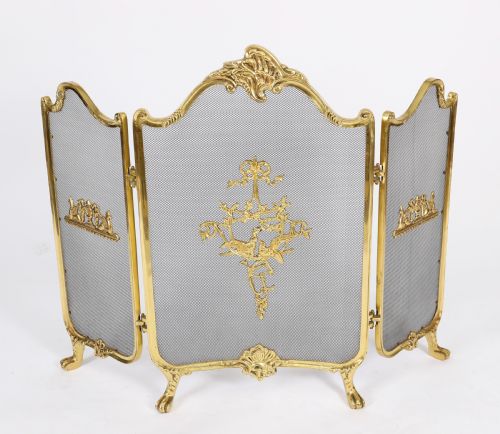
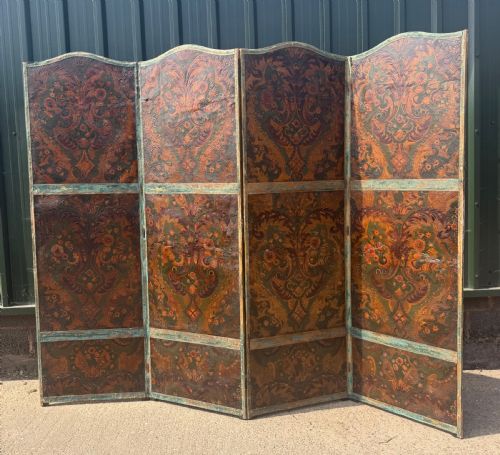
A gilded folding screen serves as a portable partition or a decorative focal point within a room, appearing in forms ranging from tall four-fold room dividers to intimate three-fold vanity screens and small fire screens. These pieces originate from various periods including the eighteenth century, the Regency era, the nineteenth century, and the Edwardian period, reflecting diverse global workshops.
The versions most commonly met on this page are multi-fold wooden panels embellished with gold leaf, giltwood, or lacquer, often spanning three, four, or eight leaves. Continental examples frequently show French Rococo or Louis XVI influence, while others display Chinoiserie or East Asian motifs executed on lacquer and canvas.
Beyond grand room dividers, the selection includes specialised formats such as fire screens with glass or gilt bronze mounts, and smaller table or vanity objects. Each variation relies on hinged panels to alter the geometry of an interior space while displaying rich surface decoration.
Materials and construction
Makers constructed the primary frames of solid wood, giltwood, or metal, applying layers of gesso and gold leaf to achieve a luminous gilded surface. Elaborate carving, brass mounts, and glazed panels frequently reinforce the structural framework of these multi-fold items.
Surface decoration relies on diverse techniques such as black lacquer, hand-painted polychrome scenes on canvas, and tooled or embossed Cordoban leather. Artisans joined individual panels with sturdy hinges, allowing the screens to articulate smoothly in both residential and formal settings.
Gilded Folding Screen Retail Price Guide 2026
Typical asking prices for gilded folding screen among the pieces listed under this phrase on Sellingantiques today, from the lower quarter to the upper quarter. They describe what is for sale here now, not the wider market.
Listings here feature materials such as brass, giltwood, lacquer, gold leaf, leather, glass, and metal across multiple centuries.
Markers of distinction
The refinement of the carving and the depth of the gilding set superior examples apart, where hand-applied gold leaf catches the light with subtle variation rather than flat uniformity. Finer pieces demonstrate meticulous attention to the reverse sides and hinges, ensuring the screen maintains its structural integrity from every angle.
Artistic execution on the painted or lacquered panels dictates the level of craftsmanship, with delicate Chinoiserie details and intricate tooled leather work commanding greater visual weight. The cohesion between the structural wood frame and the decorative infill reveals the skill of the original workshop.
Paul Sormani
The Gilded Folding Screen Glossary
- Giltwood
- Wood that has been coated with a thin layer of gold leaf or gesso and gold powder. This finish provides a durable metallic sheen characteristic of classical European furniture.
- Chinoiserie
- European decorative style that reflects Chinese artistic influences. It frequently appears on lacquered screens and panels with motifs of figures, landscapes, and pavilions.
- Cordoban leather
- Heavy leather that has been hand-painted, embossed, and gilded. It was widely used in luxury screens for its rich texture and durability.
- Fire screen
- A small ornamental screen placed in front of a fireplace when not in use. These often feature glass panels or gilt bronze mounts to deflect room drafts.
- Lacquer
- A durable resin finish applied in multiple layers and polished to a smooth sheen. It forms the dark, reflective ground typical of East Asian folding screens.
Gilded Folding Screen: Frequently Asked Questions
How were folding screens used historically?
Historically, folding screens served to block drafts in large rooms, create private dressing areas, or conceal doorways.
In grand interiors, they also acted as movable backdrops to soften rigid architectural lines and frame specific furniture groupings.
Can these screens support a room layout?
Larger multi-fold screens easily divide open-plan spaces or zone off a quiet corner for reading and relaxation.
Their substantial height and hinged panels allow them to stand independently without permanent wall fixings.
How do I care for gilded wood?
Dust the gilded surfaces gently with a dry, soft cloth to prevent the accumulation of grit in carved recesses.
Avoid liquid cleaners and keep the screen away from direct heat sources and strong sunlight to protect the gold leaf.
How do I identify a French Rococo screen?
French Rococo screens typically feature asymmetrical carved scrollwork, C-scroll motifs, and warm giltwood or gilt bronze frames.
They often incorporate decorative painted panels, Aubusson tapestry, or glazed sections typical of nineteenth-century revival work.