


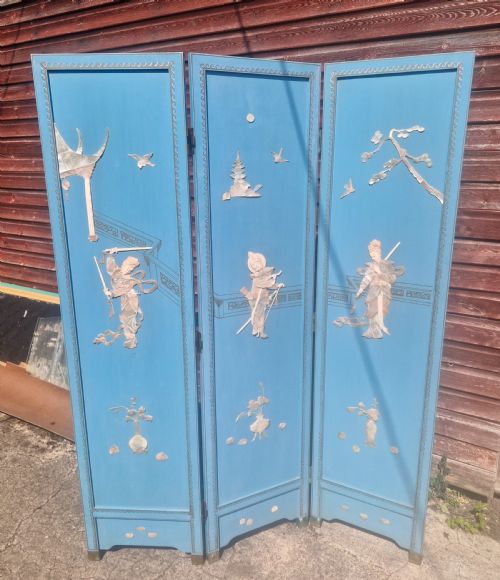


Antique Room Partition
An antique room partition organises a floor plan with hinged panels that carry centuries of decorative craft.
Antique Room Partition
An antique room partition functions as a flexible architectural boundary, dividing domestic spaces with folding panels of varying height and width.
Buyers encounter folding screens, privacy screens, and dressing room dividers originating from Victorian, Edwardian, and early twentieth-century workshops.
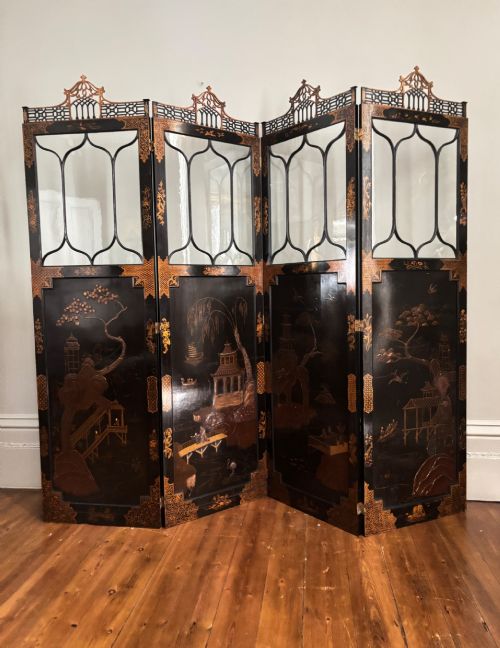
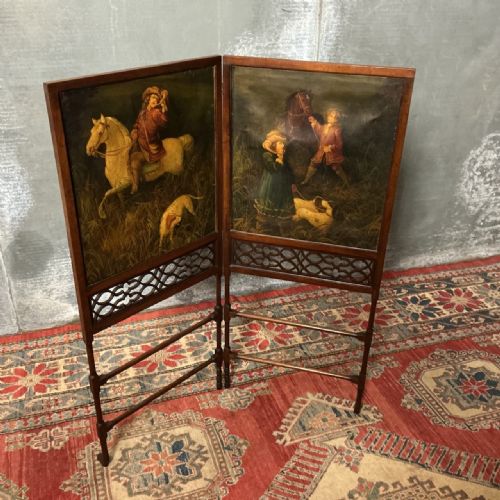
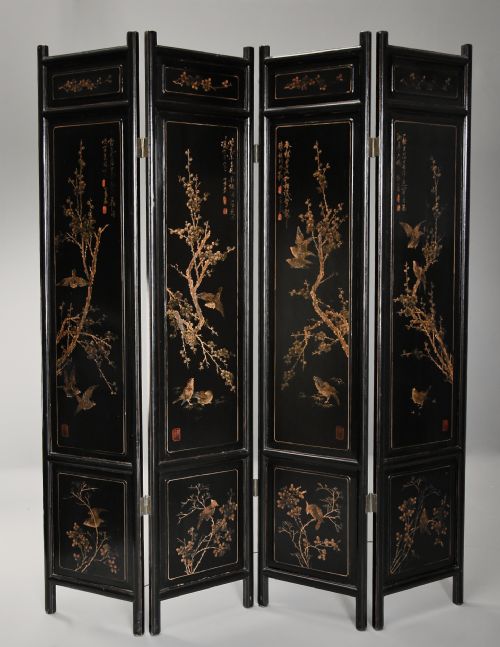
Common forms range from multi-fold Chinese lacquered panels to English mahogany frames fitted with oil paintings, fabric, or paper.
Materials and Construction
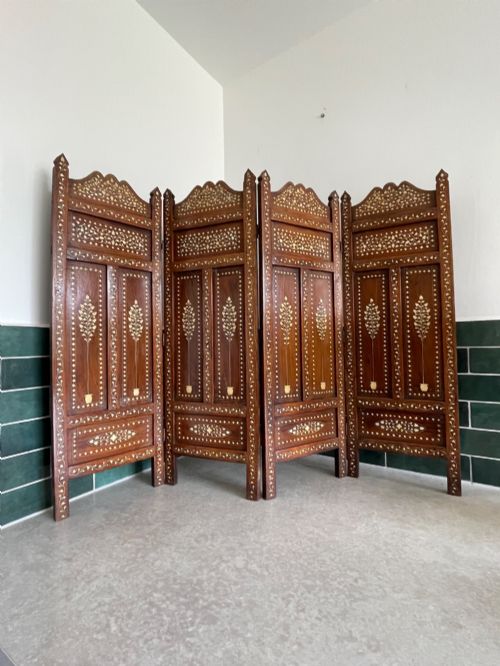
Joiners built structural frameworks using timbers such as mahogany, oak, padauk, and walnut, frequently incorporating brass hinges for multi-directional folding.
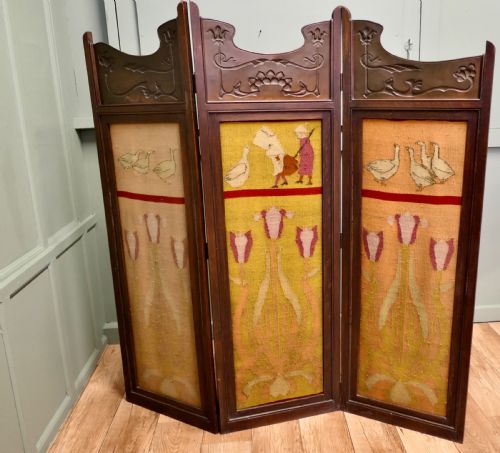
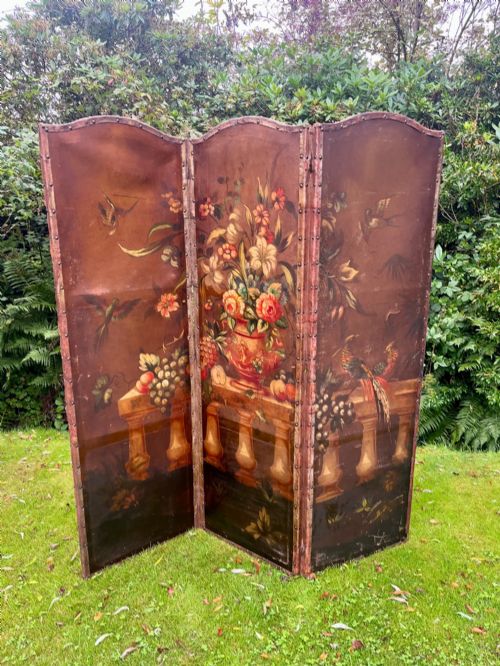
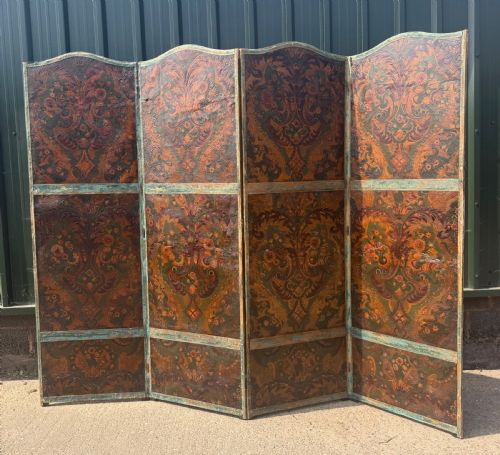
Surfaces received intricate treatments including hand-painted leather, polychrome canvas, giltwood carving, lacquer, needlepoint, and inset glass panels.
The archive records pieces spanning the eighteenth, nineteenth, and twentieth centuries.
Assessing Quality
Distinction lies in the execution of the decorative medium, separating hurried decoupage or scrap work from finely brushed oils, carved coromandel lacquer, and detailed needlework.
Structural integrity depends on the retention of original hinges and the stability of timber frames that support heavy fabric, leather, or glass inserts.
Paul Sormani
The Antique Room Partition Glossary
- Coromandel
- A type of Chinese incised lacquer work where designs are cut into a dark ground and filled with colours. This technique appears on multi-fold screens from the nineteenth and twentieth centuries.
- Mashrabiya
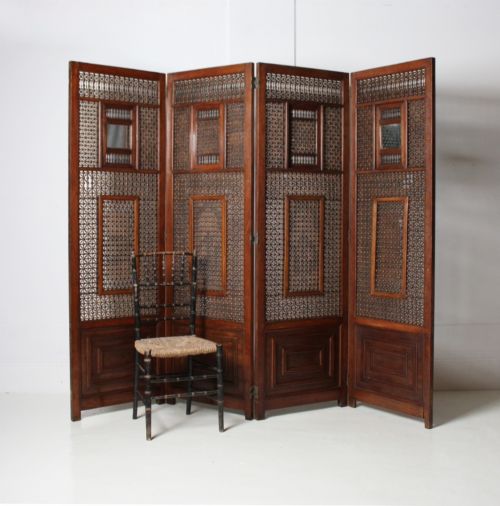
- An architectural element of turned wood latticework forming decorative panels. These appear within large room dividers.
- Scrap work
- A decorative surface technique using layered paper cut-outs or prints affixed to a screen. Victorian examples often cover entire folding panels in this manner.
- Aubusson
- A traditional French tapestry weave utilised for textile screen inserts. These panels originate from established weaving centres.
- Giltwood
- Timber carved and coated with gold leaf or metallic paint. This finish defines decorative frames from French revival and Victorian periods.
Antique Room Partition: Frequently Asked Questions
How do you use a room partition?
These folding sections divide open floor plans, create private dressing areas, or conceal utilitarian corners within a room.
They stand independently on hinges and move easily to alter the geometry of domestic spaces.
Were screens used outdoors?
Historical examples served strictly inside houses, studios, and institutional settings for privacy and draught exclusion.
Exposure to damp air and temperature shifts damages antique timber, lacquer, and textile panels.
How do you maintain antique leather panels?
Painted and gilt leather surfaces require stable indoor humidity and protection from direct sunlight to prevent cracking.
Dusting with a soft dry cloth preserves the fragile pigments and metallic leaf applied centuries ago.
How do you identify a Victorian scrap screen?
Victorian examples feature dense collages of cut-out paper prints, greetings, and illustrations pasted across wooden folding leaves.
Maker customs of the period involved families clipping and arranging these images by hand over many years.