


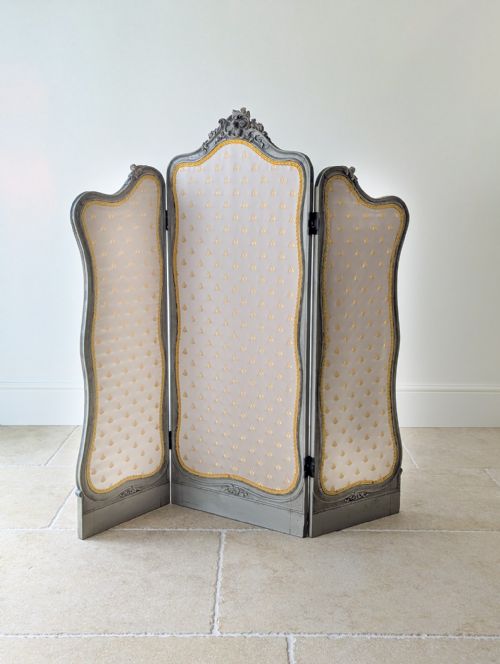


French Screen Divider
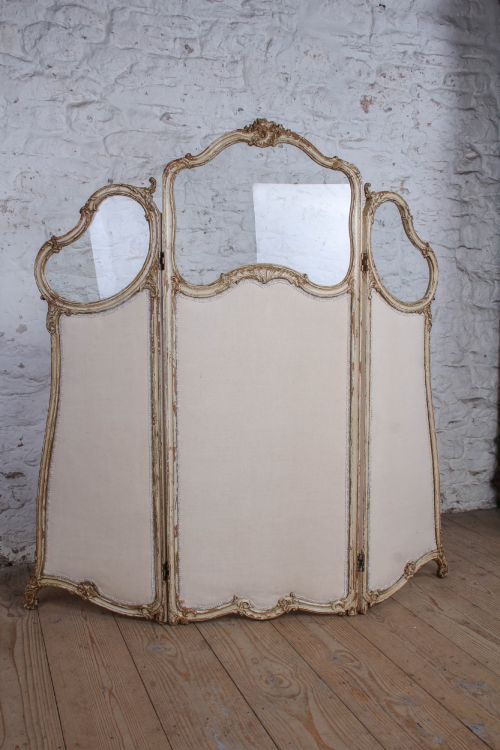
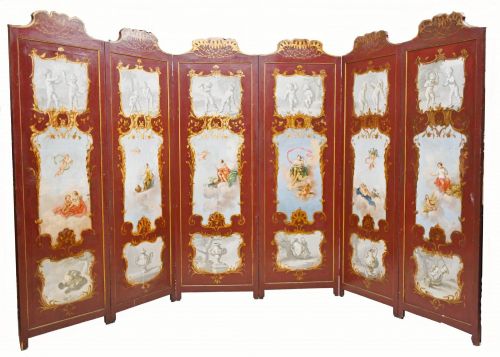
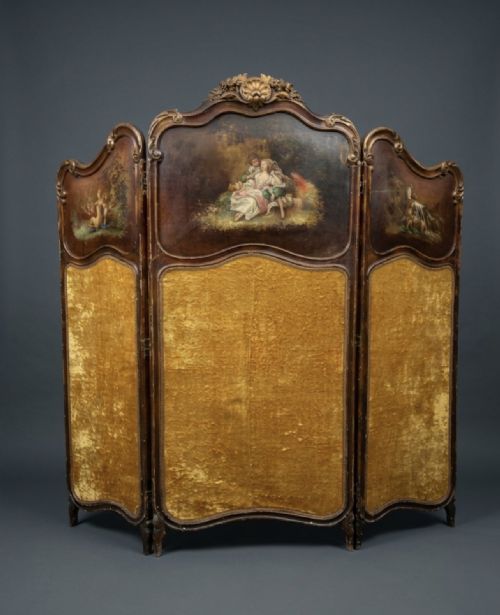
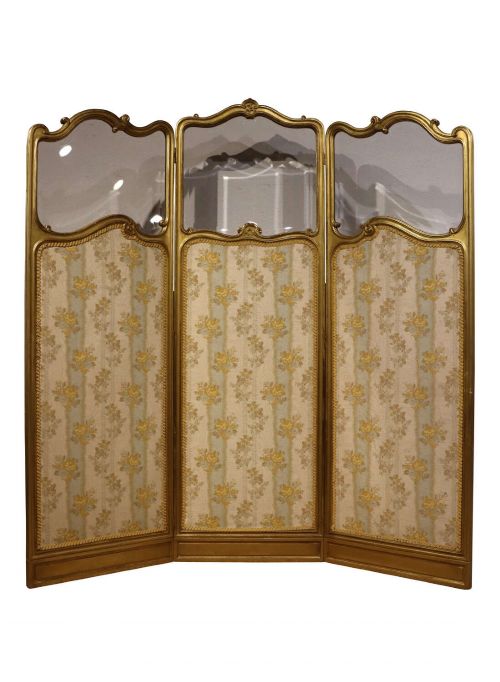
These French screen divider examples shape an interior through panels of giltwood, painted leather, and fabric, creating privacy with continental flair.
French Screen Divider
A french screen divider creates temporary partitions within a room through hinged panels that fold to suit the space. These pieces serve practical functions of privacy and draught exclusion while introducing decorative surface work to an interior.
The selection on this page centres primarily on nineteenth-century pieces, including Victorian interpretations and specific decades such as the eighteen-seventies and eighteen-nineties. Buyers encounter three-fold and four-fold formats most frequently, alongside larger six-panel configurations.
Makers and workshops utilised various forms ranging from tall dressing screens and modesty panels to low fire screens and vanity mirrors. Frames appear in walnut, giltwood, and carved wood enclosing glass, silk, canvas, and painted leather.
Materials and construction
Frames rely on timber foundations such as walnut and giltwood, joined in multiple sections with metal hinges to allow continuous folding. Carved ornamentation defines many pieces, particularly within revival styles and chateau aesthetics.
Panels incorporate diverse infills including bevelled glass, oil paint on canvas, hand-painted leather, needlepoint, tapestry, and Aubusson weave. Glazed sections require secure rebates within the wooden framework to hold glass panes firmly in place.
French Screen Divider Retail Price Guide 2026
Typical asking prices for french screen divider among the pieces listed under this phrase on Sellingantiques today, from the lower quarter to the upper quarter. They describe what is for sale here now, not the wider market.
Several screens retain pastoral painted scenes depicting figures at leisure, offering a glimpse into nineteenth-century domestic escapism.
Assessing quality in folding screens
Quality rests upon the execution of the panel infills, distinguishing hand-painted pastoral scenes or detailed needlepoint from simpler fabric inserts. The crispness of the giltwood carving and the solidity of the timber frame indicate the level of craftsmanship.
Proportion and scale dictate the success of a folding screen, with taller dressing screens requiring robust hinges and stable joints to support multiple heavy panels. The preservation of original materials, such as early leather or antique glass, determines the integrity of the piece.
Paul Sormani·Jean Corot
The French Screen Divider Glossary
- Giltwood
- Wood that has been coated with gold leaf or a gold-coloured metallic finish. This treatment highlights carved details on nineteenth-century frames.
- Aubusson
- A style of tapestry originating from the French town of the same name. These woven panels frequently appear within antique screen frames.
- Modesty screen
- A low or partial screen historically used to shield individuals from draughts or the intense heat of an open fire. These items often double as vanity or dressing accessories.
- Tambour
- Construction method using narrow strips of wood glued to a canvas backing, allowing the panel to roll or flex. This technique appears on specific twentieth-century items.
- Chinoiserie
- European artistic interpretation of Chinese and East Asian decorative motifs. Painted panels of this type show figures, landscapes, and flora.
French Screen Divider: Frequently Asked Questions
How are french screen dividers used?
These screens divide large rooms, shield dressing areas, or block draughts near doors and windows. They fold easily to adjust the layout of a space.
Historically, specific variations served as modesty screens or fire screens to protect occupants from excessive heat and direct observation.
What periods do these screens come from?
The available pieces largely date from the nineteenth century, encompassing Victorian and Edwardian examples alongside specific decades like the eighteen-seventies and eighteen-nineties.
Earlier eighteenth-century items and later twentieth-century Art Deco tambour designs also appear within the wider selection.
What materials make up the panels?
Panels incorporate hand-painted leather, oil paint on canvas, silk, needlepoint, and tapestry. Glazed versions utilise bevelled glass set into the wooden framework.
Frames themselves consist predominantly of walnut and giltwood, supported by metal hinges between the folds.
How many panels do folding screens have?
Most configurations feature three or four folding panels connected by hinges. Larger examples extend to six panels for wider room division.
Smaller variants include single-panel fire screens and vanity screens designed for specific domestic tasks.