



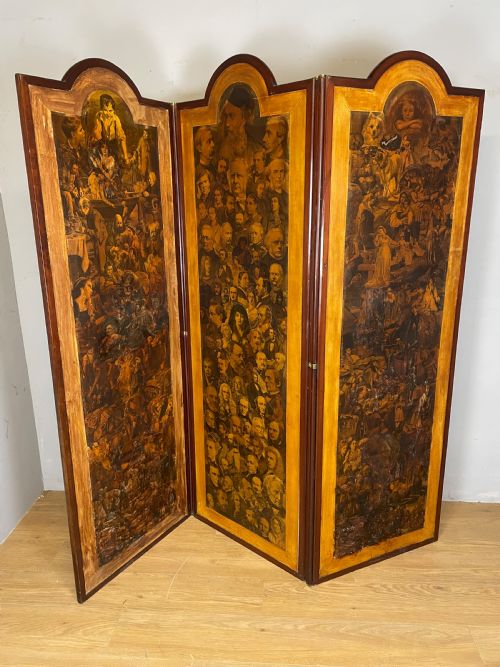
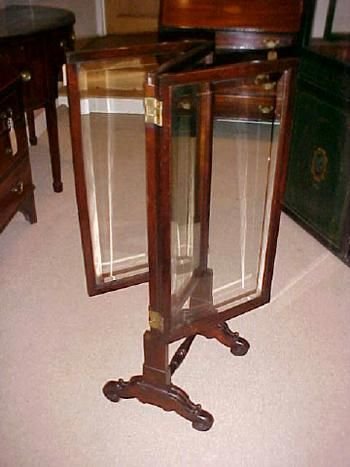
Three Panel Draught Screen
A three panel draught screen keeps the chill from your shoulders while dividing a room with architectural grace.
Three Panel Draught Screen
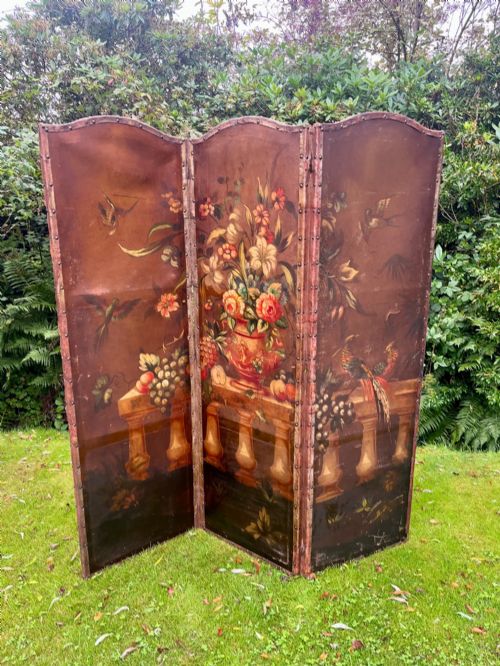
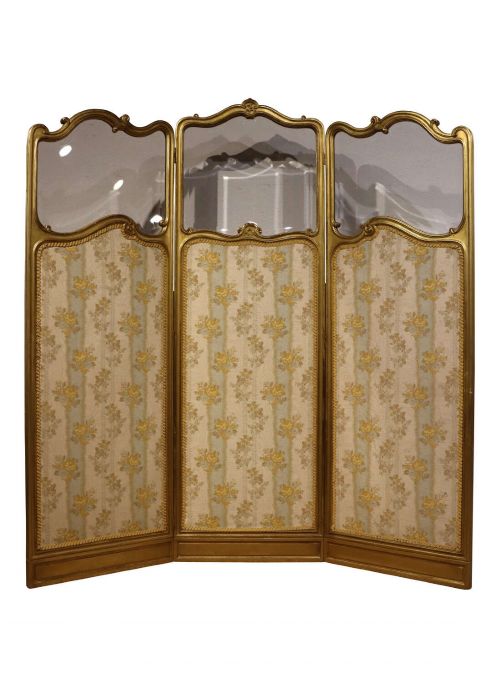
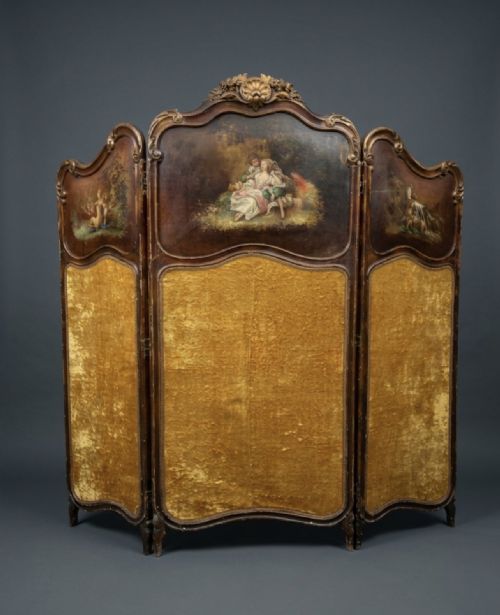
A three panel draught screen stands as a flexible partition across a room, historically deployed to block cold air currents from open fires and doors. You will encounter folding screens constructed from hinged wooden or giltwood frames, often fitted with glass, textiles, or painted panels.
The examples gathered here span from the eighteenth century through to the interwar period, reflecting both formal European revival aesthetics and utilitarian British institutional pieces. Common iterations incorporate hand-painted leather, silk, velvet, and glass inserts within multi-hinged frames.
Makers and manufacturers utilised various regional styles, ranging from French rococo and Flemish baroque to Arts and Crafts designs. These pieces functioned equally well in grand reception rooms, private chambers, and academic settings.
How they were made
Makers constructed the primary frameworks using structural timbers such as oak, walnut, mahogany, and carved giltwood, joined with hinges to permit folding in opposing directions. Gilded surfaces required intricate preparation with gesso before the application of gold leaf.
Panels were infilled with diverse media, including stretched silk, velvet, hand-painted leather, oil paint on canvas, and bevelled glass. Artisans secured these infills using rebated frames and decorative tacks or mouldings to ensure stability during folding.
Listings feature periods from the 18th century to the 1930s, utilising materials including brass, giltwood, oil paint, leather, silk, and velvet.
What varies in quality
Quality rests in the execution of the frame carving, the integrity of the original hinges, and the preservation of hand-painted or woven panel surfaces. Superior screens demonstrate crisp joinery and substantial timber scantlings rather than thin, light mouldings.
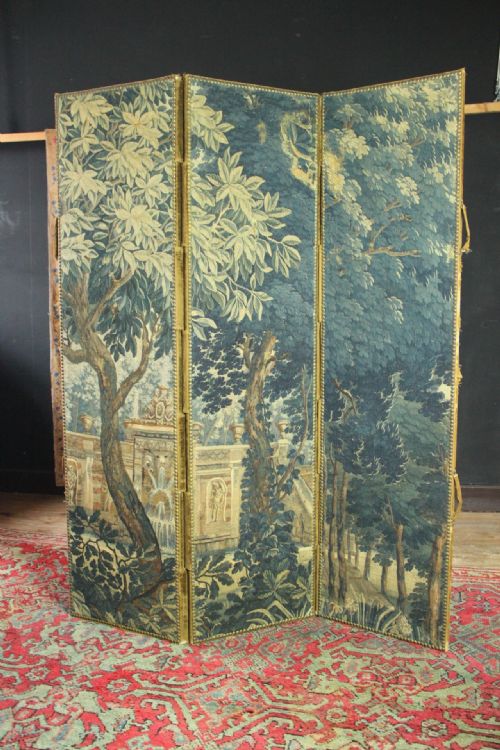
The artistry found in hand-painted leather, verdure tapestries, or Aubusson panels elevates a utilitarian partition into a significant decorative artwork. Original glass panes, particularly bevelled examples, and intact period textiles contribute substantially to the standing of the piece.
The Three Panel Draught Screen Glossary
- Modesty screen
- A low folding screen originally designed to shield a person sitting near a fireplace from excessive heat or to provide privacy in a dressing room.
- Verdure
- A style of tapestry or painting depicting lush foliage, trees, and landscapes, frequently populated by birds or animals.
- Giltwood
- Timber that has been coated with a thin layer of gold leaf or gold paint over a prepared gesso base.
- Aubusson
- A style of tapestry woven in the French town of Aubusson, known for floral and pastoral scenes without metallic threads.
Three Panel Draught Screen: Frequently Asked Questions
How did people use a three panel draught screen?
These screens served primarily to block draughts circulating across flagstone or timber floors from poorly sealed windows and doors. In larger rooms, they created intimate seating areas close to hearths or partitioned off dressing spaces.
Their mobility allowed occupants to reconfigure room layouts instantly as seasonal heating needs shifted throughout the year.
Are these screens stable on modern floors?
Most folding screens stand securely when the three panels are angled slightly rather than pulled completely flat. The weight of dense hardwood frames and glass or leather inserts provides natural ballast.
Uneven floors require careful positioning of the hinges so the weight distributes evenly across all three sections without straining the joints.
How do I identify the period of a screen?
Dating relies heavily on the primary timber, carving styles, and the materials used for the panel infills. For instance, heavy giltwood and rococo revival motifs point to the nineteenth century, while oak frames with specific fabric associations suggest the Arts and Crafts movement.
Examining the construction of the hinges and the backing materials offers further clues regarding the manufacturing decade.
Can I use a draught screen to divide a small space?
A three panel screen works effectively to zone specific areas in compact rooms, such as hiding a workspace or creating an entryway barrier. Because they fold flat, you can store them against a wall when floor space is required.
Consider the height and opacity of the panels to ensure the screen does not block natural light from windows.