






Antique Three Fold Partition
These antique three fold partition pieces divide rooms with grace, bringing painted leather, carved wood and folding panels into a home.
Antique Three Fold Partition
An antique three fold partition serves to divide domestic space, shield a corner from drafts, or create a dressing area. The selection includes folding screens and room dividers from the nineteenth century, the Edwardian period, and the interwar years.
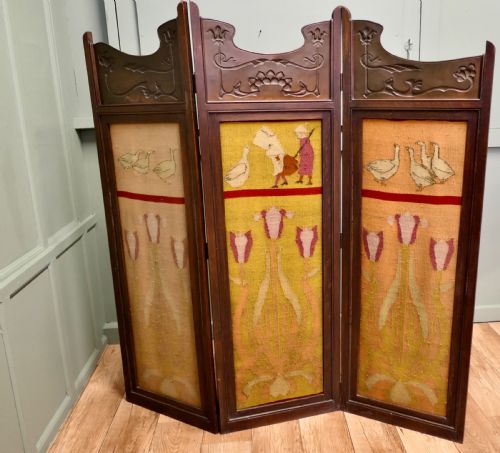
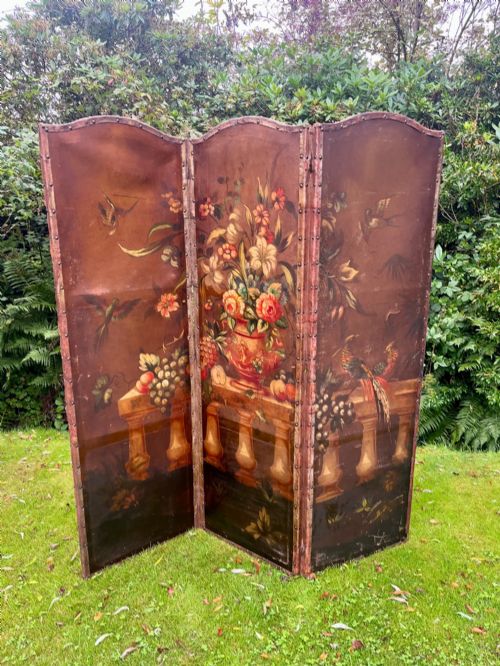
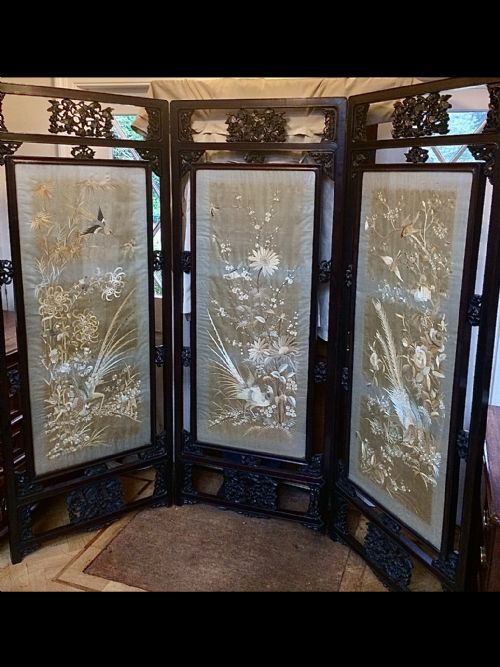
The forms span dressing room vanity screens, privacy screens, and decorative panels. Materials range from oak and mahogany to giltwood, copper, and walnut, often combined with painted leather, glass, silk, or wool.
Continental Baroque, Art Nouveau, Chinoiserie, and French Rococo Revival styles appear across the pieces, alongside country house decoupage and naive wool panels. Each screen folds on hinges to adjust the width and angle of the partition in a room.
How they were made
Makers built the frames from timbers such as oak, mahogany, walnut, and padauk, often carving the wood into elaborate shapes or inlaying the surfaces. Giltwood frames received layers of gold leaf or paint to catch the light.
Panels required diverse trades, from hand-painting on leather and silk embroidery to leaded or clear glass inserts and wool needlework. Hinges joined the three folds together, allowing the screen to articulate smoothly in both directions.
One political society debated behind an oak-framed panel.
What varies in quality
The skill of the carving and the fidelity of the style distinguish the construction, with hand-carved giltwood and detailed inlay representing superior workmanship. Plain wooden frames rely on proportion and timber selection for their impact.
The artistry of the infill panels creates the primary division in quality, ranging from finely painted leather and Aubusson tapestry to simpler fabric or decoupage. Original painted surfaces and intact glass panels preserve the integrity of the piece.
The Antique Three Fold Partition Glossary
- Three fold partition
- A folding screen composed of three hinged panels used to divide a room or create privacy. These pieces shift easily to alter the layout of a space.
- Giltwood
- Wood that has been covered with a thin layer of gold leaf or gilt paint. This finish was common in French Rococo Revival and Baroque styles.
- Aubusson
- Tapestry woven in the French town of Aubusson, often used for upholstery and screen panels in the nineteenth century. These textile inserts add colour and texture to the folding frame.
- Decoupage
- The art of decorating a surface by applying paper cutouts and varnishing them. Country house examples often feature layered prints and illustrations.
- Padauk
- A dense tropical hardwood prized for its rich colour and durability. Indian screens utilise this timber for carved structural frames.
Antique Three Fold Partition: Frequently Asked Questions
How do I use a folding screen?
Place a partition to shield a dining area, frame a desk, or create a changing space within a bedroom. The three folds adjust to form an angle or stand flat against a wall.
Position the screen away from direct heat sources to protect wood and painted leather panels from drying out.
What is the difference between Edwardian and Victorian screens?
Victorian examples often lean towards heavier carved giltwood, dark woods, and rich textiles or hand-painted leather. Edwardian pieces frequently showcase lighter mahogany frames with inlaid details.
Both eras use three hinged panels, but the decorative vocabulary shifts from ornate revival styles to more refined Edwardian elegance.
Can these screens support weight?
Partition screens are designed to stand independently and divide space rather than bear loads. The hinged panels rely on balance and correct positioning to remain upright.
Avoid hanging heavy objects from the frames, as this can strain the hinges and destabilise the structure.
How do I care for painted leather panels?
Dust the leather gently with a soft, dry cloth to prevent surface grime from accumulating. Keep the screen out of direct sunlight to prevent the painted scenes from fading.
Avoid liquid cleaners and damp cloths, which can damage aged leather and underlying canvas or wood.