





Chinese Ancestor Portrait
A chinese ancestor portrait brings solemn Qing Dynasty lineage into a room, offering striking painted faces and silk robes that honour past generations.
Chinese Ancestor Portrait
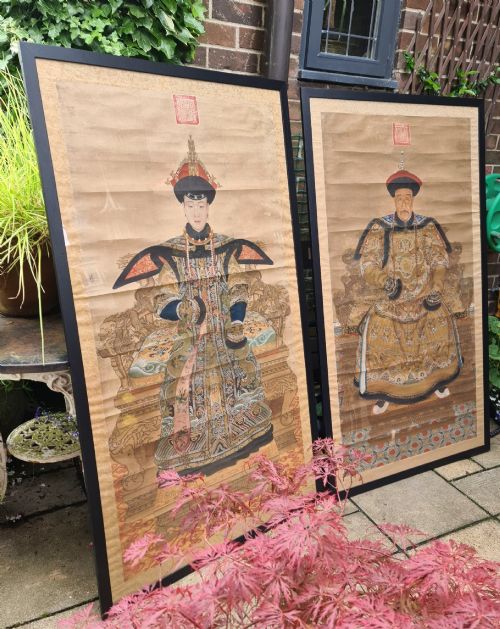
A chinese ancestor portrait captures revered family members in formal frontal poses, originating to preserve the memory and spirit of forebears for ritual veneration. Buyers searching for a chinese ancestor portrait encounter framed scrolls, wall art, and table screens featuring seated figures.
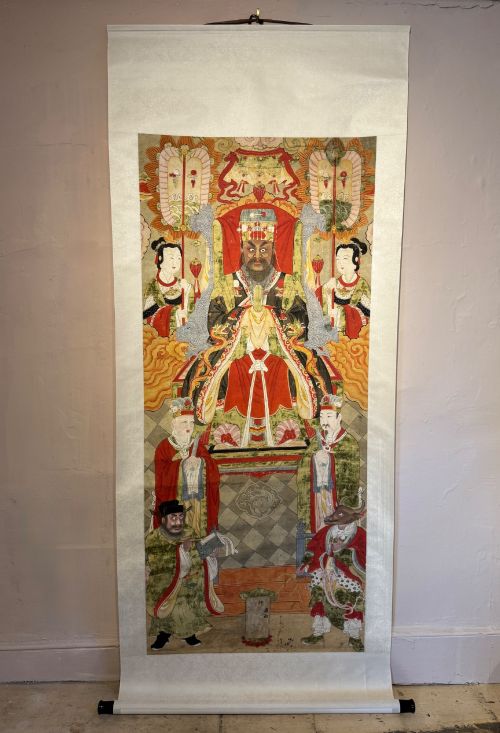
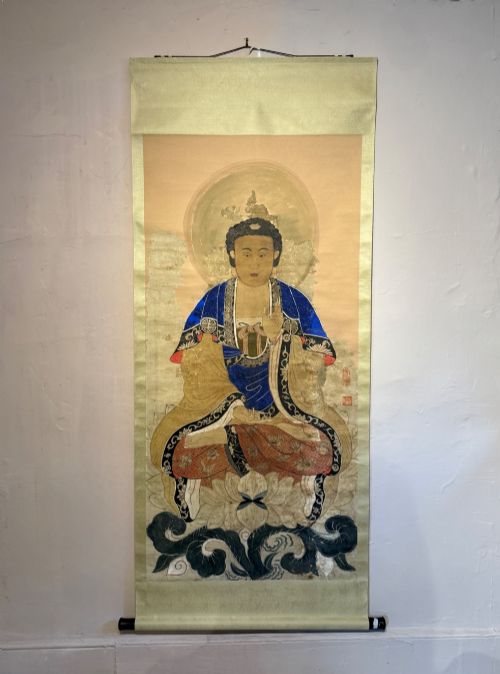
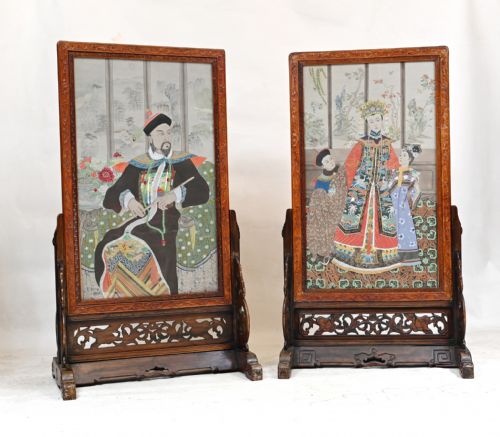
The pieces appearing here date predominantly from the nineteenth century, including specific works from eighteen-fifty and eighteen-ninety, alongside examples rooted in the eighteenth century and the Qing Dynasty. Forms vary from large framed pairs of ancestral scrolls to woven silk panels mounted in hardwood frames and paintings depicting Daoist immortals like the Jade Emperor.
Most examples originate from family halls or domestic shrines where descendants paid homage. The survival of original wooden frames and glass enhances their character as genuine historical artefacts.
Materials and construction
Artisans applied rich pigment and mineral pigment onto surfaces of silk or paper, capturing intricate details of ceremonial robes and dignified facial expressions. The choice of mineral pigments ensures the survival of bright, vibrant colours across centuries.
Many works incorporate woven silk textiles, combining painting with fine fabric arts. Supporting structures utilise hardwood, frequently configured as wall frames, scrolls, or table screens designed to stand or hang within domestic spaces.
Chinese Ancestor Portrait Retail Price Guide 2026
Typical asking prices for chinese ancestor portrait among the pieces listed under this phrase on Sellingantiques today, from the lower quarter to the upper quarter. They describe what is for sale here now, not the wider market.
Listings feature works spanning the 18th century, the Qing Dynasty, and the 19th century, including specific dates such as 1840, 1850, and 1890.
Assessing quality
Original frames and mountings elevate a piece, particularly when hardwood surrounds and early glass remain intact. Pairs demonstrate greater visual impact and continuity of provenance compared to isolated single panels.
The Chinese Ancestor Portrait Glossary
- Qing Dynasty
- The final imperial dynasty of China, lasting from sixteen-fourteen-fourteen to nineteen-twelve. Many surviving ancestral works originate from this prolific period of portraiture.
- Mineral Pigment
- Ground natural minerals used to create enduring, vibrant colours in traditional paintings. These substances resist fading better than organic dyes.
- Scroll Painting
- A flexible work on silk or paper designed to be rolled or hung. They form a primary format for traditional Asian visual art.
- Table Screen
- A decorative panel supported by a wooden stand for placement on a desk or table. Some incorporate woven silk pictorial elements.
Chinese Ancestor Portrait: Frequently Asked Questions
How were ancestor portraits displayed?
Families hung these works in ancestral halls or domestic shrines during commemorative rites and seasonal festivals. They served as focal points for offerings and veneration.
Today, framing allows them to function as striking wall art within contemporary interiors while retaining their solemn heritage.
How do I date a portrait?
Dating relies on stylistic elements of the Qing Dynasty, costume details, and material analysis of the silk, paper, and pigment. Reference to specific periods like the nineteenth century or eighteen-fifty provides a reliable anchor.
Original frames and documented provenance further clarify the chronology of each specific piece.
Are pairs common?
Surviving works occasionally include pairs depicting both a male and female ancestor, reflecting the traditional practice of dual veneration. These matching sets offer balanced symmetry for display.
Single portraits also appear frequently, representing individual family members or dispersed collections.