



Pair of Fire Screens
A pair of fire screens protects faces and ankles from the hearth, blending practical utility with decorative grace.
Pair of Fire Screens
When you search for a pair of fire screens, you encounter adjustable pole screens, hand-held face screens, and fixed hearth guards designed to manage radiant heat. These pieces originate across the Georgian, Regency, Victorian, and later periods.
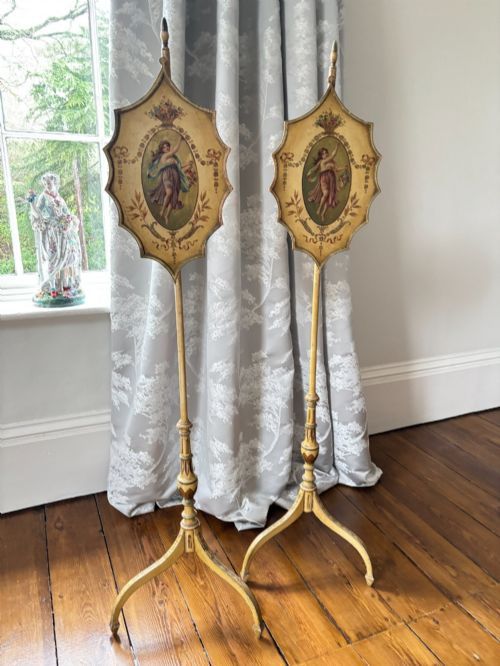
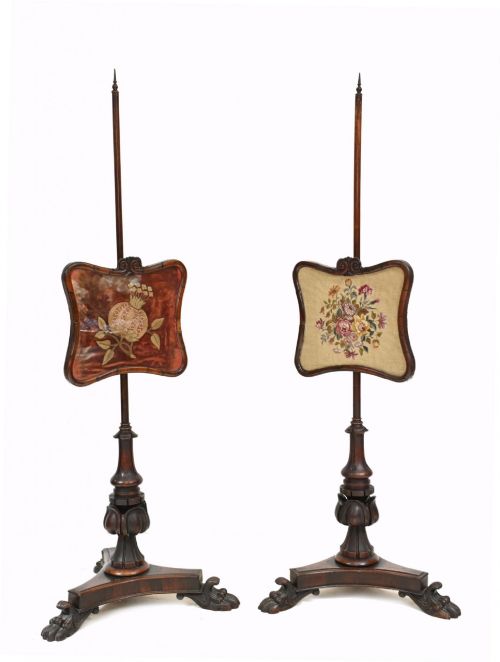
The most common version on this page is the pole screen, featuring a vertical stand with a sliding panel that adjusts to block warmth from the fire. These stands often rest on tripod bases with spade feet or circular platforms.
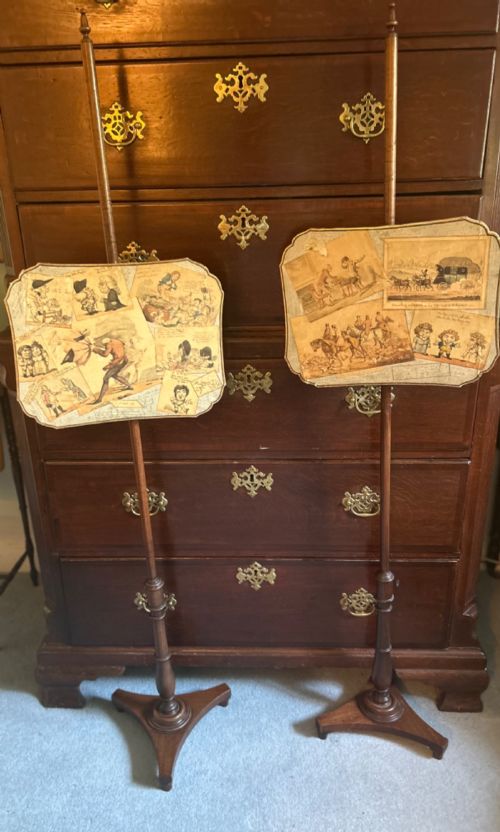
Materials span mahogany, palisander, papier-mâché, brass, and gilt bronze, frequently mounted with needlepoint tapestry, painted paper, glass, or satirical prints.
How they were made
Joiners and cabinet makers shaped dense timbers like mahogany and palisander into slender standards, turning wooden shafts on lathes and carving tripod bases with spade feet. Papier-mâché components were pressed in moulds and built up from layers of paper pulp before receiving lacquer.
Panels often incorporate textile arts, holding needlepoint tapestry or embroidered silk stretched tightly within wooden frames. Others display applied paper prints, painted wooden scenes, or hand-held glass and brass configurations.
Pair of Fire Screens Retail Price Guide 2026
Typical asking prices for pair of fire screens among the pieces listed under this phrase on Sellingantiques today, from the lower quarter to the upper quarter. They describe what is for sale here now, not the wider market.
Some screens feature witty satirical prints, proving that Regency visitors enjoyed a quiet joke while warming their toes.
What varies in quality
The sophistication of the timber turning and the crispness of the carving on the base distinguish standard examples from finer workshops. Heavier gauge brass, precise joinery, and stable sliding mechanisms on pole mounts indicate superior construction.
The artistic merit of the panel insert defines the upper tier, where intricate needlepoint tapestries, detailed painted views, or original satirical prints retain their tension and colour without degrading the surrounding frame.
The Pair of Fire Screens Glossary
- Pole screen
- A standing fire screen with an adjustable panel that slides vertically on a central wooden shaft. This design allows users to shield their faces from the direct heat of an open fire.
- Face screen
- A small, hand-held screen designed to protect a lady's complexion from excessive fireplace warmth. These pieces often utilise papier-mâché or painted paper.
- Needlepoint
- A form of counted thread embroidery stitched onto canvas stretched over a frame. It provides the decorative and insulating panel insert for many period pole screens.
- Palisander
- A dense, dark timber resembling rosewood, valued for its rich grain patterns. Regency makers utilised this wood for high-status cabinet work.
Pair of Fire Screens: Frequently Asked Questions
What is a pole screen?
A pole screen is a vertical stand supporting an adjustable sliding panel. It was placed near a fireplace to shield the face from radiant heat.
The panel height is altered by moving it up or down the central turned wooden shaft.
How were face screens used?
Face screens were held in the hand by ladies sitting close to the hearth. They prevented makeup from melting and protected skin from the heat.
Examples on this page include papier-mâché and glass constructions designed for this specific purpose.
What periods do these pieces span?
The listings encompass items from the eighteenth, nineteenth, and early twentieth centuries. Styles range from George III and Hepplewhite to Regency, Victorian, and Louis XV.
Materials and decorative techniques shift accordingly from carved mahogany to lacquered papier-mâché and gilt bronze.
What materials are typical?
Common materials include hardwoods such as mahogany and palisander alongside pressed papier-mâché. Brass and gilt bronze appear in metal hearth configurations.
Panels frequently display needlepoint tapestry, embroidered silk, paper prints, or painted wood scenes.