





Carved Wood Fire Screen
A carved wood fire screen shields the face from the fierce glare of an open hearth while bringing rich timber and needlework to a room.
Carved Wood Fire Screen
A carved wood fire screen is a traditional domestic accessory designed to manage the heat and light of an open fire. These pieces range from upright floor-standing cheval frames to adjustable pole screens that position a small panel at various heights.
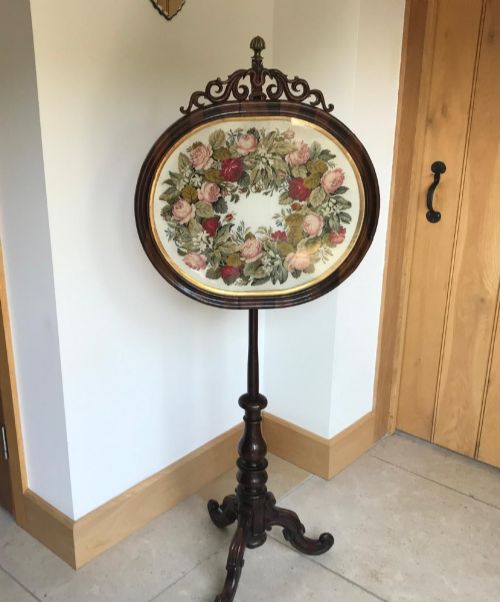
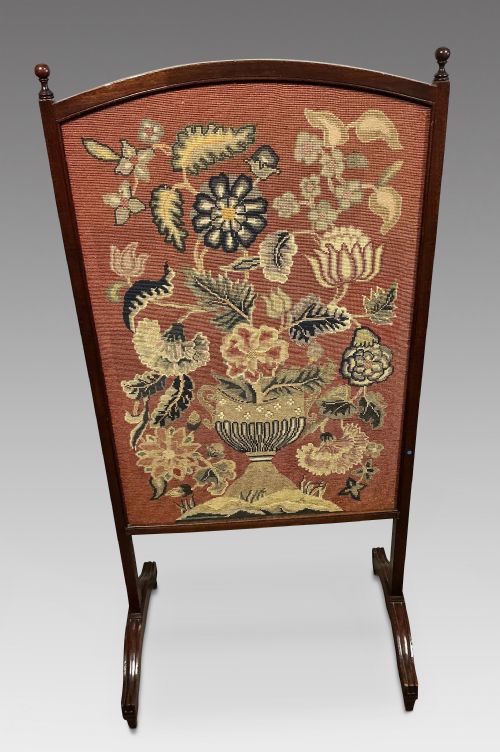
The version most commonly met on this page is the Victorian rosewood pole screen, often featuring a tripod base and an embroidered needlework panel. Alongside these stand larger mahogany and oak cheval screens, table screens, and occasional folding examples from different periods.
How they were made
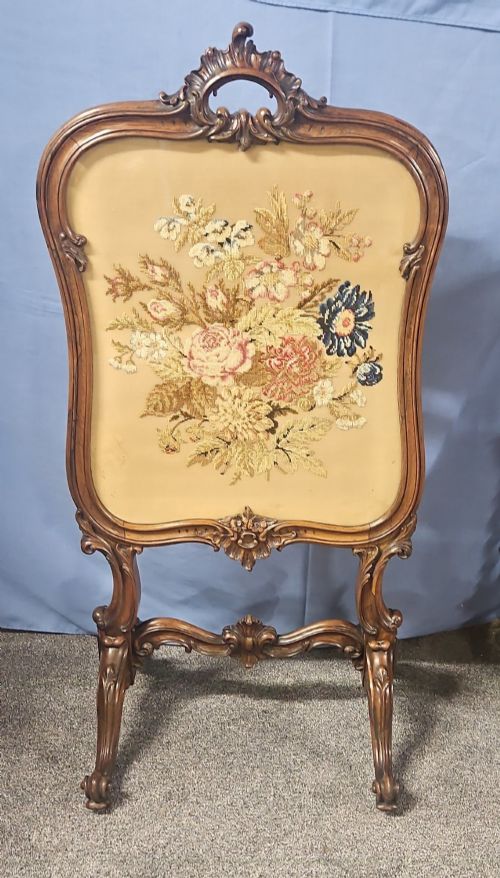
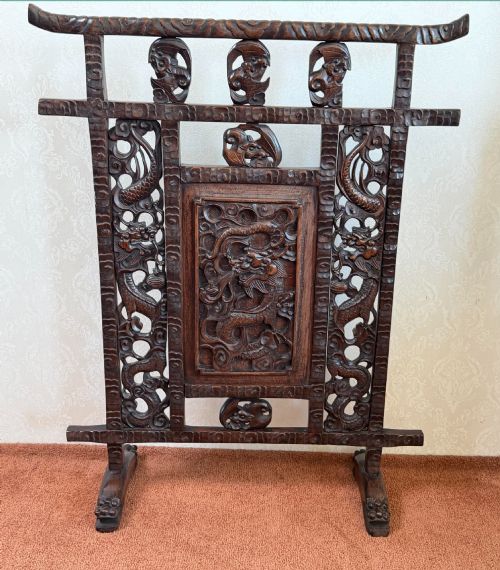
Cabinetmakers utilised dense timbers such as rosewood, mahogany, walnut, and oak to build stable frames capable of supporting heavy central panels. Carving was executed by hand, yielding intricate floral motifs, bobbin turning, and scrolling supports.
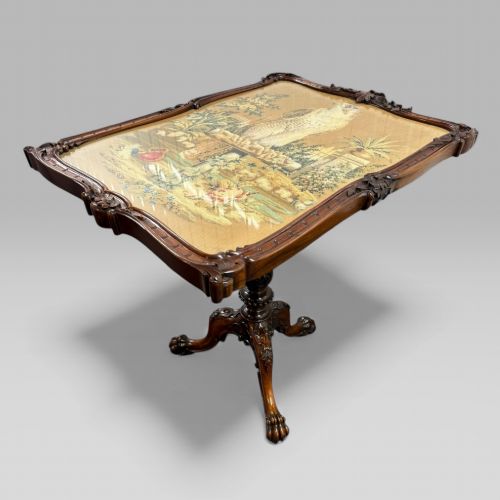
The inset panels required distinct artisan skills, incorporating hand-woven tapestry, wool needlepoint, silk embroidery, and occasionally embossed brass or glass. These textiles and metal inserts were secured into the wooden frames to form the primary heat barrier.
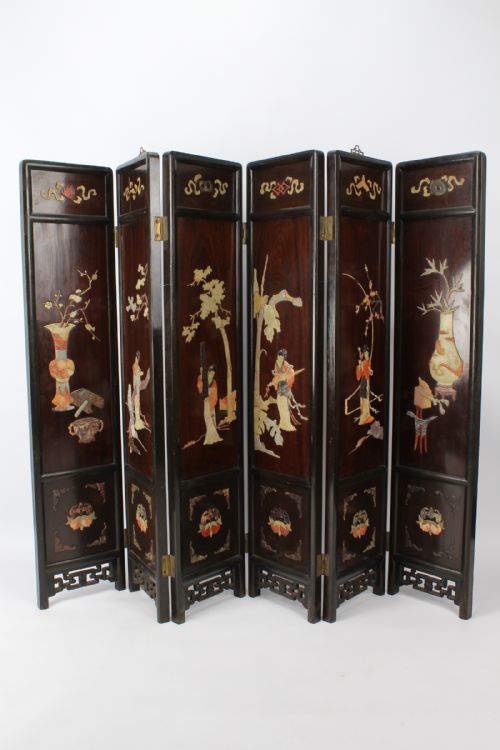
The listings span multiple centuries, uniting 17th-century brass-mounted oak alongside heavy Victorian rosewood and Chinese hardwood.
What varies in quality
The standard of a carved wood fire screen rests largely on the depth and crispness of the timber carving and the stability of its base. Heavy tripod legs with well-defined claw-and-ball or scroll feet denote careful workshop production.
Panel execution further separates examples, with finely worked hand needlepoint or silk embroidery commanding greater attention than simpler machine textiles. The integration of adjustable brass pole mechanisms also reflects the original maker's investment in utility and finish.
Gillows
The Carved Wood Fire Screen Glossary
- Pole screen
- A type of fire screen featuring a vertical wooden shaft on a tripod base, holding an adjustable panel that slides up and down.
- Cheval screen
- A self-standing floor screen supported by two side pillars and feet, allowing the main panel to tilt or remain fixed.
- Needlepoint
- A form of canvas work embroidery executed with wool or silk yarn, frequently used to depict pastoral scenes or coats of arms on screen inserts.
- Tripod base
- A three-legged support structure commonly found on pole screens to ensure stability on uneven floorboards.
- Giltwood
- Timber treated with a thin layer of gold leaf, often carved in ornate revival styles for formal reception rooms.
Carved Wood Fire Screen: Frequently Asked Questions
What is a pole screen?
A pole screen is a slender wooden stand featuring a vertically adjustable panel designed to block radiant heat from a fireplace.
Users moved the central screen up or down the pole to protect their faces from the sudden warmth of an open coal fire.
How were fire screens used?
These pieces were placed between the seated occupants and the fireplace to deflect excess heat and protect sensitive complexions.
When not needed near the hearth, they functioned as decorative furnishings against drawing-room walls.
How do I date a fire screen?
Dating relies on timber choices, such as heavy rosewood or mahogany, alongside the predominant decorative style of the frame.
Victorian pieces often favour rosewood and elaborate needlework, while Georgian examples lean towards giltwood and classical carving.
Where should I place a screen?
They suit empty corners, beside seating groups, or against plain walls where the carved timber and tapestry panels can be appreciated.
Modern homes utilise them primarily as decorative antique furniture rather than functional heat shields.