
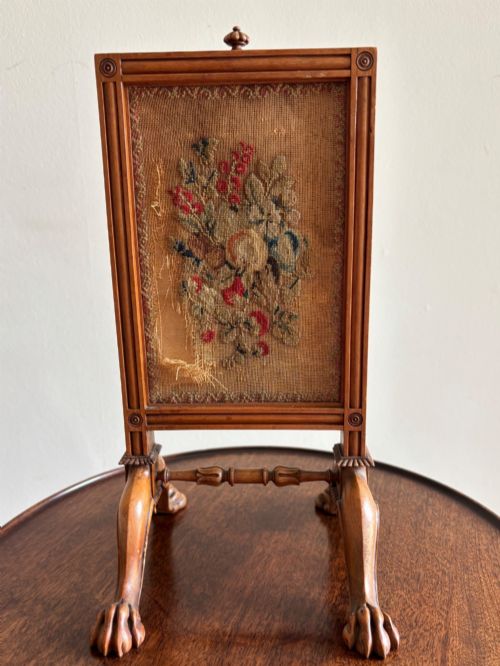


Carved Mahogany Pole Screen
These carved mahogany pole screen examples offer adjustable shields to block the fierce heat of an open fire.
Carved Mahogany Pole Screen
A carved mahogany pole screen is a standing fireside accessory designed to protect a seated person's face from the direct glare and heat of a hearth fire. These pieces consist of a slender vertical standard mounted on a sturdy base, carrying a sliding panel that can be adjusted to any height along the shaft. Buyers searching for a carved mahogany pole screen will encounter various forms across Georgian, Regency, William IV, and Victorian periods.
The primary form met on this page is the single-pillar standard featuring a carved tripod base or a heavy circular plinth, topped with an embroidered or needlepoint panel. Examples span from the clean lines associated with Chippendale and Regency designs through to the heavier proportions of Early Victorian and later 19th-century makers. Some listings feature pairs, whilst others appear as miniature or large standalone items.
The adjustable panel itself typically holds a textile insert such as wool, tapestry, or needlepoint, sometimes protected behind glass or functioning as a reflector. These screens served a practical domestic purpose in period interiors before central heating changed how rooms were warmed. Today they function as decorative accent furniture that retains its original mechanical height adjustment.
How they were made
Makers fashioned the main structural parts from solid mahogany, turning the slender poles on a lathe and shaping the tripod legs or heavy bases by hand. Craftsmen utilised traditional joinery and carved decorative details directly into the dense timber of the standard and base.
The adjustable shield frames enclose textile elements, primarily needlepoint, wool, and tapestry work, occasionally paired with glass to protect the delicate stitching. Brass mechanisms or wooden thumb-screws allowed the panel to slide freely along the pole and lock securely at the desired height.
Pairs appear alongside miniature versions, offering small screens for small rooms.
What varies in quality
The distinction between ordinary and superior examples lies in the crispness and depth of the timber carving on the base and standard. Finer pieces display sharply rendered foliage or reeded turnings, whereas lesser versions feature softer, more perfunctory detailing.
The quality of the mounted needlework or tapestry panel significantly influences the overall character of the piece. Intricately worked period needlepoint shows a higher level of domestic skill than simpler subsequent replacements.
The Carved Mahogany Pole Screen Glossary
- Pole screen
- A standing fireside screen with an adjustable panel mounted on a vertical wooden shaft. This design allowed sitters to adjust the height of the shield against the hearth heat.
- Needlepoint
- Canvas work embroidery using counted stitches to form pictorial or geometric designs. These panels make up the adjustable viewing screens.
- Tripod base
- A three-legged support structure commonly carved from mahogany. It provides stability for the slender vertical pole rising from its centre.
- Regency
- An English design period spanning the early nineteenth century. Pieces from this era often feature classical motifs and refined proportions.
Carved Mahogany Pole Screen: Frequently Asked Questions
What is a pole screen used for?
A pole screen was placed near a fireplace to shield a person's face from the radiant heat of an open fire. The adjustable panel could be raised or lowered to block the warmth and glare.
In period drawing rooms, these pieces also protected expensive wax cosmetics from melting near the hearth.
How do you adjust the panel height?
The central panel is fitted with a brass collar or a wooden thumb-screw mechanism at the back. Loosening this mechanism allows the panel to slide up and down the vertical mahogany pole.
Tightening the screw holds the screen securely at the chosen height.
Are the needlework panels original?
Many examples retain their period needlepoint, wool, or tapestry work stitched during the eighteenth or nineteenth centuries. Some panels feature later nineteenth-century needlework replacements inserted into the original mahogany frames.
Close inspection of the canvas and thread wear helps distinguish period textiles.
How do I date a pole screen?
Dating relies upon the stylistic details of the mahogany turning and the carving on the base. Regency and Chippendale examples show lighter proportions, whilst Victorian versions tend to be heavier.
Associated period markers like brass fittings and the style of needlework also indicate the era of manufacture.