
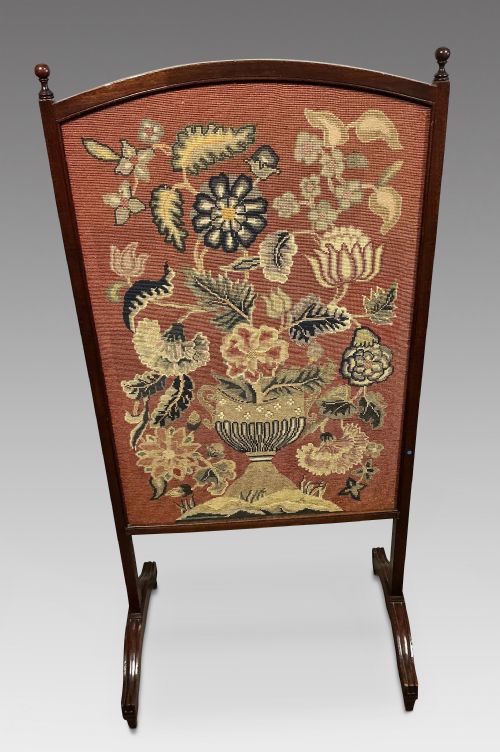


Embroidered Mahogany Screen
An embroidered mahogany screen brings warmth and texture to a room, acting as a functional shield against hearth heat.
Embroidered Mahogany Screen
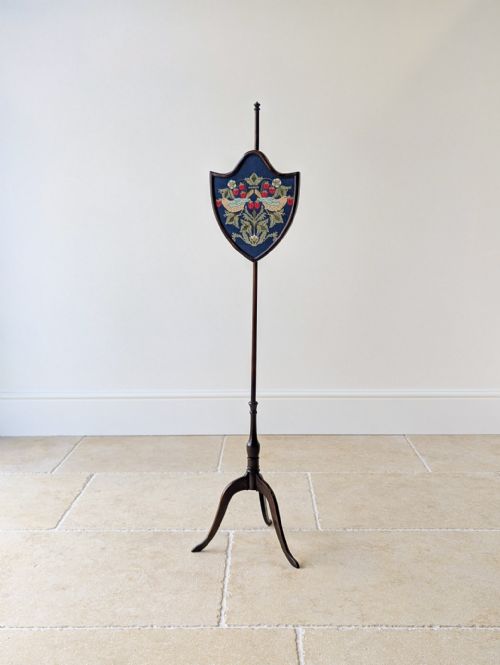
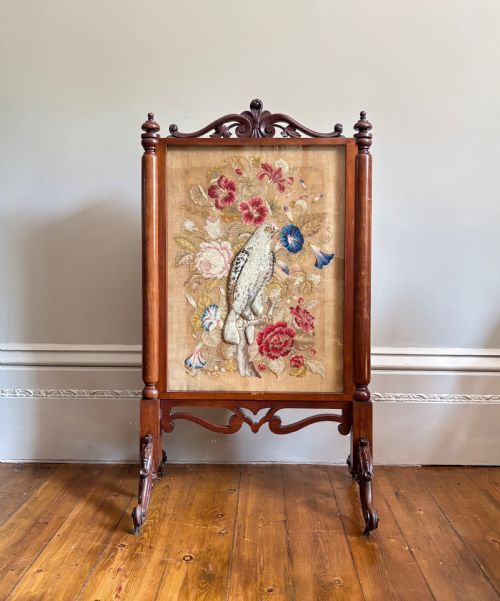
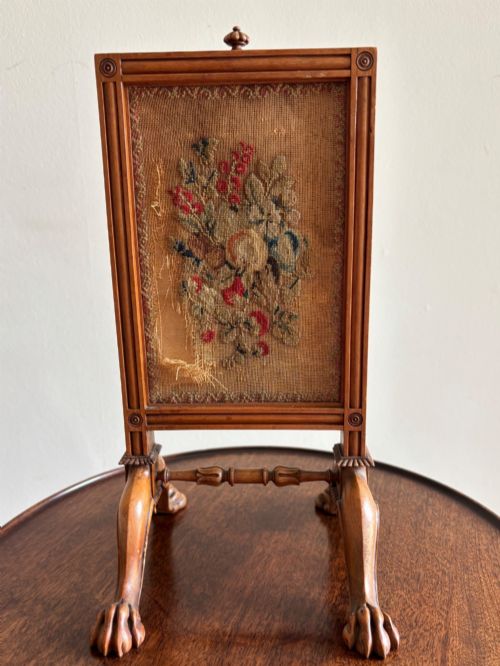
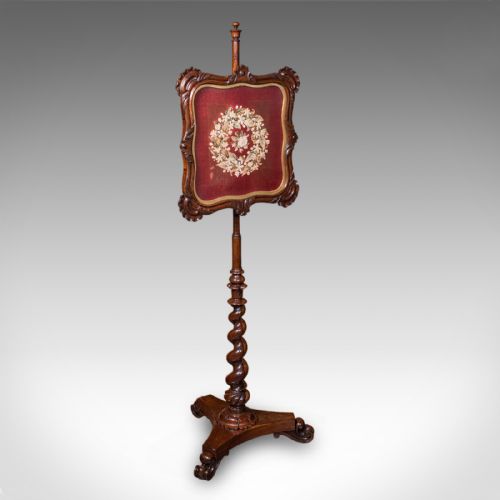
An embroidered mahogany screen combines timber framing with textile art, most commonly seen as adjustable pole screens or standing room dividers from the Georgian, Regency, and Victorian periods.
The form exists primarily to deflect heat from an open fireplace or to create discrete privacy spaces within a larger room.
Examples on this page span compact single-panel tripods and larger multi-panel folding dividers, utilising rich woods alongside wool, silk, and canvas needlework.
Judging quality and execution
The refinement of the timber turning and the depth of carving on the tripod base or frame set finer examples apart from plainer utility pieces.
The density, intricacy, and preservation of the needlework or embroidery dictate the visual impact, as does the integration between the textile panel and its wooden mount.
Materials recorded across these pieces include solid mahogany frames paired with wool, silk, tapestry, and brass.
The Embroidered Mahogany Screen Glossary
- Pole screen
- A vertical firescreen mounted on a slender central pillar with a tripod or weighted base, featuring a sliding panel that adjusts vertically.
- Berlin work
- A popular style of counted-thread embroidery using brightly coloured wools on canvas, widespread during the Victorian era.
- Needlepoint
- Embroidery stitched onto an open-weave canvas ground, completely covering the fabric to form a dense pictorial or geometric surface.
- Goncalo Alves
- A dense exotic hardwood sometimes utilised for cabinet work and decorative frames, valued for its striking striped grain patterns.
Embroidered Mahogany Screen: Frequently Asked Questions
How do you adjust a pole screen?
Most pole screens feature a friction collar or a thumb screw on the back of the panel hub, allowing the needlework frame to slide up and down the turned wooden shaft.
Once positioned at the desired height to block radiant heat from the hearth, tightening the mechanism holds the panel steady.
Where were these placed in a room?
These screens stood directly between seating areas and the fireplace to shield occupants' faces from the intense heat of open coal or wood fires.
Larger folding dividers were positioned to drafty doorways or to create private reading corners in larger drawing rooms.
How do I clean the embroidery?
Dust textile panels gently with a soft brush or a low-suction vacuum attachment through a protective mesh screen to prevent fibre damage.
Avoid liquid cleaners entirely, as older threads and wools can shrink, bleed colour, or weaken when exposed to moisture.
Are the glass covers original?
Glass panels protecting needlework were frequently added later to preserve fragile textiles from soot, dust, and handling.
Examining the glazing and framing rebates helps determine if the glass is a later addition or part of the initial construction.