


Victorian Tapestry Pole Screen
A victorian tapestry pole screen stands as a decorative and practical fireside accessory designed to shield the face from the fierce heat of an open grate.
Victorian Tapestry Pole Screen
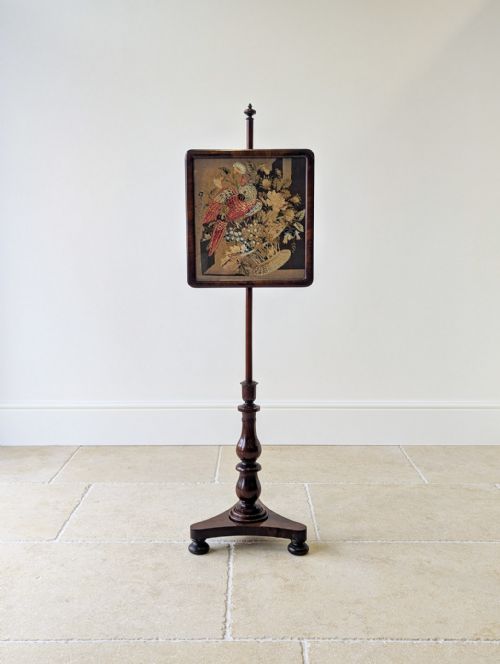
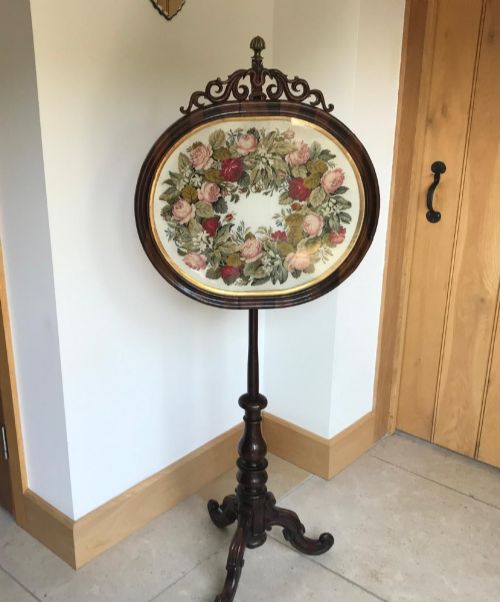
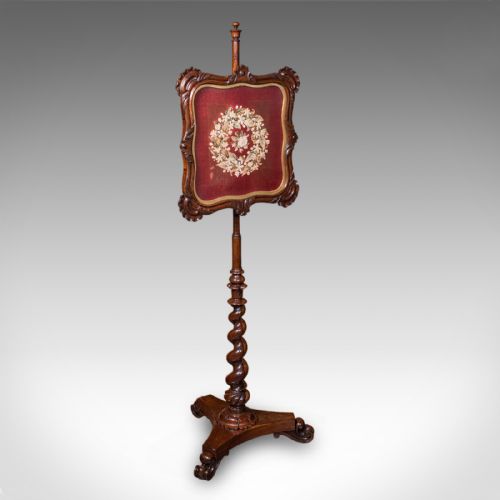
A victorian tapestry pole screen comprises a vertical wooden shaft supported by a tripod or circular base, carrying an adjustable needlework panel. These furnishings served a vital domestic purpose in nineteenth century drawing rooms, allowing sitters to protect their complexions from the scorching hearth fire.
The versions encountered on this page span the nineteenth century, including William IV, Regency, and Victorian Rococo Revival styles. Rosewood and mahogany form the predominant timbers of the stands, whilst walnut and satinwood also appear among the selections.
Materials and Construction
Cabinetmakers utilised dense timbers such as rosewood, mahogany, and walnut to turn the slender vertical poles and carve the sturdy tripod bases. These woods were chosen for their strength and capacity to take a fine polish.
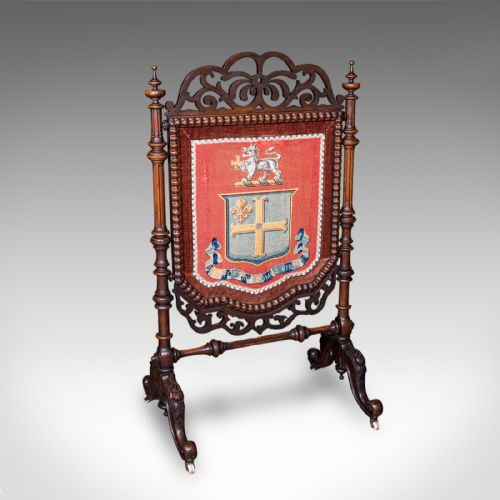
The decorative panels employ wool and textile needlepoint, stitched by hand to create intricate floral or armorial designs. Brass and gilt components provide the adjustable mechanisms that allow the screen panel to slide up and down the pole.
Victorian ladies utilised these clever adjustable screens to prevent their expensive facial cosmetics from melting by the hearth.
Evaluating Quality and Craftsmanship
The distinction between standard and superior pieces lies in the crispness of the timber turning and the depth of carving on the tripod base. Fine examples exhibit sculptural detail on the cabriole legs and secure, precise brass adjustment mechanisms.
The execution of the needlepoint panel heavily influences the standing of a piece, with finely detailed woolwork and rich colour retention commanding greater attention. The structural integrity of the central pole and the stability of the base remain crucial to overall excellence.
The Victorian Tapestry Pole Screen Glossary
- Pole screen
- A freestanding fireside accessory featuring an adjustable panel mounted on a vertical shaft and base. It was used to deflect the intense heat of an open coal fire away from the face.
- Needlepoint
- A type of canvas work embroidery executed with wool yarn, commonly forming the central decorative panel of these furnishings. The density and precision of the stitching determine the fineness of the imagery.
- Tripod base
- A three-legged support structure commonly found beneath the vertical shaft of these pieces. These bases often feature carved cabriole legs or scrolled feet for stability.
- Banner hanger
- A variant design where the textile panel hangs suspended from a horizontal bar rather than being fixed within a rigid frame. This form often incorporates brass or gilded metalwork.
- Armorial panel
- A needlework design displaying a family crest, coat of arms, or heraldic symbols. Such panels indicate bespoke commission work for landed households.
Victorian Tapestry Pole Screen: Frequently Asked Questions
How did people use a pole screen?
These screens were placed close to an open hearth and adjusted vertically to shield a person's face from the direct heat of the fire.
They allowed individuals to sit comfortably near the flames without risking heat damage to delicate complexions or cosmetics.
What woods are most common?
Rosewood and mahogany dominate the structural timber of these furnishings, valued for their deep grain and durability.
Walnut and satinwood also appear across the nineteenth century selections, offering lighter tones and varied grain patterns.
How do I adjust the panel height?
A brass collar or friction mechanism secures the needlework frame to the central turned pole.
Gentle pressure allows the panel to slide up or down the shaft to the desired level before locking into place.
Are the tapestry panels original?
The needlepoint and embroidery work on these pieces typically dates from the nineteenth century, matching the era of the stands.
Close inspection of the wool yarn and the canvas backing reveals the age and hand-worked nature of the textiles.