


Antique Needlework Screen
An antique needlework screen brings warmth and texture to a room, offering a glimpse into domestic art through framed wool, silk, and canvas panels.
Antique Needlework Screen
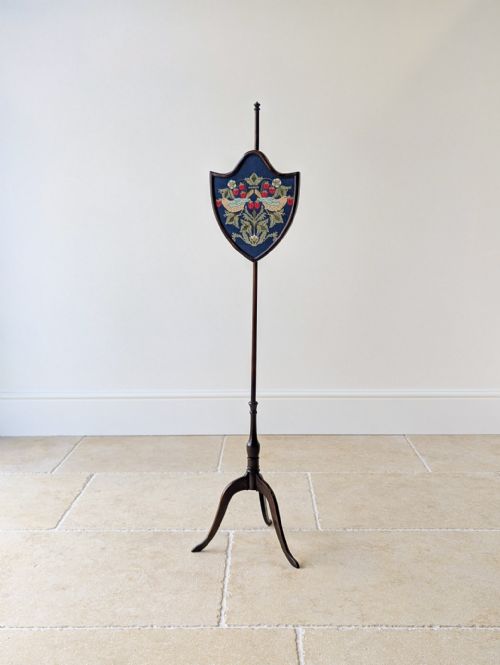
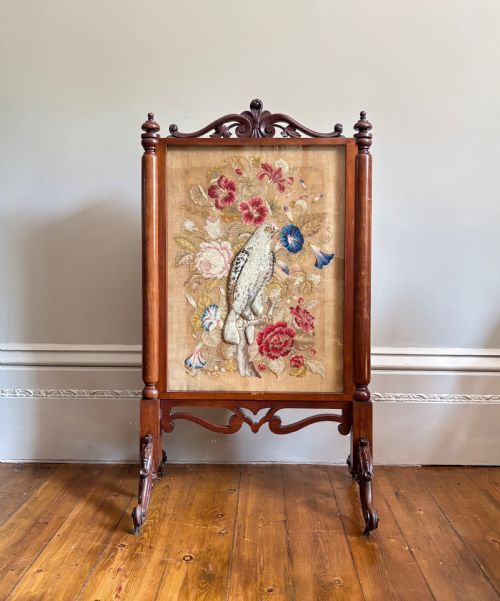
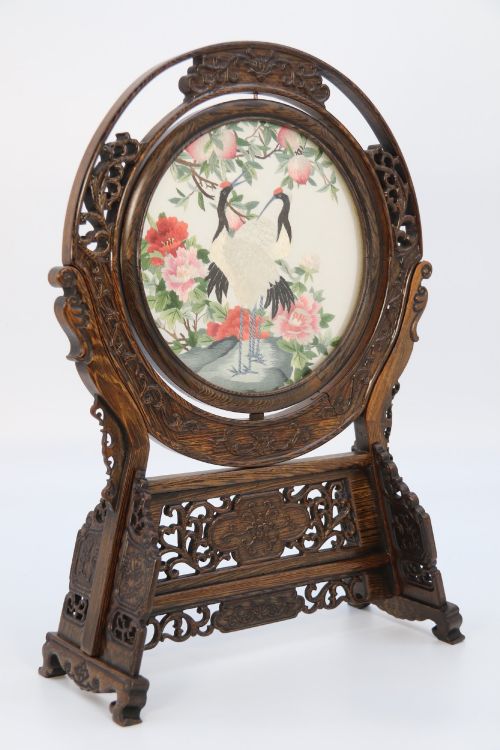
When you search for an antique needlework screen, you encounter pieces designed to shield faces from hearth heat or to divide interior spaces. The selection ranges from tall pole screens and cheval frames to table screens and room dividers spanning the Georgian, Regency, and Victorian periods.
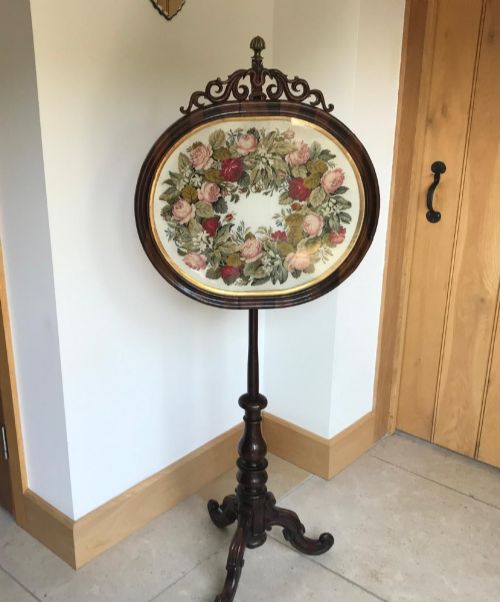
Pole screens dominate the available forms, featuring adjustable panels mounted on wooden stands supported by tripod bases or carved pedestals. These stand alongside static firescreens, table face screens, and multi-panel room dividers constructed from mahogany, rosewood, and oak.
The needlework elements themselves vary widely, encompassing Berlin work, wool tapestry, silk embroidery, samplers, and needlepoint pictures. Many pieces hail from the nineteenth century, uniting structural cabinetmaking with domestic textile arts.
How they were made
Cabinetmakers utilised dense timbers such as mahogany, rosewood, satinwood, and goncalo Alves to construct the stands, frames, and tripod bases of these screens. Turning, carving, and gilding shaped the wooden supports, while brass hardware often allowed height adjustment on pole models.
Textile panels were worked separately using wool, silk, or canvas, employing techniques like Berlin work, embroidery, and cross-stitch needlepoint. These completed panels were then mounted into wooden frames or glazed behind glass to protect the delicate threads from soot and dust.
Listings feature needlework screens predominantly from the Victorian, Regency, and Georgian periods, utilising mahogany, rosewood, wool, and silk.
What varies in quality
Quality rests heavily on the crispness of the timber carving, the stability of the support base, and the intricacy of the textile work. Superior examples display finely turned poles, substantial tripod legs, and dense, evenly stitched needlework with vibrant colour retention.
The integration between the textile panel and its timber housing separates ordinary items from exceptional ones. Well-preserved embroidery under glass or securely mounted within carved frames indicates careful original craftsmanship and subsequent preservation.
The Antique Needlework Screen Glossary
- Pole screen
- A type of freestanding screen with an adjustable panel that slides up and down a vertical wooden shaft. This design allowed sitters to adjust the screen height to block radiant heat from a fireplace.
- Berlin work
- A style of needlepoint embroidery popular in the nineteenth century that used brightly coloured wool yarns stitched over canvas grids. It allowed makers to create detailed pictorial scenes and floral patterns.
- Cheval screen
- A floor-standing screen featuring a vertical frame mounted on two side pillars or trestle feet. Unlike pole screens, the panel usually pivots or remains fixed at a set height.
- Table screen
- A smaller version designed to sit on top of a desk, table, or sideboard rather than the floor. These often served as face screens to protect complexions from hearth flames.
- Needlework sampler
- A piece of fabric embroidered with various stitches, alphabets, or motifs to demonstrate needlework skill. These panels were frequently repurposed into functional household screens.
Antique Needlework Screen: Frequently Asked Questions
What is a pole screen?
A pole screen is a vertical stand with a sliding panel designed to block fireplace heat. Sitters adjusted the height to protect their faces from open flames.
They appear frequently in nineteenth-century interiors as both decorative and practical furnishings.
How were fire screens used?
Fire screens protected people from the intense radiant heat of coal and wood fires before central heating existed. They sat near hearths to shield skin and varnished furniture.
Over time, many transitioned into purely decorative objects displaying intricate needlework.
Are the needlework panels original?
Most needlework panels are contemporary to the frames, often dating from the Georgian or Victorian eras. Textile arts like Berlin work and silk embroidery were standard domestic pursuits.
Some pieces pair earlier frames with later nineteenth-century needlework insertions.
What woods were used?
Cabinetmakers utilised dense hardwoods including mahogany, rosewood, oak, and satinwood for the stands and frames. These timbers provided the necessary weight for stable tripod bases.
Gilt finishes and turned details frequently complemented the polished wood surfaces.