


Antique Rosewood Screen
An antique rosewood screen brings warmth and refined texture to a room, functioning primarily as a movable barrier against hearth heat or a decorative division.
Antique Rosewood Screen
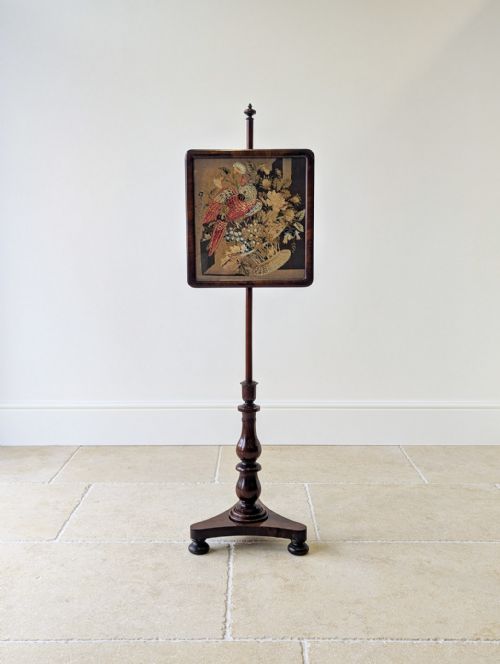
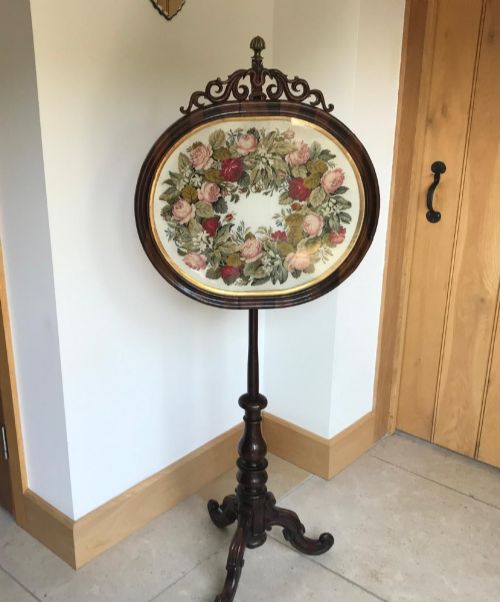
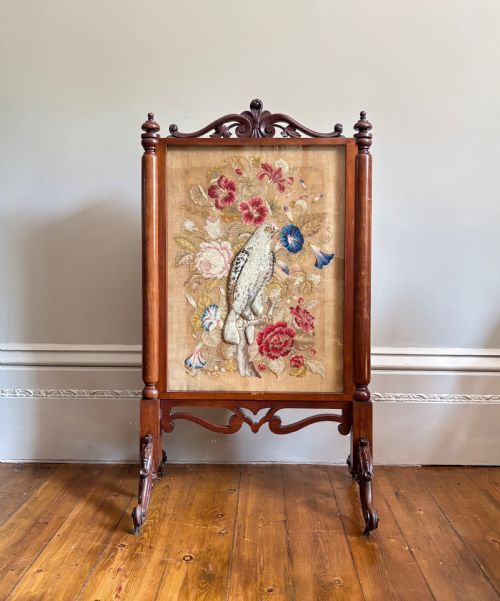
When you search for an antique rosewood screen, you encounter pieces designed to shield faces from open hearth flames or divide interior spaces. The selection on this page largely consists of nineteenth-century pole screens alongside folding and table variants, spanning Regency, William IV, and Victorian eras.
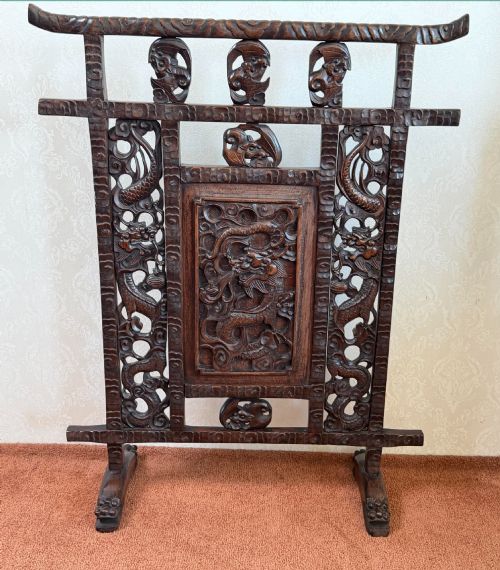
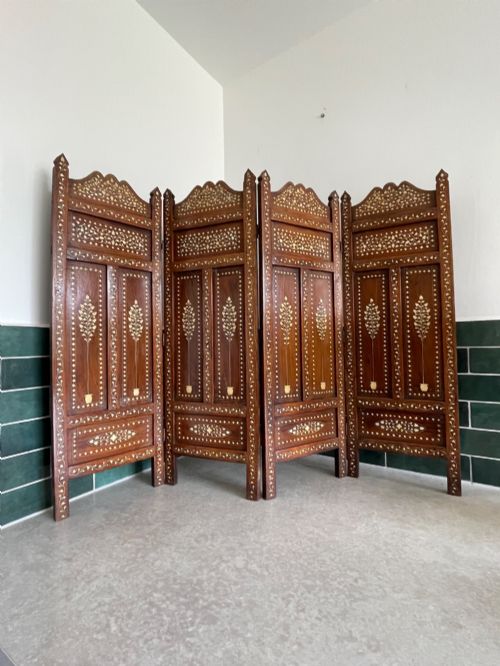
Tall pole screens dominate the records, featuring upright stands with adjustable needlework or tapestry panels mounted on tripod bases. Alongside these vertical forms, table screens and lower folding screens appear, originating from English workshops as well as Chinese traditions using hardwood.
Makers of the period adopted diverse stylistic influences, ranging from straightforward Georgian proportions to elaborate carved details and Anglo-Indian or Chinese motifs. These objects served functional roles in domestic interiors before evolving into purely decorative furnishings.
Materials and Construction
Construction relies heavily on dense rosewood, often complemented by secondary timbers like mahogany, alongside alternative dense tropical woods such as palisander and goncalo alves. Artisans turned tripod bases on lathes and hand-carved decorative motifs into the solid timber columns and frames.
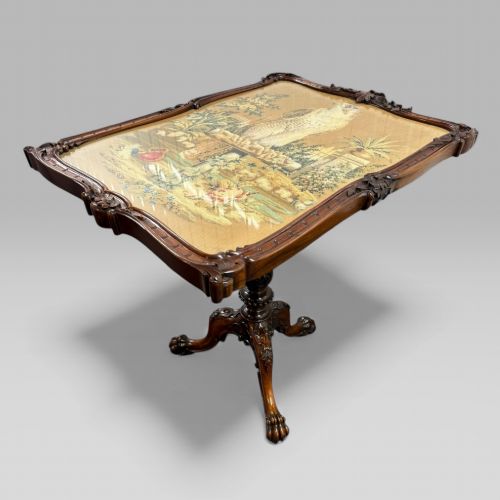
The protective panels incorporate textile art, utilising wool, silk, canvas, and glass. Needlework, tapestry, Berlin work, crewelwork, and poker work decorate these inserts, secured within the wooden framework to act as heat shields or visual screens.
Adjustable mechanisms on pole screens utilise brass fittings, allowing the textile panel to slide vertically and tilt on its mount. Joinery methods of the nineteenth century ensure stability in the tall upright stands and the folding sections.
Listings demonstrate a strong presence of nineteenth-century pieces, spanning Regency, William IV, and Victorian periods alongside Chinese hardwood alternatives.
Quality and Execution
The distinction between ordinary and superior pieces rests on the crispness of the wood carving and the weight of the timber used for the base. Stronger examples display deeply carved tripod legs and substantial turned columns that support the weight of the screen without leaning.
Needlework quality dictates much of the visual appeal, separating standard stitched panels from finely worked, densely detailed tapestries and silk embroideries. Original condition in both the woodwork and the textile panel commands greater regard among collectors.
Sophistication of the adjustment mechanism also indicates grade, with robust brass thumbscrews and smooth sliding actions reflecting superior workshop execution. Proportion and balance across the entire height of the pole screen determine the overall elegance of the design.
Gillows
The Antique Rosewood Screen Glossary
- Pole screen
- A vertical standing screen with an adjustable panel mounted on a central pillar, traditionally placed near a fireplace to deflect radiant heat from the face.
- Berlin work
- A style of counted-thread embroidery popular during the nineteenth century, worked in brightly coloured wool on canvas from printed pattern sheets.
- Crewelwork
- Embroidery executed with wool yarn using a variety of traditional stitching techniques on a plain woven fabric foundation.
- Tripod base
- A three-legged support structure commonly utilised on nineteenth-century pillar furniture to provide stable ground contact.
- Palisander
- A dense, richly grained tropical timber related to rosewood, frequently utilised in Regency cabinet making.
- Needlepoint
- Embroidery stitched onto a stiff open-weave canvas ground, covering the base fabric entirely to create a dense pictorial surface.
Antique Rosewood Screen: Frequently Asked Questions
What is a pole screen used for?
A pole screen protected a seated person from the intense radiant heat of an open coal or wood fire. The adjustable panel could be moved up and down the vertical shaft to shield the face while the body remained warm.
Over time, as heating methods improved and open hearths became less dominant, these screens transitioned into purely decorative interior furnishings. They remained popular for displaying intricate needlework and tapestry skills within the Victorian parlour.
How do you adjust the panel?
The central panel mounts to a collar or sleeve that encircles the vertical wooden pole. A brass thumbscrew or internal spring mechanism allows the user to loosen the grip, slide the panel to the desired height, and tighten it again.
Some examples also feature a tilt mechanism, enabling the panel to angle toward or away from the heat source. Care must be taken with older brass fittings to avoid stripping threads during adjustment.
What is needlework panel work?
Needlework panels consist of hand-stitched wool or silk threads worked onto a canvas or linen backing. Common techniques found on these screens include tapestry, petit point, and Berlin work, often depicting pastoral scenes, florals, or classical figures.
These textiles were worked by hand separately before being stretched and fixed into the wooden frames of the screen. The condition and fineness of the stitching contribute significantly to the visual character of the piece.
How do I date a rosewood screen?
Dating relies on examining the turning style of the woodwork, the joinery methods, and the aesthetic of the textile panel. Regency and William IV pieces often display crisp classical turning, robust tripod bases, and bolder carved details.
Victorian iterations frequently introduce heavier proportions or more ornate floral carving, while Chinese hardwood variants employ traditional mortise and tenon joinery with silk inserts. Comparing the hardware, such as brass adjusters, also helps narrow down the period of manufacture.
Where should I place a screen?
These screens suit placement beside a seating area, in a hallway, or against an empty wall where the textile panel can act as a focal point. Because pole screens have a narrow footprint, they fit well into corners or between pieces of furniture.
Protection from direct, strong sunlight helps preserve the colours of the vintage needlework or silk panels. Positioning them away from active heat sources prevents the rosewood and historical textiles from drying out.