
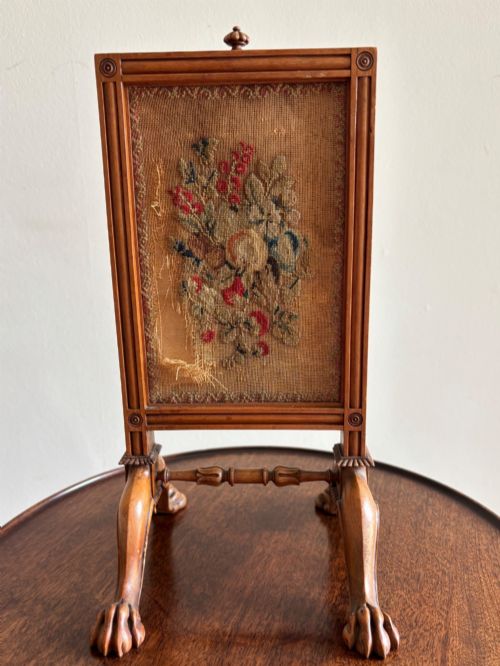


Antique Embroidered Fireguard
An antique embroidered fireguard blocks the radiant heat of an open grate whilst framing a worked textile panel of silk, wool or needlepoint.
Antique Embroidered Fireguard
An antique embroidered fireguard serves as both a practical hearth accessory and a decorative screen, designed to shield a seated person from the intense heat of a coal or wood fire. These pieces take the form of pole screens with adjustable vertical panels or cheval frames that rest securely upon sturdy floor bases.
The examples gathered here span from the Georgian and Regency eras through the Victorian period, encompassing styles such as Victorian Rococo Revival, Anglo-Indian and Art Nouveau. Most pieces utilise rich hardwoods like mahogany, rosewood and walnut to frame intricate needlework, tapestry or canvas panels.
Buyers will encounter freestanding cheval screens alongside pole screens featuring embroidered samplers, floral needlepoint and even silver and gold thread work. Each version reflects the interior aesthetic of its period, transitioning from formal Georgian proportion to ornate Victorian detail and flowing Art Nouveau lines.
How they were made
Cabinetmakers constructed the frames using dense timbers including mahogany, rosewood, walnut and occasionally brass, shaping upright poles and sturdy pedestal bases to support the hanging weight. These wooden elements often feature fine turnings, gilt details or carved motifs appropriate to their respective Regency, Georgian or Victorian styles.
The textile panels demand meticulous handwork, employing wool, silk and canvas to execute tapestry, needlepoint and sampler designs. Artisans mounted these embroidered cloths securely within wooden frames or suspended them from adjustable brass pole mounts so the height of the screen could be altered at will.
What varies in quality
The distinction between standard and superior pieces lies in the crispness of the timber carving and the complexity of the internal joinery within the frame and base. Heavier, more stable pedestals combined with tight, well-fitted joinery indicate a higher grade of cabinetmaking.
On the textile side, the density and finesse of the needlework, wool, silk or tapestry distinguish finer examples from simpler work. Well-preserved threads with minimal fading and sophisticated colour palettes elevate the overall standing of the piece.
The Antique Embroidered Fireguard Glossary
- Pole screen
- A vertical stand featuring a sliding panel designed to protect the face from fireplace heat. The embroidered screen mounts on a central shaft and can be raised or lowered.
- Cheval screen
- A freestanding floor screen supported by two stiles and feet, allowing the embroidered panel to tilt or remain fixed. This form provides a broader barrier than a single pole screen.
- Needlepoint
- A type of canvas work embroidery stitched with wool or silk threads to create dense pictorial designs. It forms the primary decorative panel in many hearth screens.
- Sampler
- A piece of embroidery produced as a demonstration or test of skill, often incorporating alphabets or motifs. These historic cloths occasionally find a second life mounted within a screen frame.
- Tapestry
- A form of textile art woven on a loom or worked by hand on canvas to depict figurative or decorative scenes. These panels offer rich texture and substantial weight.
Antique Embroidered Fireguard: Frequently Asked Questions
What is an antique embroidered fireguard?
An antique embroidered fireguard is a decorative hearth screen designed to shield sitters from the intense heat of an open coal or wood fire.
These pieces combine a wooden or brass frame with a hand-worked textile panel, serving both a functional purpose and an ornamental role in historic interiors.
How were pole screens used?
Pole screens stood near the fireplace, where users adjusted the height of the embroidered panel to block radiant heat from reaching their faces.
Because eighteenth and nineteenth-century rooms relied on open hearths, these adjustable screens allowed occupants to manage warmth without moving heavy furniture.
Where should I place a fire screen?
While originally intended for the hearth, these screens work well in sitting rooms, studies or hallways as decorative vertical accents.
Many owners place them near cold walls or unused fireplaces to introduce warmth, texture and historic character into a modern room.
How do I date a fire screen?
Dating relies on examining the timber species, turning styles and the technique used in the embroidered textile panel.
Georgian and Regency pieces tend to feature cleaner lines and simpler mahogany or rosewood frames, whereas Victorian examples often display heavier carving, gilt details or Rococo Revival influences.