


Brown Needlepoint Screen
These brown needlepoint screen pieces are decorative room dividers and fire panels crafted to shield a room from heat or drafts.
Brown Needlepoint Screen
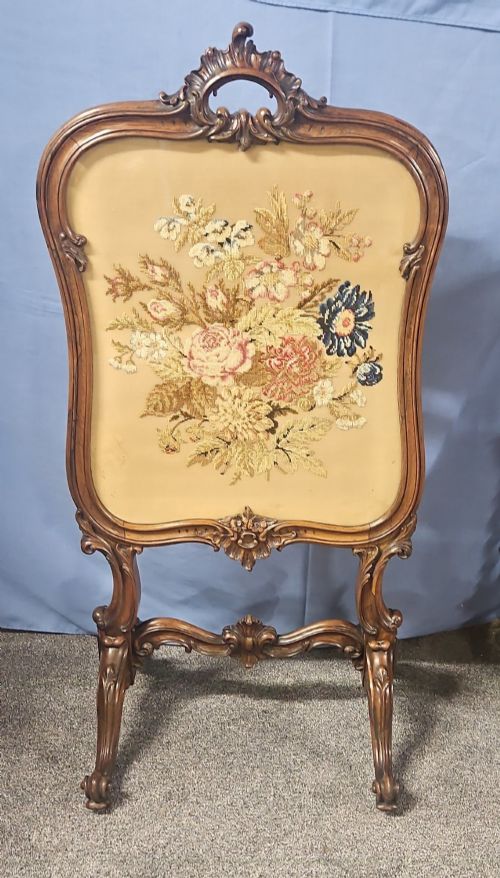
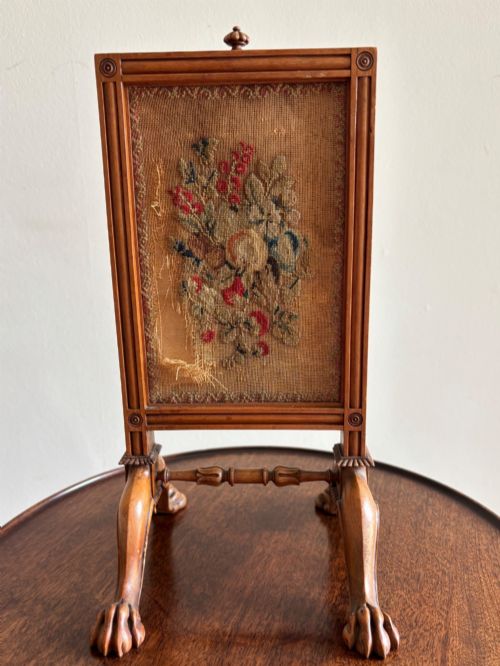
A brown needlepoint screen typically takes the form of a fire screen, pole screen, or privacy screen designed to stand in a principal room. These items serve both a functional purpose and an ornamental role within period interiors.
The selections span several eras, predominantly featuring Victorian, Regency, William IV, and Georgian periods. Formats range from single-panel adjustable pole screens to large four-panel room dividers.
Most examples utilise rich timber frames enclosing hand-worked textile panels. The needlepoint and tapestry panels frequently display pastoral scenes, floral motifs, or samplers.
How they were made
Frames are constructed from solid timbers such as mahogany, walnut, and palisander, often shaped with carved details or bobbin turning. Joinery and turning reflect the cabinet-making standards of the Georgian, Regency, and Victorian eras.
Panels employ wool and textile needlework, tapestry, and embroidery stitched by hand. These textile inserts are set securely within wooden frames, sometimes protected by glass.
Pole screens incorporate adjustable brass mechanisms allowing the needlepoint panel to slide vertically on a turned wooden shaft supported by a tripod or platform base.
Needlepoint panels frequently depict pastoral scenes, offering a quiet, stitched countryside view even when planted firmly in a Victorian parlour.
What varies in quality
The refinement of the timber carving and the complexity of the frame construction distinguish finer pieces from simpler domestic examples. Carved walnut and palisander with elaborate details indicate superior workshop production.
The density, intricacy, and preservation of the needlepoint or tapestry panel dictate overall merit. Hand-woven pastoral scenes and detailed woolwork demonstrate higher artisan skill than basic samplers.
The integrity of the mechanism in adjustable pole screens and the original stability of multi-panel room dividers affect the standing quality of the piece.
The Brown Needlepoint Screen Glossary
- Pole screen
- A standing firescreen featuring a vertical wooden shaft and an adjustable panel that slides up and down.
- Needlepoint
- A type of canvas work embroidery stitched by hand using wool or other yarn to form pictorial or geometric designs.
- Palisander
- A dense, richly grained exotic timber akin to rosewood, utilised in fine Regency cabinet making.
- Bobbin turned
- Woodturning characterised by a series of rounded knobs resembling bobbins, popular on Victorian furniture frames.
- Tapestry
- A thick textile woven with decorative pictorial designs, often mounted into frames to form fire screens.
Brown Needlepoint Screen: Frequently Asked Questions
What is a pole screen?
A pole screen is a slender standing item featuring a vertical shaft and a small panel that slides vertically. It was placed near a fireplace to protect the face from radiant heat.
The adjustable panel allowed occupants to alter the height of the shield according to where they sat in the room.
How were fire screens used?
Fire screens were positioned in front of domestic hearths when fires were not fully ablaze or to shield sitters from excessive heat. They also served to block drafts in large period rooms.
Over time, many of these pieces transitioned into purely decorative room dividers and furnishings.
What materials make up these screens?
Frames are built from hardwoods including mahogany, walnut, and palisander, occasionally complemented by brass fittings. Glass is also found on certain protected panel designs.
The central panels consist of wool, textile, embroidery, and tapestry worked in needlepoint techniques.
How do I identify a Victorian screen?
Victorian examples frequently display rich walnut frames with carved details, bobbin turning, or rococo revival styling. The needlepoint panels often feature pastoral or floral compositions.
Comparing the timber finish and the style of the carving helps separate these pieces from earlier Georgian or Regency items.