


Dark Mahogany Fire Screen
A dark mahogany fire screen stands ready to block the direct heat of an open grate while bringing rich wood grain and historic textiles to a room.
Dark Mahogany Fire Screen
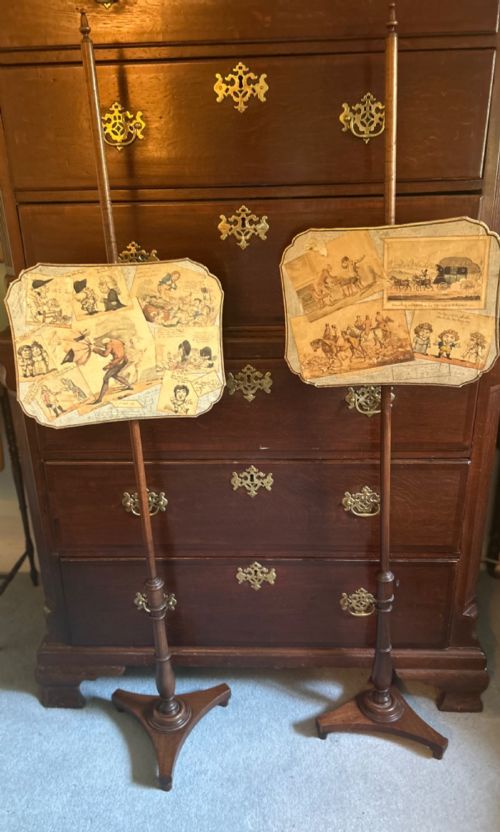
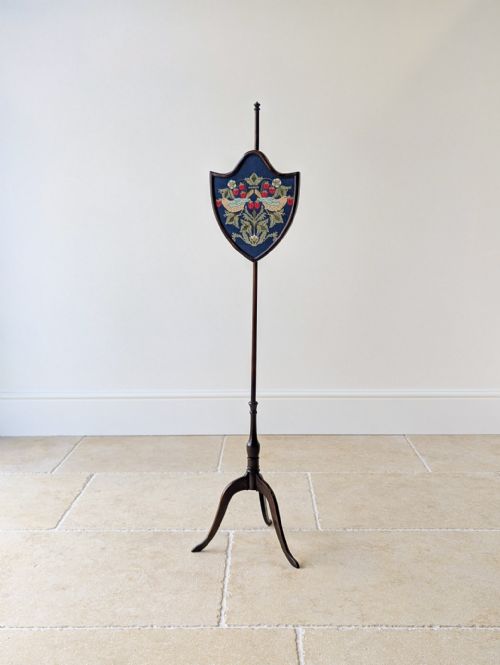
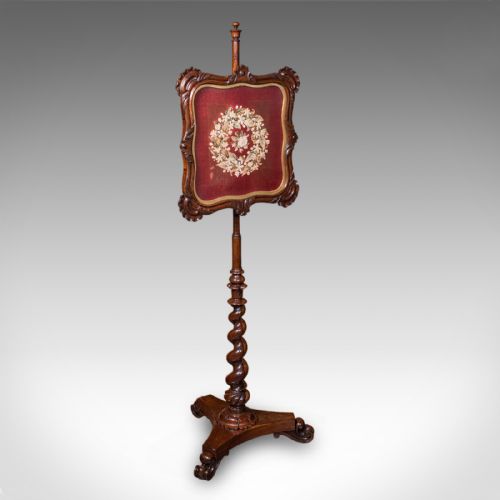
When you search for a dark mahogany fire screen, you are looking at functional Victorian and Georgian household shields designed to protect the face from the intense glare of a coal fire. Most examples encountered here take the form of pole screens, where a framed panel moves up and down a vertical wooden shaft supported by a tripod base.
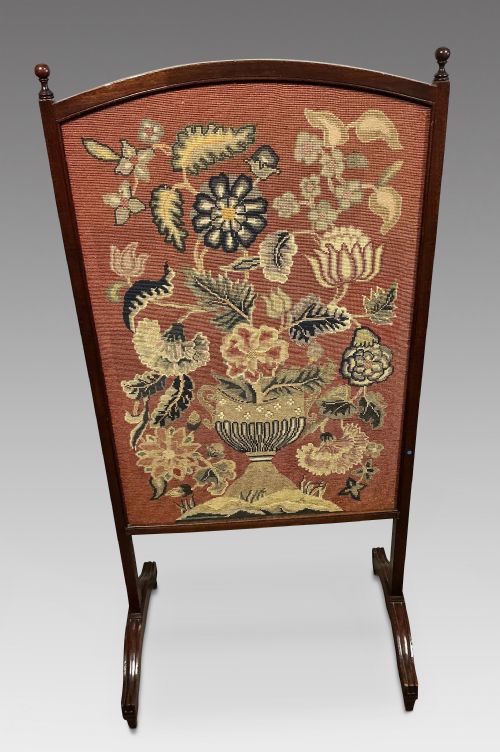
The selection spans from the late 18th century through the Victorian era, encompassing Georgian, Regency, and William IV styles. Alongside standard tripod pole screens, you will find larger static frames and adjustable fireside heat reflectors fashioned from solid mahogany.
How they were made
The primary structure relies on dense mahogany timber, occasionally complemented by rosewood or goncalo alves for contrast in the grain. Turned wooden shafts rise from sturdy tripod legs, while brass fittings allow the working parts to adjust smoothly.
The central panels serve as frames for elaborate needlepoint, tapestry, silk, wool, or canvas work. Some examples incorporate glass panels or feature hand-embroidered silver and gold thread depicting coats of arms and satirical prints.
Current listings span from the Georgian period through the Victorian era, utilising mahogany alongside rosewood, brass, glass, and silk textiles.
What varies in quality
The distinction between standard examples and superior pieces rests in the ambition of the carving on the base and the complexity of the needlework panel. Tripod legs shaped with crisp foliate carving or claw feet demonstrate a higher level of cabinetmaker skill than plain turned supports.
The condition and artistic merit of the textile insert also dictate the standing of the piece. Intricate pictorial tapestries, heraldic coats of arms, and finely preserved embroidery elevate the object far beyond plain utilitarian screens.
The Dark Mahogany Fire Screen Glossary
- Pole screen
- A freestanding screen featuring an adjustable panel mounted on a vertical wooden pole with a tripod base. This form allowed sitters to raise or lower the shield against the radiant heat of the hearth.
- Needlepoint
- A type of canvas work embroidery executed with a yarn in a counted thread stitch. It frequently forms the decorative central panel of Georgian and Victorian screens.
- Tripod base
- A three-legged support system commonly utilised on pole screens to ensure stability on uneven floorboards. The legs often terminate in scroll or pad feet.
- Goncalo Alves
- A dense exotic hardwood sometimes utilised in Regency cabinetmaking for its distinctive dark figuring. It provides a striking alternative to standard mahogany.
- William IV
- A transitional design period spanning the early 19th century that combined heavy classical forms with robust architectural elements. Pieces from this era often display bold carving and substantial proportions.
Dark Mahogany Fire Screen: Frequently Asked Questions
How did people use a pole screen?
A pole screen stood near the fireplace to shield a person's face from the intense heat of an open coal fire, which could otherwise melt heavy cosmetic makeup or cause discomfort.
The central panel slid vertically along the upright pole, allowing the user to adjust the height precisely as they sat in an armchair or by the hearth.
How do I tell a Regency screen from a Victorian one?
Regency pieces often display restrained classical proportions, elegant tripod bases with delicate reeding, and sophisticated needlework panels reflecting earlier 18th-century tastes.
Victorian screens generally present heavier carved elements, more exuberant frames, and denser tapestry or Berlin wool work within the central shield.
Are the tapestry panels original to the wood?
Most period screens retain their original needlework, tapestry, or embroidered inserts mounted securely within the wooden frame.
Because textiles are susceptible to fading and wear over centuries, some panels have received sympathetic re-weaving or period-appropriate restoration while keeping the primary frame intact.
How do I place a fire screen in a modern room?
A pole screen functions effectively as a freestanding decorative object in a living space, drawing the eye toward historic woodwork and detailed textile art.
They sit comfortably beside a functioning fireplace, in an empty corner, or against a panelled wall where the tripod base and vertical proportions balance other furniture.