




Dark Wood Hearth Screen
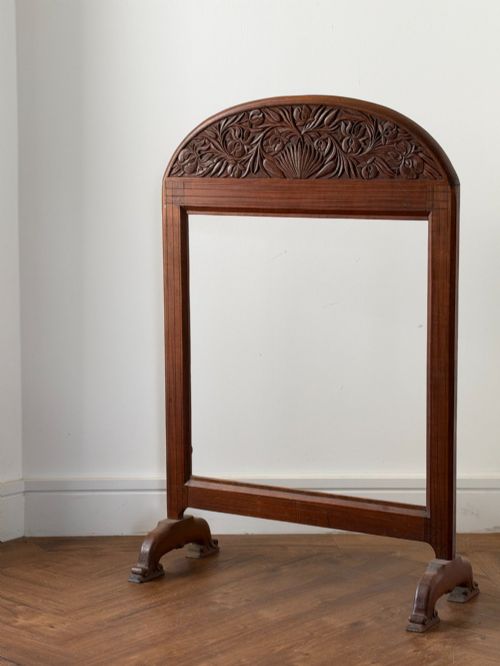
These dark wood hearth screen examples combine solid timber with needlework, brass, and glass to block the heat of an open grate.
Dark Wood Hearth Screen
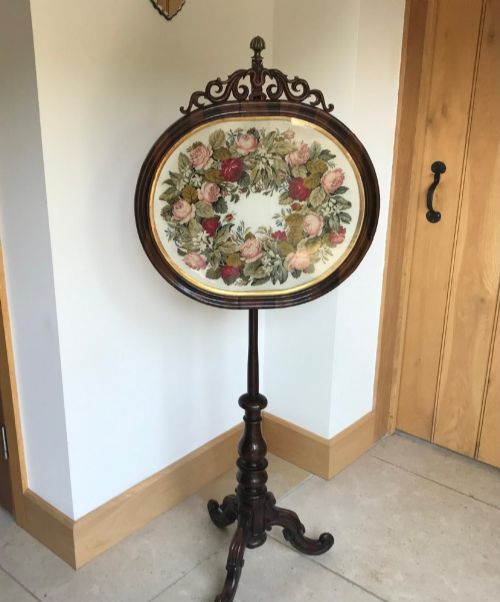
A dark wood hearth screen functions as a decorative movable barrier placed before a fireplace when the grate is unlit. The selection spans George III, Regency, William IV, and Victorian periods, alongside Dutch Renaissance Revival and Chinese Traditional forms.
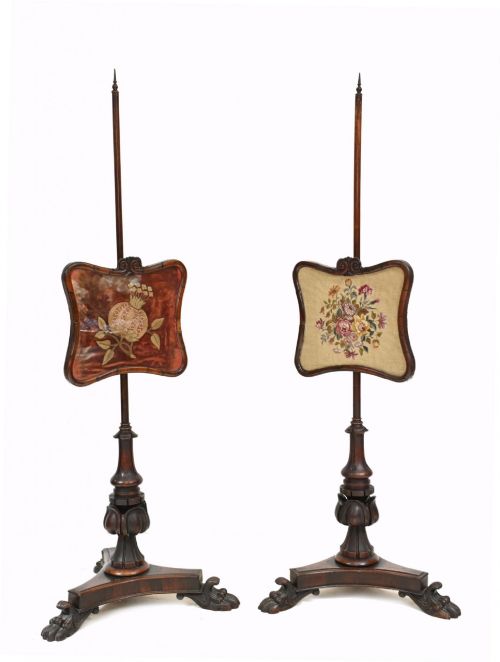
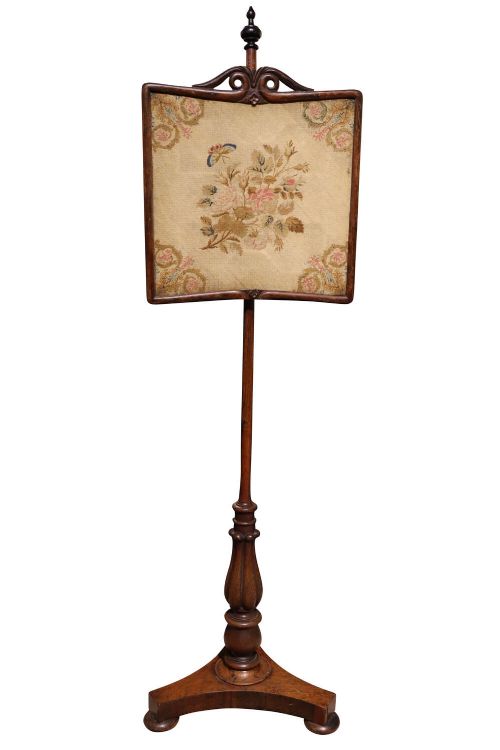
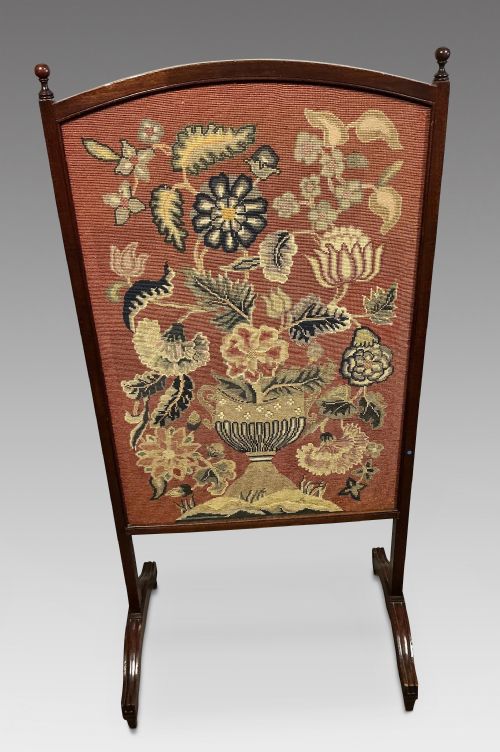
Most examples found here take the form of pole screens, where a framed panel adjusts vertically on a turned wooden shaft supported by a tripod or platform base. Other variations include cheval screens and folding or fixed panels made from mahogany, rosewood, oak, palisander, and hardwood.
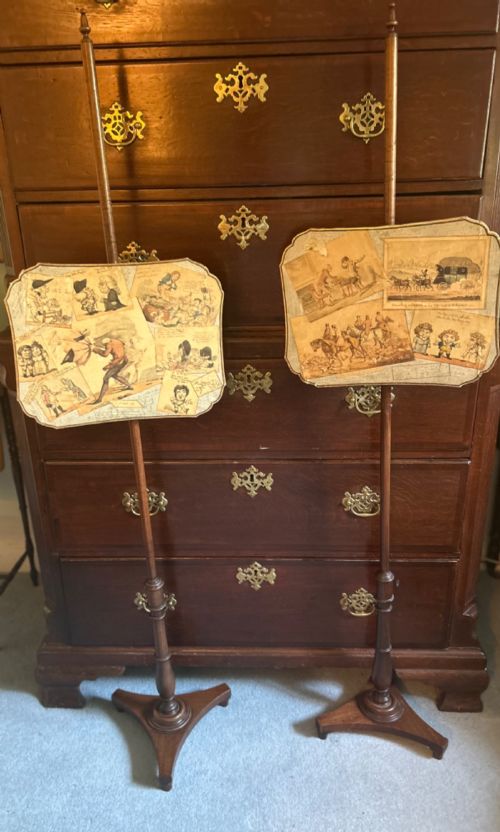
Makers integrated various display panels into the dark wood frames, ranging from needlepoint, wool, and silk embroidery to canvas, prints, embossed brass, and glass. These items originate predominantly from nineteenth-century English workshops, alongside earlier Georgian and seventeenth-century brass-mounted pieces.
How dark wood hearth screen items were made
Cabinetmakers shaped dense timbers such as mahogany, rosewood, and oak into turned poles, scroll brackets, and heavy platform bases, often incorporating carved details. The timber was polished or waxed to bring out the deep grain.
Needlework panels, tapestry, and silk embroidery were stitched by hand onto canvas or wool grounds, then secured within wooden frames. Metal elements like the brass coats of arms were embossed and chased before being mounted directly onto the wood.
Dark Wood Hearth Screen Retail Price Guide 2026
Typical asking prices for dark wood hearth screen among the pieces listed under this phrase on Sellingantiques today, from the lower quarter to the upper quarter. They describe what is for sale here now, not the wider market.
Some late George III pole screens incorporate witty satirical prints rather than polite needlework, bringing unexpected humour to the fireplace.
What varies in quality
The sophistication of the timber turning and the depth of the carving on the base distinguish standard examples from finer work. Heavier proportions and substantial rosewood or mahogany framing indicate greater material investment.
The execution of the central panel, whether fine silk embroidery, detailed needlepoint, or chased brass, dictates the visual standard. Original mechanisms that allow a pole screen panel to adjust smoothly on its shaft add functional merit.
The Dark Wood Hearth Screen Glossary
- Pole screen
- A standing fireplace screen with a vertically adjustable panel mounted on a central wooden shaft. It allowed the user to shield their face from the radiant heat of the fire.
- Cheval screen
- A self-supporting floor screen held within a rectangular wooden frame that swings on side pivots between two upright posts. This form offered a wider protective surface than a standard pole screen.
- Needlepoint
- A type of canvas work embroidery executed with wool or silk yarn using counted stitches. It formed the decorative pictorial or armorial panels seen on many nineteenth-century frames.
- Palisander
- A dense, dark tropical timber related to rosewood, utilised for fine cabinetwork during the Regency period. Its rich grain contrasts sharply with lighter decorative elements.
- Chased brass
- Metalwork decorated by hammering or punching patterns into the front surface rather than cutting away material. It frequently appears on seventeenth-century Dutch or Flemish panels.
Dark Wood Hearth Screen: Frequently Asked Questions
How do you use a pole screen?
A pole screen stands near the hearth to protect a person's face from the intense radiant heat of an open coal or wood fire. The adjustable panel slides up and down the central shaft to catch the warmth at the desired height.
In modern rooms, they function as decorative room dividers or decorative focal points in sitting areas away from active fireplaces.
How do I date a wooden fire screen?
Dating relies on timber choice, turning styles, and base construction, comparing them against known periods from Georgian to Victorian eras. Mahogany and rosewood were favoured in the nineteenth century, while heavier carved oak points towards earlier seventeenth-century influences.
The needlework or textile panel within the frame often provides corroborating stylistic clues regarding costume or artistic motifs of the period.
Are the embroidery panels original to the screens?
Many screens retain their original hand-stitched needlework, tapestry, or silk panels executed during the Georgian and Victorian periods. Needlework was frequently produced by amateur or professional needlewomen as a domestic craft.
Over the centuries, some panels experienced wear and underwent period or later re-stitching, which remains common in textile-inset furniture.
How do I maintain the wooden frame?
Maintain the timber by applying a microcrystalline wax periodically to nourish the surface and protect the polished grain from dry air. Avoid placing the screen directly next to active heat sources or in strong direct sunlight.
Dust textile panels gently with a soft brush and keep brass components free of moisture to prevent tarnishing.