

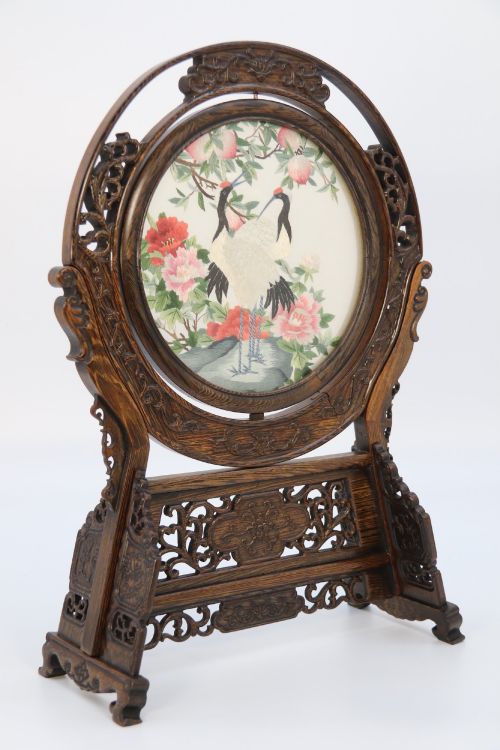


Vintage Needlework Screen
These vintage needlework screens are practical decorative panels and floor pieces that bring rich textile artistry to a room.
Vintage Needlework Screen
When you search for a vintage needlework screen, you are looking at functional panels designed to deflect fireplace heat or divide interior spaces. The pieces on this page span several distinct periods including the Regency era, the nineteenth century, and the Victorian period.
Textiles form the visual centrepiece of these objects, featuring traditional embroidery, figural tapestry panels, and double-sided silk needlework. You will also encounter specific revivals such as the Chinese Republic Period and Persian style designs within the current listings.
How They Were Made
Makers constructed the structural frames of these screens using solid hardwoods such as mahogany, rosewood, oak, and turned timber. Carved bases and adjustable poles demonstrate traditional cabinet-making techniques from the nineteenth century and earlier.
The decorative panels rely on textile artistry, incorporating silk, linen, and wool thread stitched into detailed needlework and tapestry pictures. Some panels are further protected beneath glass to preserve the delicate embroidery work.
Vintage Needlework Screen Retail Price Guide 2026
Typical asking prices for vintage needlework screen among the pieces listed under this phrase on Sellingantiques today, from the lower quarter to the upper quarter. They describe what is for sale here now, not the wider market.
Current listings feature pieces spanning the Regency, Victorian, and Chinese Republic periods, utilising mahogany, rosewood, oak, and silk embroidery.
What Varies in Quality
Quality rests in the precision of the timber carving and the complexity of the frame construction, particularly in the turned standards of pole screens and the joinery of folding room panels. Denser timbers like rosewood and finely carved mahogany indicate superior workshop standards.
The execution of the textile panel dictates the artistic merit of the piece, with dense silk embroidery and detailed figural tapestry representing the upper tier of production. Preserved condition of the needlework and original glass settings elevate the overall integrity of the screen.
The Vintage Needlework Screen Glossary
- Pole screen
- A vertical wooden stand featuring an adjustable sliding shield designed to protect the face from fireplace heat. These pieces typically stand on a tripod base.
- Firescreen
- A decorative panel placed before an unused fireplace during warmer months to improve the appearance of the hearth. They often display elaborate needlework.
- Tapestry
- A form of textile art woven on a loom or stitched by hand with thread to create pictorial scenes. These panels form the primary visual element in many antique screens.
- Bobbin turned
- A method of woodturning that creates a series of rounded, spool-like shapes along the length of a furniture leg or frame. This technique appears frequently on nineteenth-century pieces.
Vintage Needlework Screen: Frequently Asked Questions
What is a pole screen?
A pole screen is a vertical wooden stand with an adjustable sliding panel used historically to shield the face from fireplace heat. These pieces typically feature a slender standard mounted on a stable base.
The sliding shield can be moved up or down the pole and fixed in position. They served a practical purpose in period parlours before central heating became common.
How were fire screens used?
Fire screens were placed directly in front of active hearths to block intense heat or positioned before empty grates during summer months for decoration. They helped regulate comfort in large rooms.
Over time their function shifted toward decorative display as textile panels gained artistic prominence. They remain useful today as interior room accents.
What materials make up these screens?
The frames utilise hardwoods including mahogany, rosewood, oak, and turned timber alongside brass elements. Structural supports range from simple rotating stands to heavy carved tripod bases.
Needlework panels incorporate silk, linen, and wool threads, occasionally protected beneath glass. The textiles define the character of each individual screen.
How do I identify a Victorian screen?
Victorian screens often feature darker hardwoods like mahogany with ornate carvings, bobbin turned elements, or substantial proportions. The needlework frequently includes detailed pictures and rich tapestry designs.
Comparing the frame style and textile motifs helps distinguish nineteenth-century examples from earlier Regency or later twentieth-century pieces.