
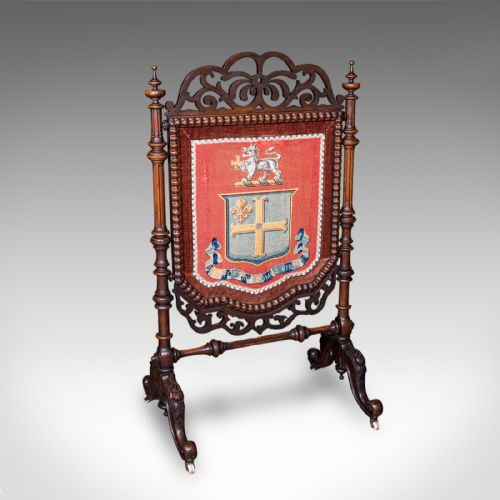
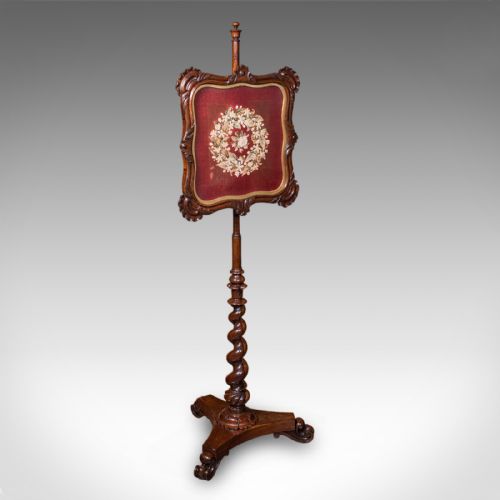


Needlepoint Pole Screen
Needlepoint pole screens are adjustable fireside stands carrying embroidered panels, offering period charm and practical warmth control for any room.
What the pieces are
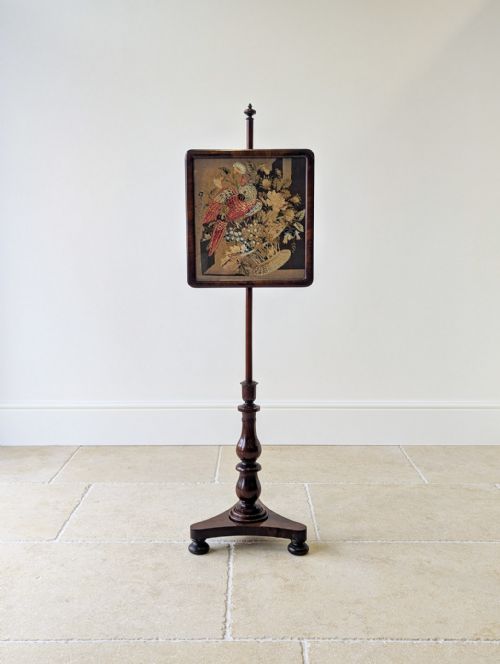
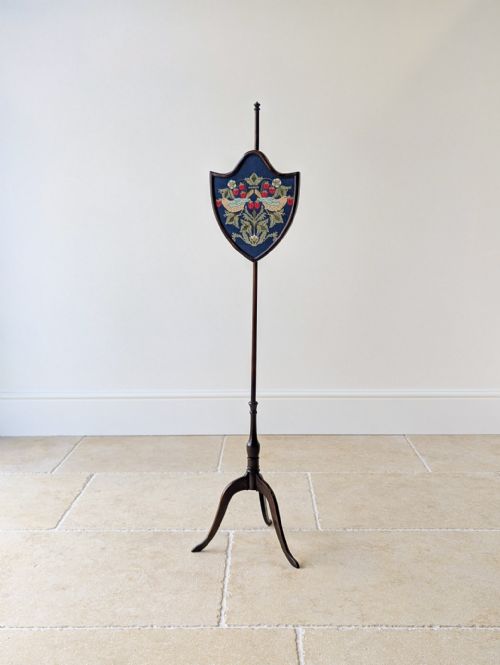
A needlepoint pole screen is a fireside furnishing designed to shield the face from the direct heat of an open hearth. These stands comprise a vertical upright pole supported by a stable base, carrying a sliding panel that can be adjusted to any height.
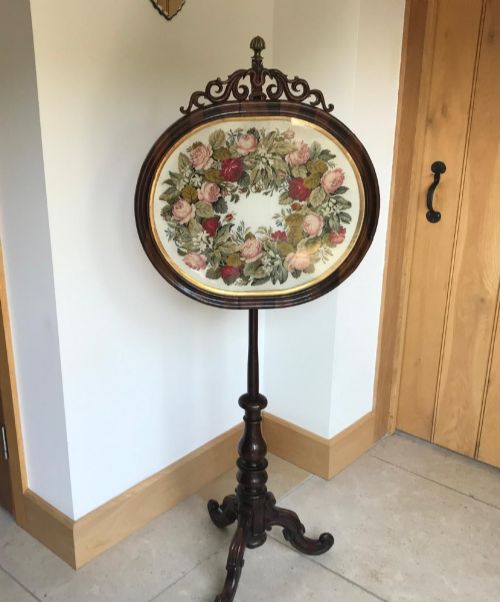
Most examples found here date from the Regency and Victorian eras, spanning the nineteenth century. Buyers regularly encounter rosewood, mahogany, and walnut stands featuring floral or pictorial textile panels.
The primary forms include tripod bases and pendant designs, often referred to simply as fire screens or fireplace screens in period records. They combine functional utility with decorative needlework craftsmanship.
How they were made
The structural framework relies on turned or carved timber uprights fixed to tripod or heavy weighted bases in mahogany, rosewood, walnut, and brass. Joinery and turning demand precise woodworking skills to ensure the vertical pole supports the weight of the sliding panel without listing.
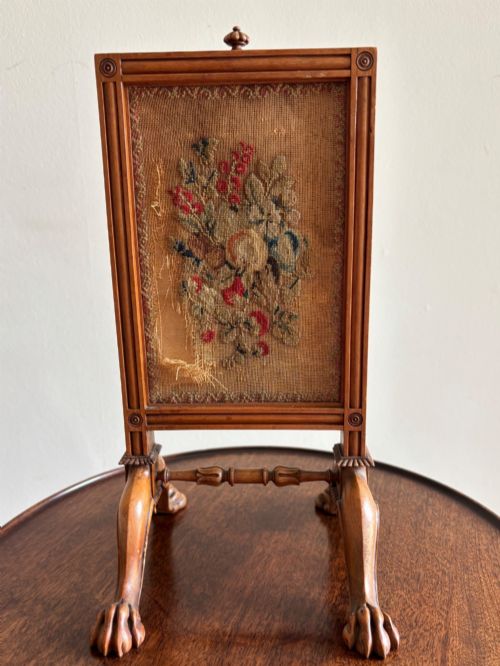
Panels are constructed from textiles, tapestry, woolwork, and velvet, often stretched over wooden frames and protected by glass in certain configurations. The needlework itself employs detailed stitching techniques to render floral and decorative motifs.
Retail Price Guide 2026
Typical UK retail prices for needlepoint pole screen, calculated from the Sellingantiques database of over a million retail prices indexed since 2003. This retail price guide relies exclusively on Sellingantiques data; no external sources or auction records are used, so the figures do not describe the wider market.
Listings feature woods including mahogany, rosewood, walnut, and brass alongside textile, tapestry, woolwork, and velvet panels.
What varies in quality
Quality rests in the timber selection and the complexity of the wood turning on the pole and base. Dense, figured rosewood or finely grained mahogany elevate a piece far above simpler utility versions.
The finesse of the needlepoint tapestry panel dictates the artistic merit of the work. Tightly stitched woolwork with nuanced shading represents superior craftsmanship compared to coarser, simpler execution.
The Needlepoint Pole Screen Glossary
- Pole screen
- A freestanding vertical support holding an adjustable panel used originally to block radiant heat from a fireplace.
- Needlepoint
- A type of canvas work embroidery executed with wool or silk thread, frequently forming dense pictorial or floral tapestries.
- Tripod base
- A three-legged support structure providing stability to the vertical pole.
- Reflector
- A panel type incorporated into certain screens to redirect warmth back toward the room or away from the face.
Frequently Asked Questions
How were pole screens used?
These screens were placed strategically between a chair and an open fireplace to protect the face from excessive heat and glaring flames.
The sliding mechanism allowed the user to raise or lower the needlepoint panel precisely to eye level while seated.
Where do I put a pole screen?
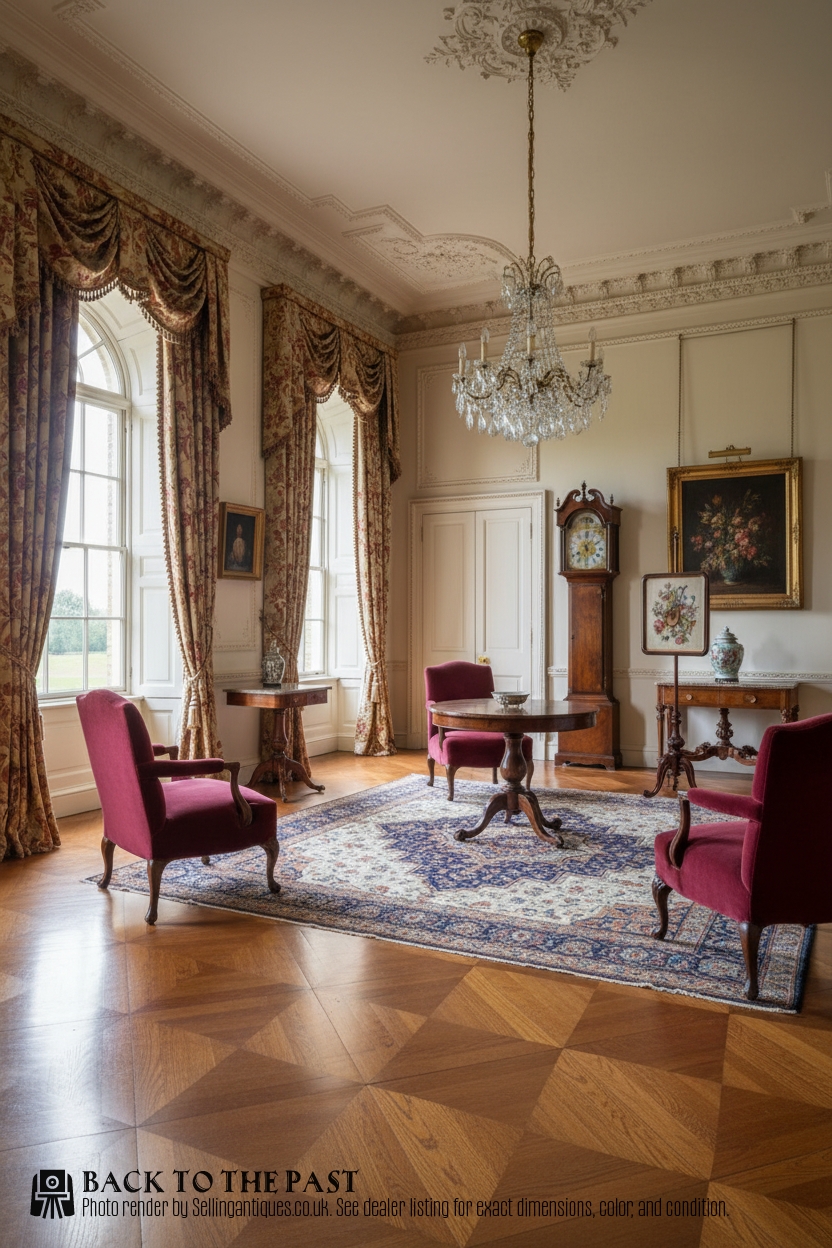
A pole screen fits naturally beside a fireside armchair, reading seat, or empty corner where its vertical form adds architectural interest.
Because the panel adjusts, it can occupy a narrow footprint while drawing the eye upward with its decorative textile.
How do I spot a Regency screen?
Regency examples frequently employ rosewood or walnut timbers paired with crisp, classical turning on the tripod base and upright.
The needlepoint panels on these pieces often exhibit specific early nineteenth-century floral or geometric compositions.
What is woolwork?
Woolwork refers to the hand-stitched textile panels executed in wool yarn that form the primary decorative element of these screens.
This technique provides both durability and rich colour variation across the antique tapestry surface.