



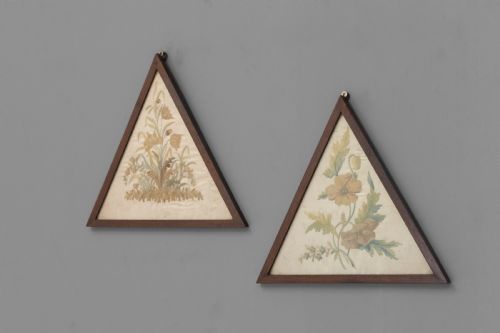


Victorian Needlework Panel
A victorian needlework panel brings hand-worked textile artistry into a room, offering tactile warmth and nineteenth-century craft.
What these pieces are
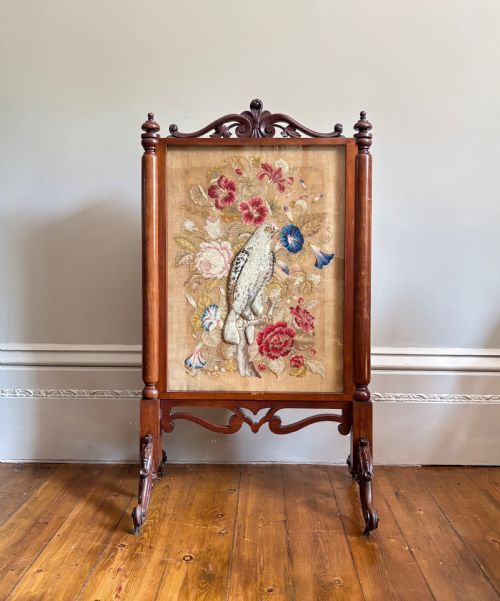
A victorian needlework panel brings together textile art, wool, and silk within nineteenth-century frameworks. These pieces appear frequently mounted as wall art or set into wooden fire screens and pole screens.
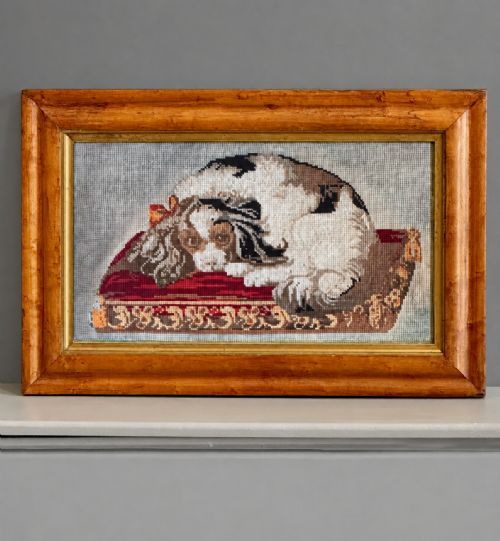
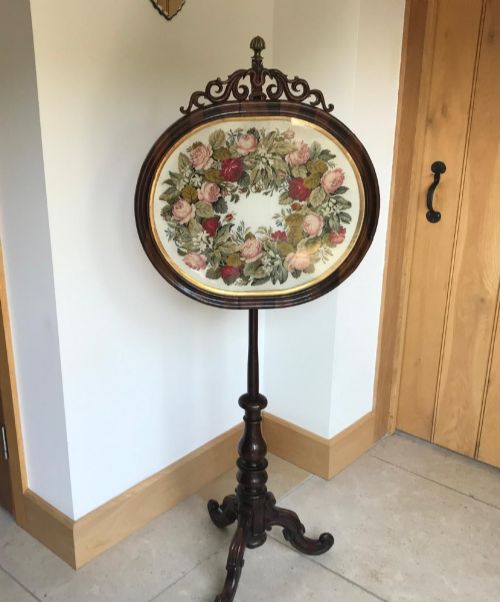
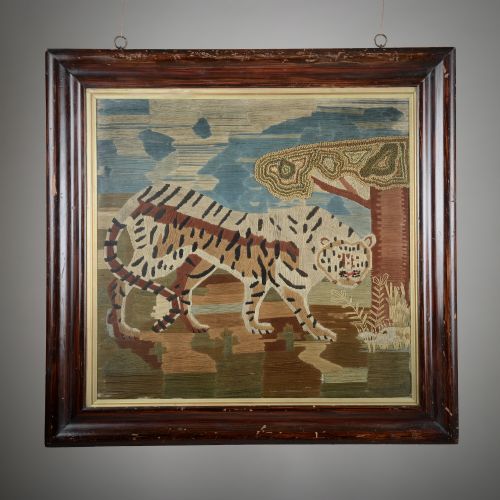
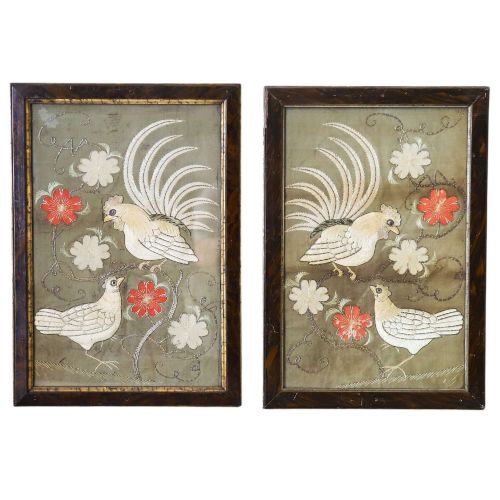
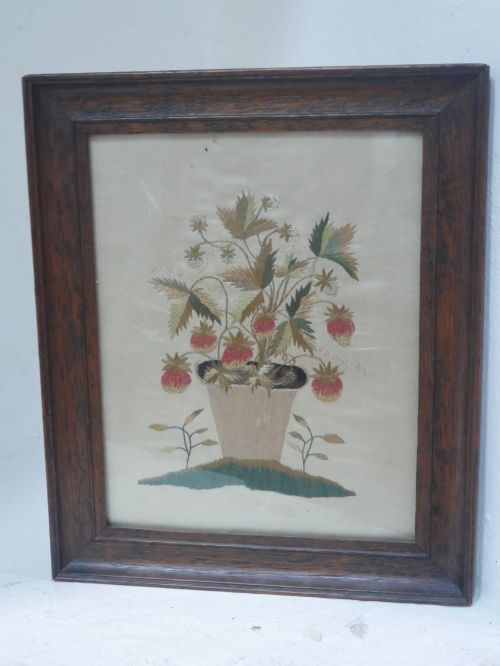
The selection ranges from framed floral hanging pictures and samplers to embroidered panels designed as reflectors and fire screens. Rosewood and mahogany provide the primary framing structures for the pole screens and cheval formats.
Early Victorian examples often feature intricate wool and silk embroidery on canvas. Larger decorative works include silk patchwork destined for specific historic interiors such as Hammerfield House.
How they were made
Maker execution relies on textile stitching upon canvas using wool and silk threads. Needlework panels incorporate detailed embroidery techniques applied by hand during the nineteenth century.
Wooden frames utilise rosewood and mahogany, often shaped into scrolls or turned pole screen standards. Brass fittings and glass glazing protect the embroidered surfaces on framed wall art and screen inserts.
Retail Price Guide 2026
Typical UK retail prices for victorian needlework panel, calculated from the Sellingantiques database of over a million retail prices indexed since 2003. This retail price guide relies exclusively on Sellingantiques data; no external sources or auction records are used, so the figures do not describe the wider market.
Listings feature Victorian and nineteenth-century periods utilising rosewood, mahogany, wool, silk, brass, and glass across fire screen and wall art forms.
What varies in quality
The sophistication of the needlework design and the precision of the stitching dictate the upper tier of quality. Finer wool and silk threads create intricate floral motifs and detailed pictorial depth.
The surrounding woodwork influences overall merit, distinguishing simpler turned poles from elaborate scroll-framed rosewood cheval structures and substantial mahogany mounts.
The Victorian Needlework Panel Glossary
- Pole screen
- A vertical wooden stand with an adjustable needlework panel designed to shield a person's face from the heat of an open fire. The panel slides up and down on a central turned shaft.
- Cheval fire screen
- A floor-standing screen featuring a needlework panel supported within a swinging frame between two upright pillars. This format allows the panel angle to be tilted.
- Sampler
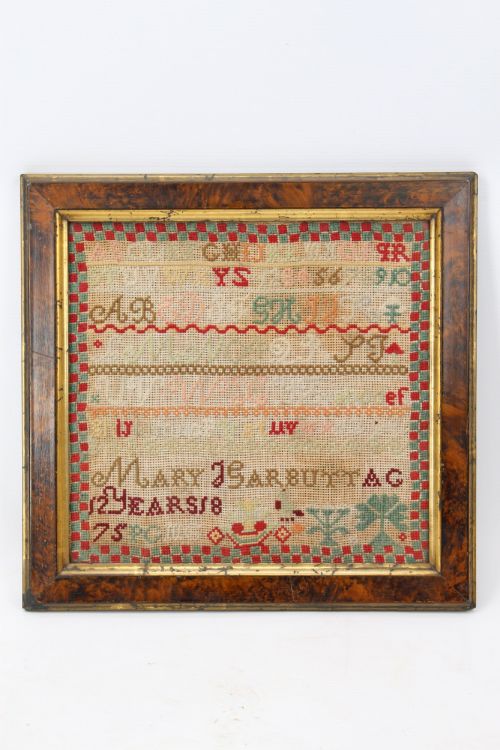
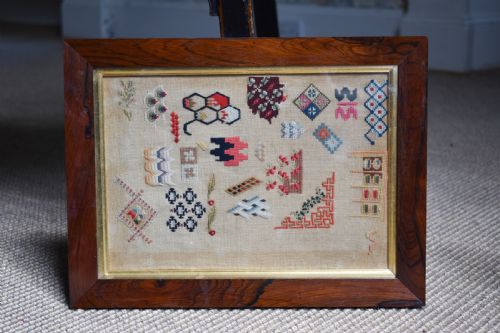
- A piece of embroidery produced by a maker to demonstrate proficiency in various stitches and alphabets. Dated examples record the maker and year of creation.
- Patchwork
- Textile art formed by sewing together small pieces of fabric of various shapes and colours. Larger silk examples were created for specific country house interiors.
Frequently Asked Questions
What is a pole screen?
A pole screen is a nineteenth-century standard lamp-style wooden support holding an adjustable needlework panel. It protected the face from open fireplace heat.
The panel moves vertically along a turned wooden pole to suit the seated user.
How were these panels displayed?
Needlework panels were mounted inside wooden frames for wall hanging or integrated into functional furniture like fire screens. They brought colour and texture into period rooms.
Many remain set within their original rosewood or mahogany stands.
What materials are used?
Makers utilised wool and silk threads stitched onto canvas grounds. These textiles are often supported by rosewood, mahogany, and brass hardware.
Glass frequently protects framed needlework hanging pictures from dust and environmental wear.
How do early Victorian panels differ?
Early Victorian items show distinct stitching patterns and specific framing styles associated with the earlier nineteenth century. Rosewood pole screens often date from this phase.
Later Victorian works include large samplers and silk patchwork pieces.