
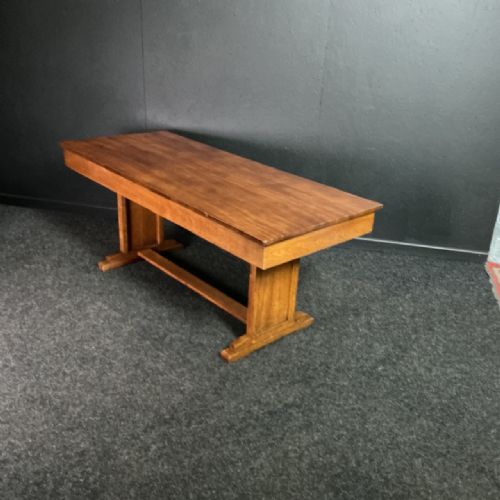
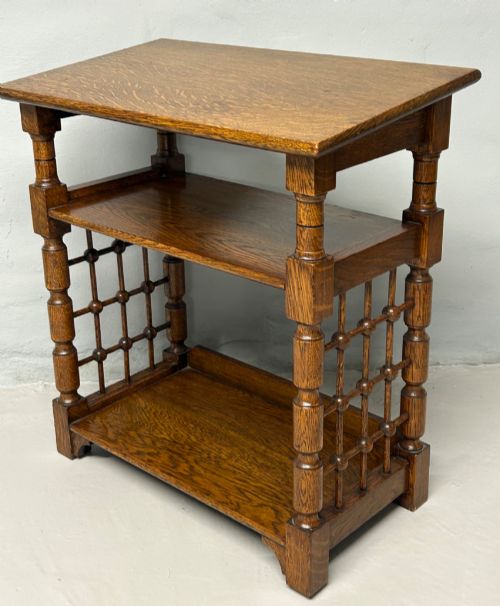
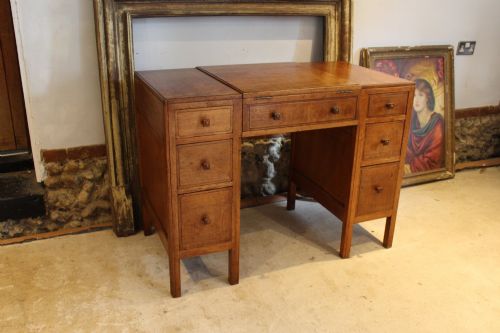


Medium Oak Desk
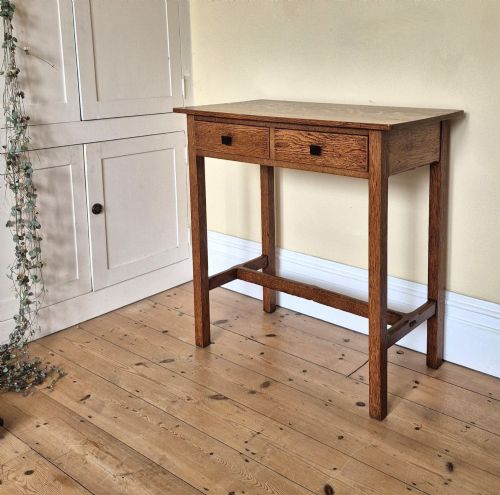
A medium oak desk brings warm grain and practical workspace into a room, spanning Edwardian, Victorian, and later periods.
Medium Oak Desk
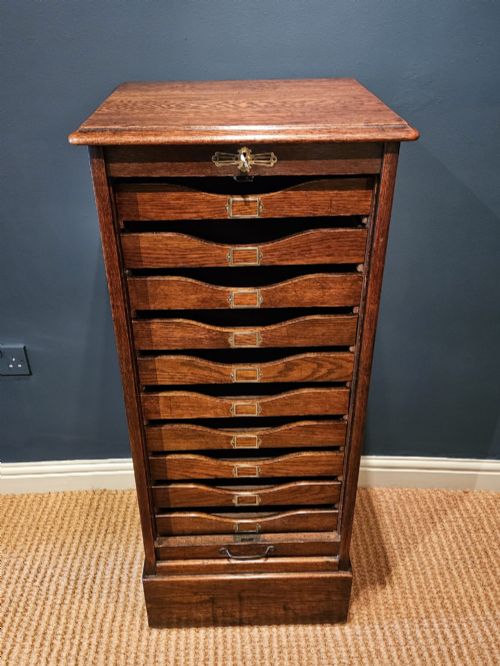
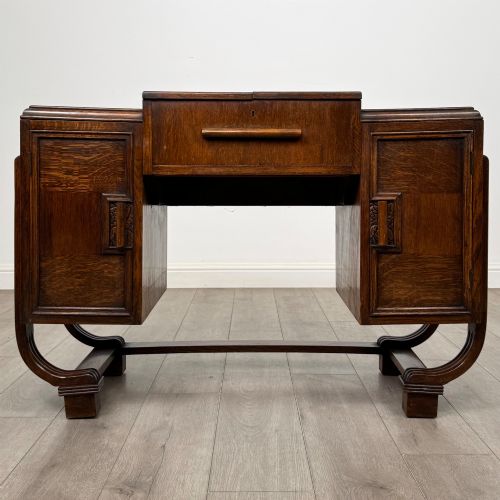
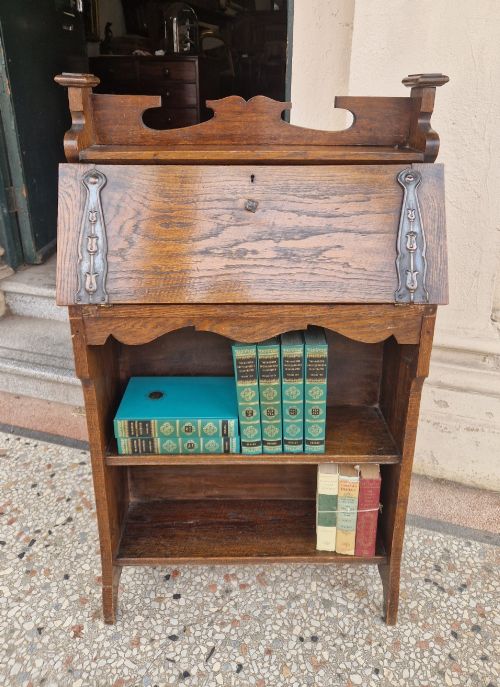
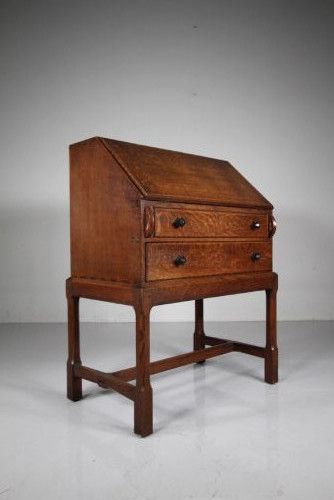
A medium oak desk serves as a sturdy workspace, appearing in forms such as twin pedestal desks, kneehole desks, roll top desks, and writing bureaus. These pieces emerge from periods including the Victorian era, the Edwardian period, and the 1920s and 1930s.
The version most commonly met on this page is the Edwardian or early twentieth-century oak bureau or twin pedestal desk, often showing Arts and Crafts influence or traditional period styling. Such items combine functional drawers and fitted interiors with the robust character of solid oak.
Makers and workshops of the early twentieth century produced these desks using medium oak tones, incorporating brass handles, glass elements, and occasionally leather writing surfaces. Each piece reflects the utility and craftsmanship of its specific decade, from Victorian Gothic Revival to Interwar production.
How they were made
Makers constructed these desks primarily using solid oak and oak veneers, selected for durability and pronounced grain patterns. Workshops applied traditional joinery methods to ensure stability across pedestals, writing flaps, and bureau cabinets.
Hardware details typically include brass handles, hinges, and key escutcheons, while specific forms incorporate iron or copper accents. Some variants feature glass doors on bookcase tops or cane panels, supported by structural ironwork where necessary.
Listings feature medium oak desks and related forms spanning the Victorian era, the Edwardian period, and the 1920s and 1930s.
What varies in quality
Quality in these desks rests upon the selection of timber, the precision of the joinery, and the integrity of the fitted interior compartments. Superior examples display carefully matched oak grain and smoothly operating tambour mechanisms or drawers.
Maker attribution and original labelling elevate certain pieces, distinguishing standard commercial production from workshops associated with known designers and guilds. The presence of original keys, functional roll tops, and well-preserved hardware further separates finer specimens.
Arthur Simpson·Stanley Webb Davies·Bryn Mawr·Hubert Simpson of Kendal·Heal And Sons·Heals of London·Shapland And Petter
The Medium Oak Desk Glossary
- Bureau
- A writing desk featuring a sloping hinged flap that opens to reveal small drawers and pigeonholes. This form often sits atop a chest of drawers or a bookcase cabinet.
- Tambour
- A flexible sliding shutter made of narrow strips of wood glued to canvas, commonly used to enclose the upper section of a roll top desk.
- Pedestal desk
- A heavy freestanding writing table supported by two banks of drawers reaching down to the floor. Such desks frequently include a central drawer above the kneehole.
- Kneehole desk
- A compact writing desk with a central recess for the user's legs, flanked by pedestals containing drawers. This configuration offers a balanced writing surface without excessive bulk.
- Arts and Crafts
- A design movement emphasising handcraftsmanship, simple forms, and traditional construction methods, often visible in oak furniture from the early twentieth century.
Medium Oak Desk: Frequently Asked Questions
What is the difference between a bureau and a roll top desk?
A bureau utilises a hinged sloping flap that pulls down to create a writing surface while concealing internal compartments. A roll top desk encloses the workspace using a slatted wooden tambour that slides along a curved track.
Both forms provide secure storage for stationery and papers, but they distribute internal space differently. Bureaus often combine writing areas with bookcase cabinets above, whereas roll top desks focus on expansive desktop utility.
How do I identify an Edwardian oak desk?
Edwardian desks display characteristics typical of the early twentieth century, combining traditional Victorian proportions with lighter Arts and Crafts influences. They frequently feature plain or quarter-sawn oak timbers with simple brass hardware.
Clues such as registration numbers, specific drawer construction, and period lock mechanisms help confirm the date. Many pieces from this era also bear maker labels or stamps from contemporary workshops.
What kind of chair matches an antique oak desk?
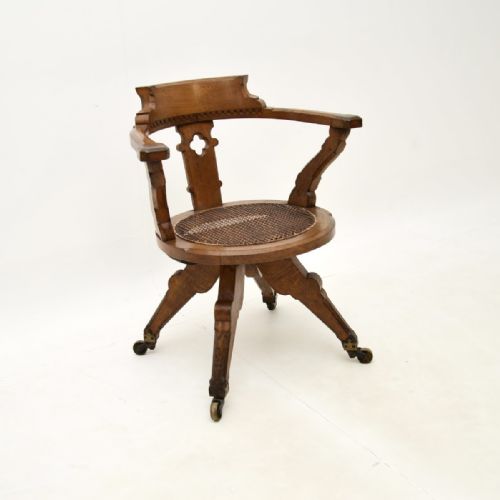
Period desks pair naturally with contemporary desk chairs, swivel chairs, or armchairs sharing the same oak timber and stylistic period. Edwardian and Victorian office chairs often feature bentwood frames, leather upholstery, and swivel mechanisms.
Matching the wood tone and finish ensures visual consistency between the seating and the desk. Chairs from the Arts and Crafts tradition or simple spindle-back designs complement the structural aesthetic of medium oak furniture.