



Compact Wooden Office Desk
A compact wooden office desk is a practical working surface designed to fit smaller rooms using traditional timbers.
Compact Wooden Office Desk
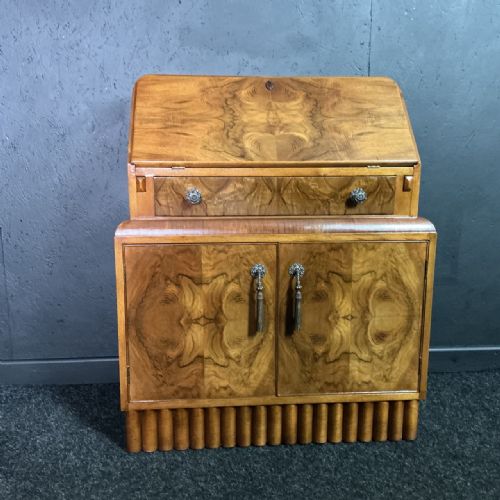
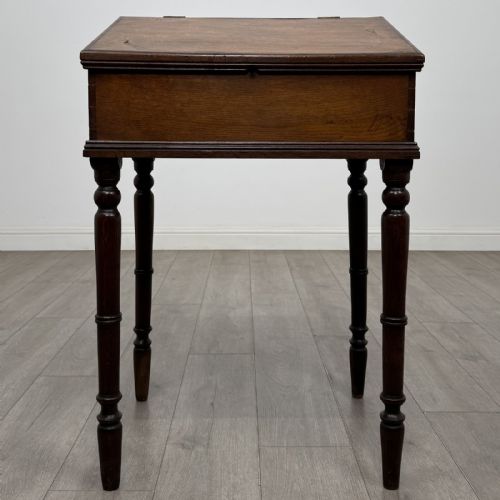
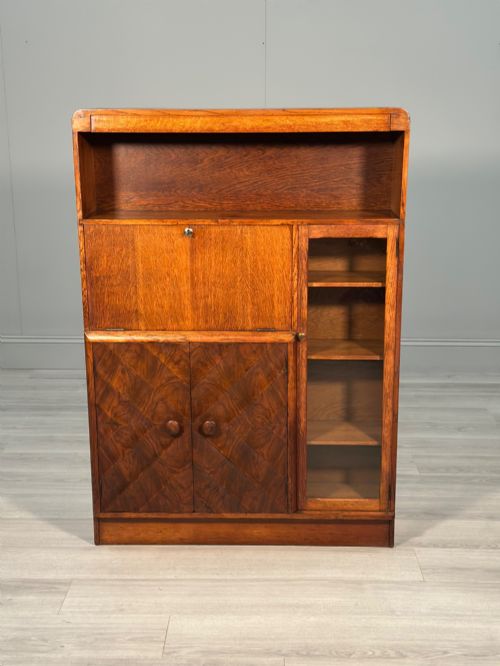
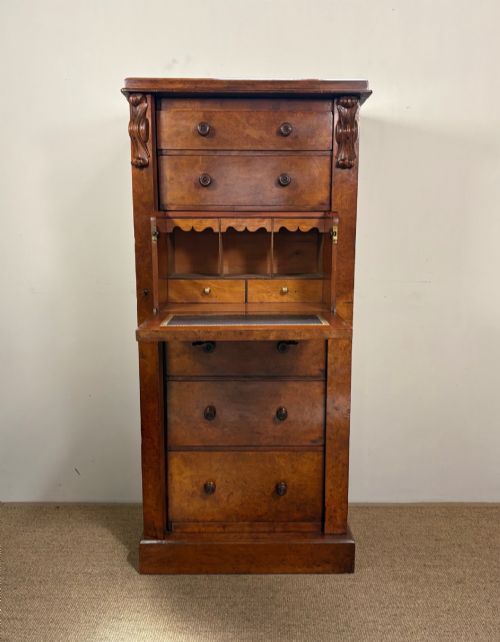
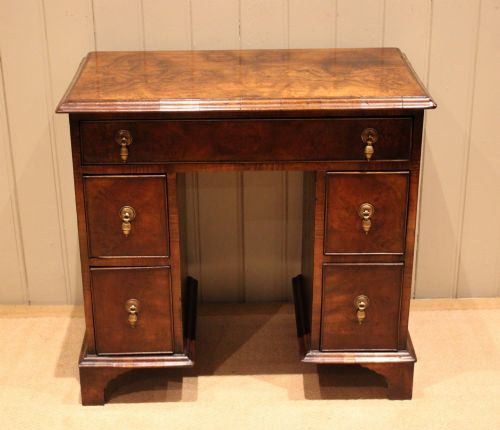
A compact wooden office desk serves as a working surface for smaller rooms, combining traditional form with modest proportions. When buyers search for a compact wooden office desk, they generally encounter forms such as pedestal desks, writing bureaus, writing desks, filing cabinets, and secretaire chests.
The pieces available originate from various periods including Victorian, Edwardian, and Art Deco eras, spanning the nineteenth and twentieth centuries. These encompass styles such as Queen Anne style, Georgian style, and Late Victorian designs.
Buyers are most likely to meet burr walnut and oak versions on this page, alongside mahogany examples. These objects provide functional writing and storage spaces tailored for limited floor plans.
Materials and Construction
Makers utilised timber such as oak, mahogany, walnut, and burr walnut to construct these pieces, occasionally incorporating satinwood for interior elements. These woods provide the primary structural body and visible grain patterns.
Compact Wooden Office Desk Retail Price Guide 2026
Typical asking prices for compact wooden office desk among the pieces listed under this phrase on Sellingantiques today, from the lower quarter to the upper quarter. They describe what is for sale here now, not the wider market.
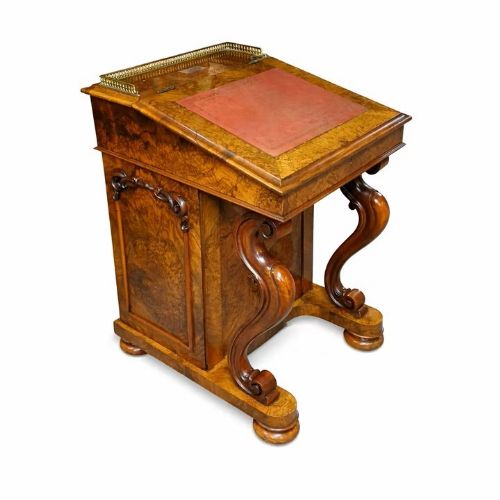
Some Davenport desks include secret side drawers that require a hidden release catch to open.
Assessing Quality
Quality rests upon the selection of timber figures, such as burr walnut veneer or light oak grain, and the precision of the joinery. Superior examples display careful matching of wood veneers across drawers and writing surfaces.
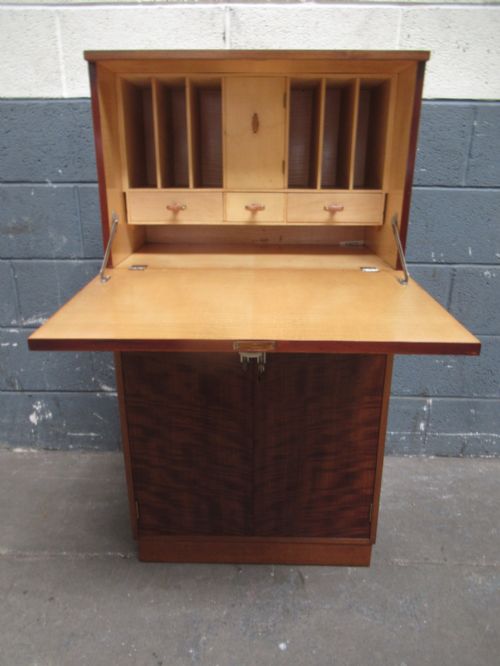
The refinement of internal secondary woods, such as satinwood interiors within Davenport desks, distinguishes finer pieces from simpler utilitarian items. Hardware integration, including brass handles and fitted compartments, further demonstrates the maker's hand.
The Compact Wooden Office Desk Glossary
- Pedestal desk
- A freestanding desk comprising two independent pedestals of drawers with a central writing surface across the top. This form offers substantial storage beneath the elbow height.
- Davenport desk
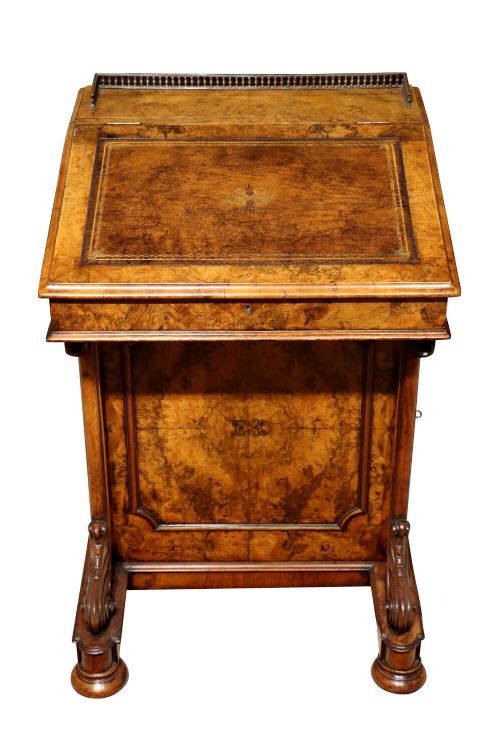
- A compact small desk featuring a sloping writing top and side drawers, originating in the Regency period and remaining popular through the Victorian era. The interior often conceals small pigeonholes and drawers.
- Writing bureau
- A desk featuring a hinged writing flap that folds down to reveal a fitted interior of pigeonholes and small drawers. When closed, it presents a neat cabinet front.
- Burr walnut
- A prized timber veneer obtained from the gnarled growths of walnut trees, displaying swirling and mottled grain patterns. It decorates high-status Victorian and Edwardian surfaces.
- Secretaire chest
- A chest of drawers containing a fitted writing drawer that pulls out and drops down to serve as a desk. It conceals writing compartments while maintaining the exterior appearance of a standard chest.
Compact Wooden Office Desk: Frequently Asked Questions
What is a Davenport desk?
A Davenport desk is a compact writing cabinet featuring a sloping top and side drawers. It provides a small footprint suitable for tighter interior spaces.
Such desks often include internal compartments for stationery and papers beneath the writing slope.
How do I identify an Edwardian desk?
Edwardian desks date from the reign of King Edward VII, spanning the early twentieth century. They frequently utilise oak or lighter timbers and simpler decorative schemes than their Victorian predecessors.
Construction methods from this period reflect early mass production alongside traditional cabinet making.
What woods were commonly used?
Makers constructed these desks primarily using oak, walnut, burr walnut, and mahogany. Satinwood often appears for internal drawer linings and smaller decorative details.
These timbers dictated both the colour and durability of the finished working surface.
Where were writing bureaus placed?
Writing bureaus served as functional writing and storage furniture in domestic sitting rooms and home studies. Their enclosed writing flaps kept correspondence and paperwork hidden when not in use.
Their modest dimensions allowed them to fit against walls in rooms with limited space.