



Traditional Walnut Study Furniture
Traditional walnut study furniture brings warm timber tones and period proportions into a room, offering practical workspace through desks, bookcases and bureaux.
Traditional Walnut Study Furniture
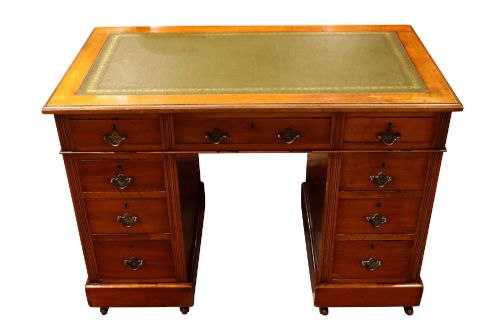
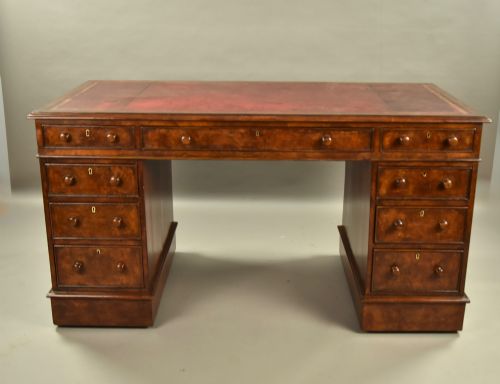
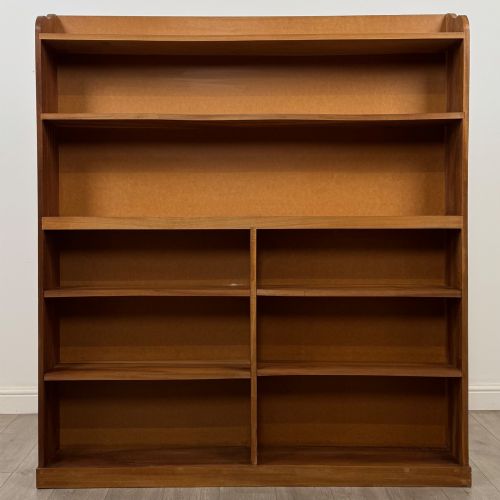
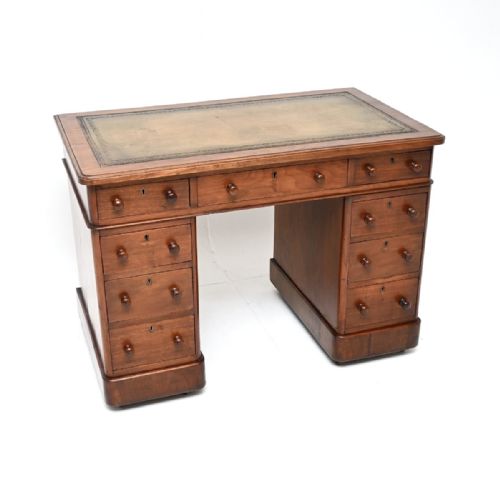
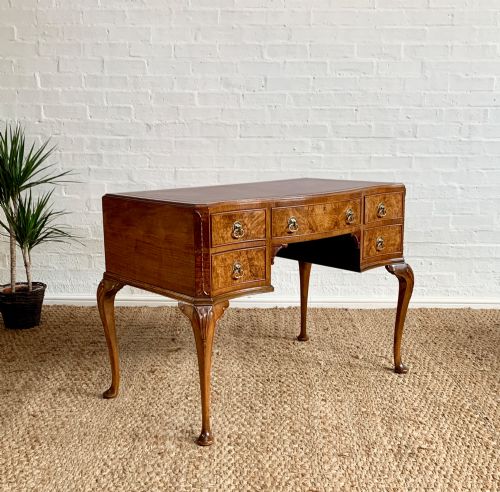
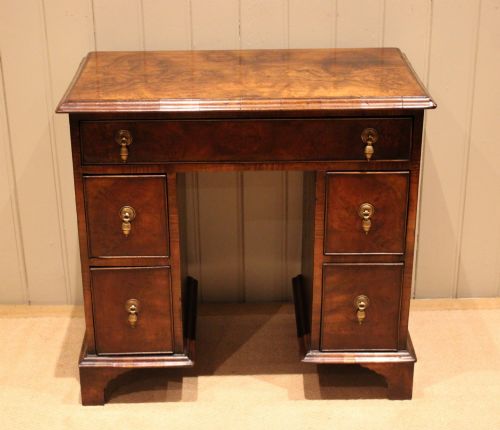
Traditional walnut study furniture encompasses desks, writing tables, partners desks, bookcases and bureaux designed for home working and library spaces. When searching for traditional walnut study furniture, buyers encounter pedestal desks, Davenport desks and writing tables originating predominantly from the Victorian and Edwardian eras, alongside pieces executed in specific revival styles.
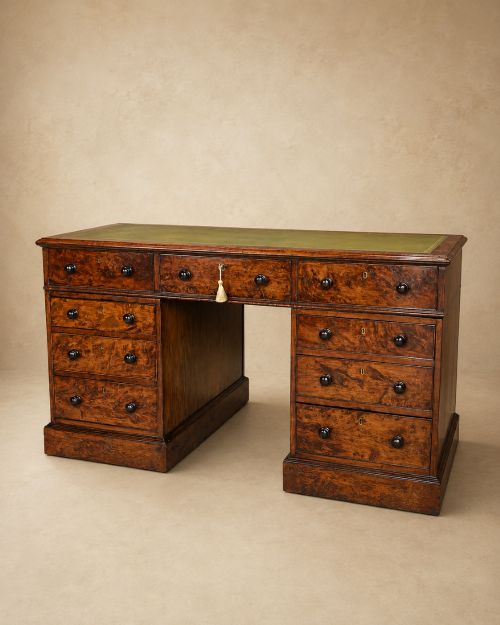
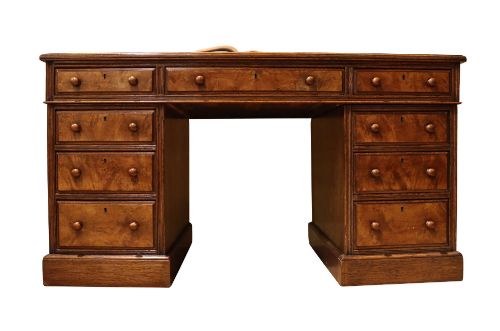
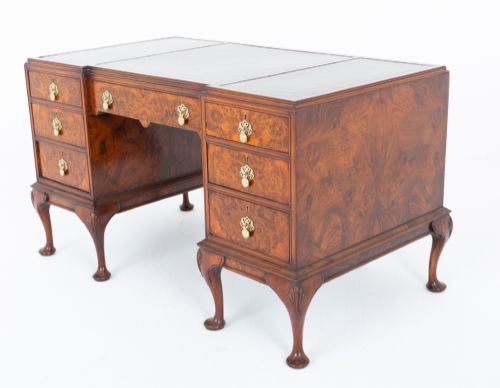
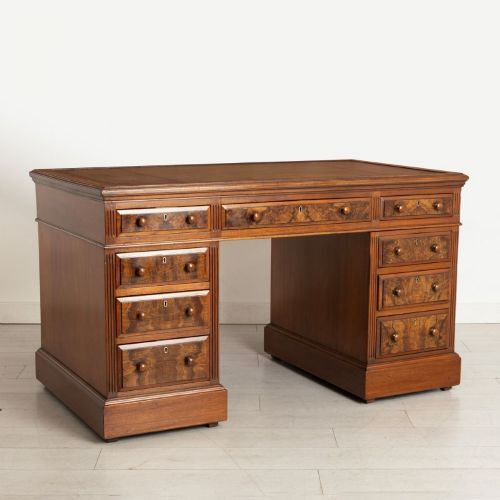
The selection leans heavily toward pedestal desks and partners desks constructed from walnut and burr walnut, often fitted with leather writing surfaces and brass hardware. These items reflect the domestic and professional interior requirements of the nineteenth and early twentieth centuries, scaled from small proportions to large formats.
How they were made
Makers utilised solid walnut and decorative burr walnut veneers applied to secondary timbers, combining figured grain patterns with marquetry inlay and brass fittings. Leather inserts provide the writing surfaces on desks and tables.
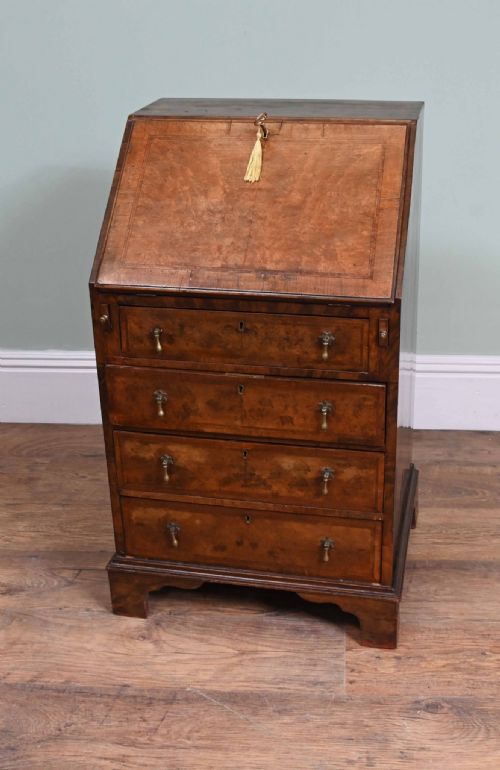
Construction techniques include multi-drawer pedestal configurations, bureau fall-fronts and writing table frameworks dating from the William IV period through to the twentieth century.
Some desks are built for two people to glare at each other across an ocean of burr walnut.
What varies in quality
Quality differences emerge in the selection of timber veneers, such as figured or burr walnut, and the precision of marquetry inlay work. Solid golden walnut framing and well-matched grain patterns separate standard examples from finer productions.
The integrity of brass hardware, leather skivers and the structural joinery of drawers and pedestals determine the standing of an individual desk, bookcase or bureau within the wider range.
Wylie & Lochhead Glasgow·Gillows
The Traditional Walnut Study Furniture Glossary
- Burr walnut
- A highly figured timber veneer obtained from the growth excrescences of walnut trees, prized for its swirling patterns. It is frequently applied to the primary surfaces of Edwardian and Victorian desks.
- Partners desk
- A large double-sided pedestal desk designed for two people to work opposite one another. These pieces feature drawers and cupboards accessible from both sides.
- Pedestal desk
- A freestanding desk comprising a top supported by two pedestals containing banks of drawers. They often incorporate inset leather writing surfaces.
- Davenport
- A compact writing desk featuring a sloped, hinged writing surface above a set of side drawers. Victorian examples often incorporate burr walnut and marquetry details.
- Marquetry
- Decorative inlay work using various woods to create patterns and pictures on furniture surfaces. It appears on selected Victorian Davenport desks.
Traditional Walnut Study Furniture: Frequently Asked Questions
What is a partners desk?
A partners desk is a large double-sided writing table designed with drawer banks on both faces so two people can sit opposite each other.
These pieces served administrative and professional functions in nineteenth-century offices and libraries.
How do I identify burr walnut?
Burr walnut displays swirling, highly decorative grain patterns created from tree growths rather than straight timber boards.
Cabinet makers used these figured veneers on the main surfaces of Victorian and Edwardian desks and bureaux.
What is a Davenport desk?
A Davenport is a compact Victorian writing desk with a sloped, hinged writing top and drawers positioned down one side.
Their smaller proportions made them suitable for drawing rooms and private studies where space was limited.
How do I date a walnut desk?
Dating relies on stylistic markers such as Queen Anne revival shapes, Victorian proportions, Edwardian construction methods and recorded maker details.
Materials like brass hardware and secondary framing timbers also provide clues to the period of manufacture.