




Bracket Foot Desk
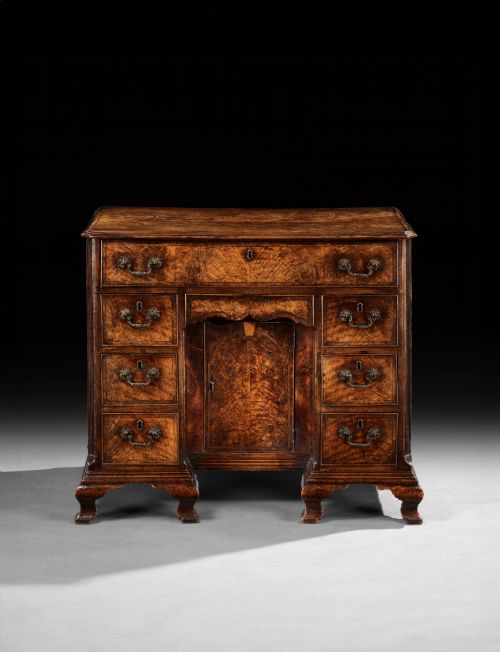
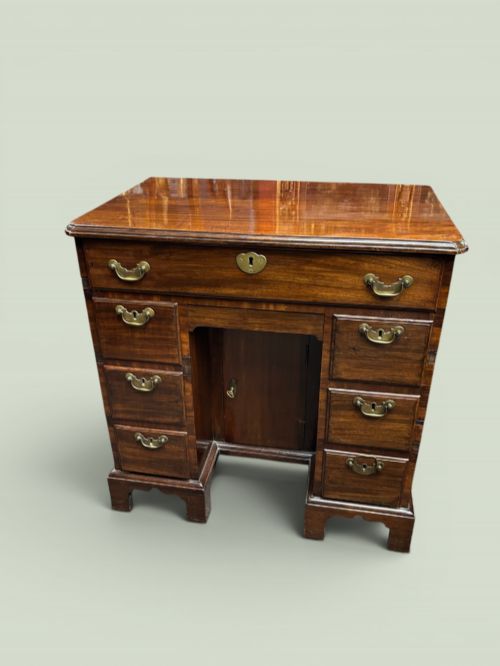
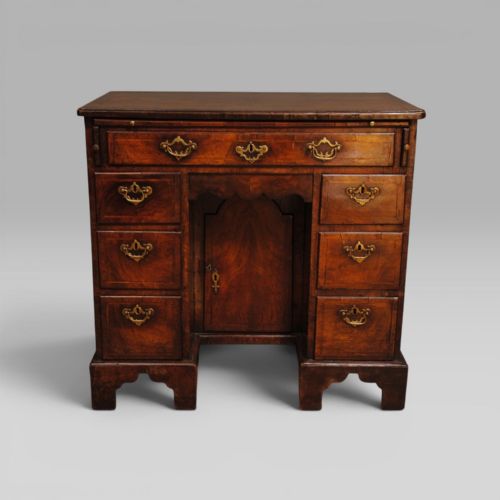
A bracket foot desk is a writing table raised on distinct corner supports, bringing solid construction and classic proportions to any room.
What a bracket foot desk is
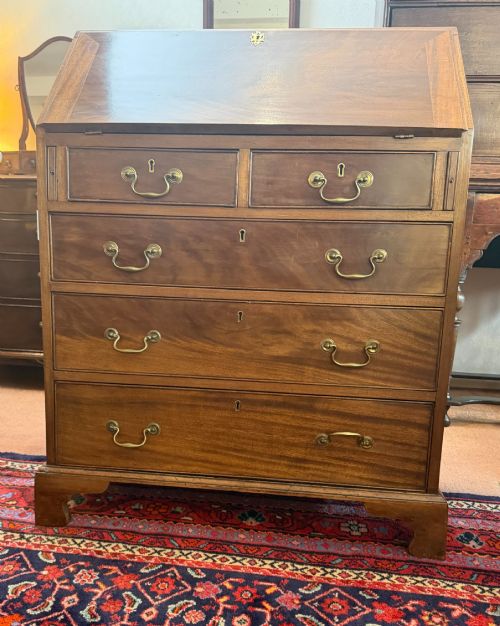
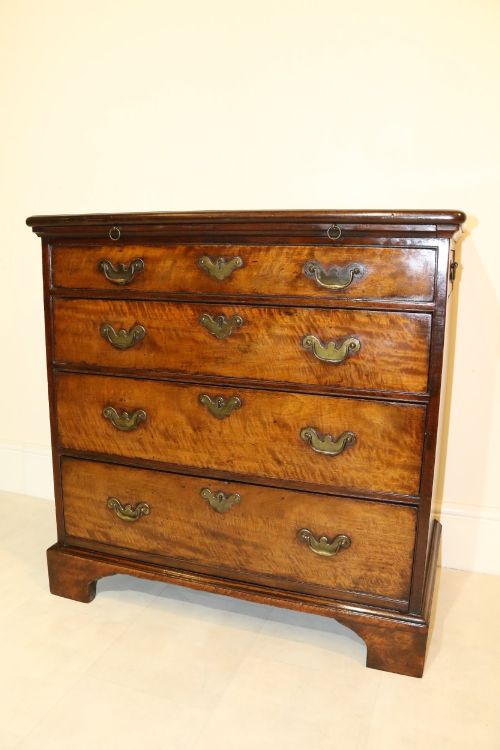
When you search for a bracket foot desk, you are looking at writing furniture designed with specific corner supports that lift the body cleanly off the floor. The pieces gathered here span the eighteenth century, the Victorian era, and the nineteen-thirty period.
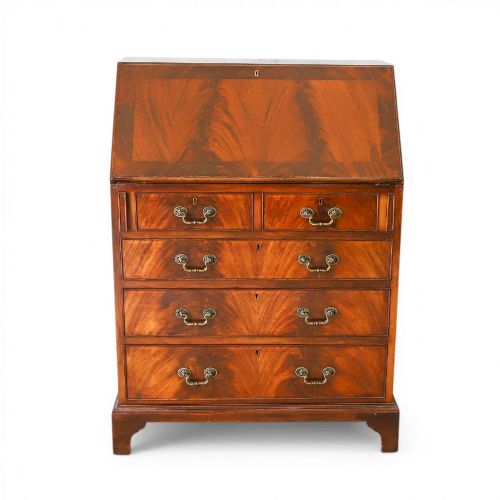
You will most frequently meet mahogany and walnut examples carrying Georgian, George II, George III, and Queen Anne styles. These forms include kneehole desks and bureaux with fitted interiors for correspondence and storage.
How they were made
Cabinet makers constructed these desks using timbers such as mahogany, walnut, burr walnut, and oak, often selecting flame-figured veneers for the exterior surfaces. Drawer interiors and secondary woods show traditional joinery methods suited to each period.
Metalwork played a key role in the finished piece, with original brasses fitted to drawers and drop-fronts. Writing surfaces were frequently lined with leather to provide a suitable texture for writing.
Retail Price Guide 2026
Typical UK retail prices for bracket foot desk, calculated from the Sellingantiques database of over a million retail prices indexed since 2003. This retail price guide relies exclusively on Sellingantiques data; no external sources or auction records are used, so the figures do not describe the wider market.
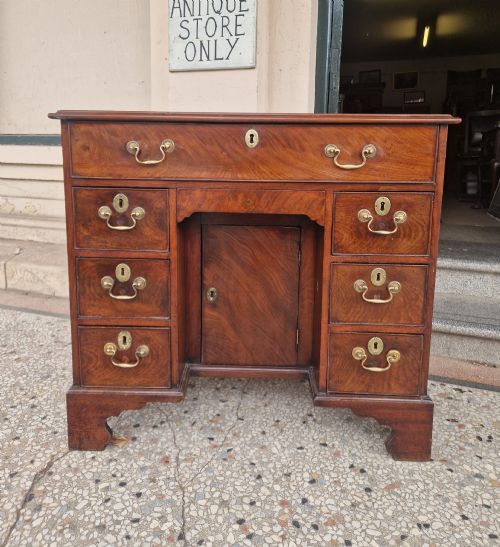
Some kneehole desks hide a secret central recess cupboard behind the main drawers for stowing private ledgers.
What varies in quality
The distinction between ordinary and exceptional examples rests upon the choice of timber and the preservation of original surfaces. Rich figure in the wood and the survival of period brass handles elevate certain items above standard production.
Proportion and cabinet-making execution separate the finer workshops from simpler regional output. The integration of the corner supports with the main carcase dictates the visual balance of the finished desk.
The Bracket Foot Desk Glossary
- Bracket foot
- A corner foot shaped like a bracket, supporting the base of case furniture with a clean mitered joint. This form is characteristic of eighteenth-century cabinet work.
- Kneehole desk
- A compact writing table featuring a central recess for the user's legs, flanked by pedestals of small drawers. It provides a tidy footprint for smaller rooms.
- Bureau
- A desk featuring a sloping fall-front that opens to reveal pigeonholes and small drawers. When closed, it conceals the working papers.
- Fiddleback walnut
- Walnut timber displaying a rippled grain pattern resembling the back of a violin. This decorative grain was prized for high-end cabinet fronts.
Frequently Asked Questions
What is a bracket foot desk?
A bracket foot desk is a writing table or bureau raised on shaped corner supports rather than straight legs. These pieces range from compact kneehole configurations to larger writing cabinets.
Cabinet makers used woods like mahogany, walnut, and oak, often adding brass hardware and leather writing inserts to complete the design.
How do I date a desk?
Dating relies on observing the timber selection, construction methods, and stylistic details present in the piece. Eighteenth-century examples display different handling of secondary woods compared to Victorian or nineteen-thirty revivals.
Examining the drawer linings, handle fixings, and overall proportions helps place the furniture in its correct period context.
Where were these desks used?
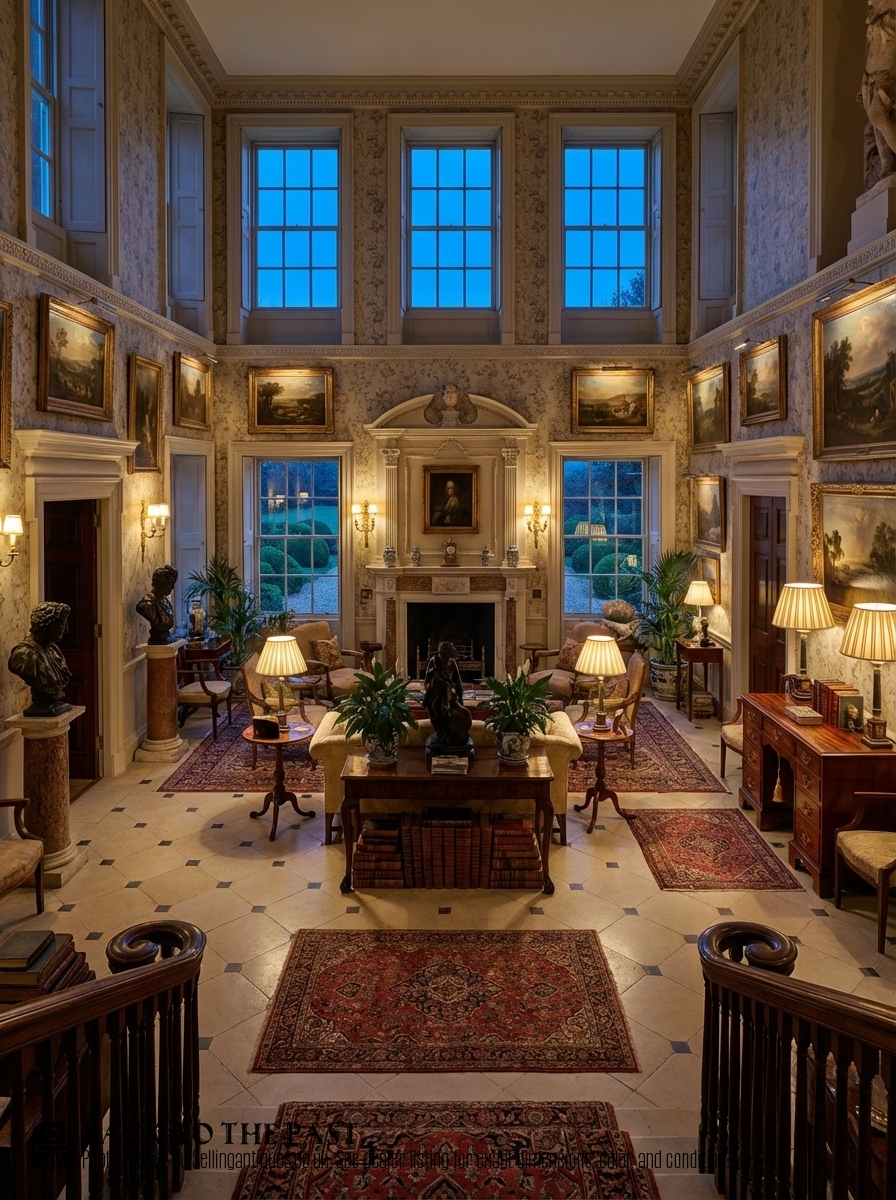
These desks served as private writing spaces in the principal rooms of period homes, from libraries to bedrooms. Their compact forms allowed them to sit flush against walls while offering organised storage for letters and accounts.
The kneehole layout and bureau interiors kept writing materials close to hand without dominating the floor space.
How do I care for the wood?
Maintaining these surfaces requires keeping them away from direct heat sources and strong sunlight that can dry out old timbers. Regular dusting with a soft cloth preserves the polish and grain.
Applying appropriate wax sparingly helps nourish walnut and mahogany finishes without building up heavy residues.